Researchers have uncovered fascinating insights into Earth's climatic history, particularly regarding the role of a "salty blob" in the Southern Ocean during the last ice age. This blob, rich in salinity, is believed to have played a crucial part in sequestering carbon dioxide (CO2) deep within the ocean.
It is well-established that an increase in atmospheric CO2 leads to a rise in global temperatures, while ice ages are characterized by lower CO2 levels. A pivotal question in climate science has been the fate of CO2 during these colder periods and its subsequent release during warmer epochs.
"One of the fundamental questions in our field was, 'Where did that CO2 go during ice ages, and where did it come from when the planet warmed?'"
Scientists have long suspected that the ocean was a significant player in this dynamic, given its vastness and ability to exchange gases with the atmosphere. However, evidence linking deep ocean salinity to CO2 fluctuations over ice age cycles had been elusive until now.
Recent findings published in Nature Geoscience bolster the hypothesis that a substantial layer of salty water in the ocean effectively trapped CO2 during the last ice age. This salty blob is thought to have released CO2 during an upwelling event approximately 18,000 years ago.
Uncovering the Past
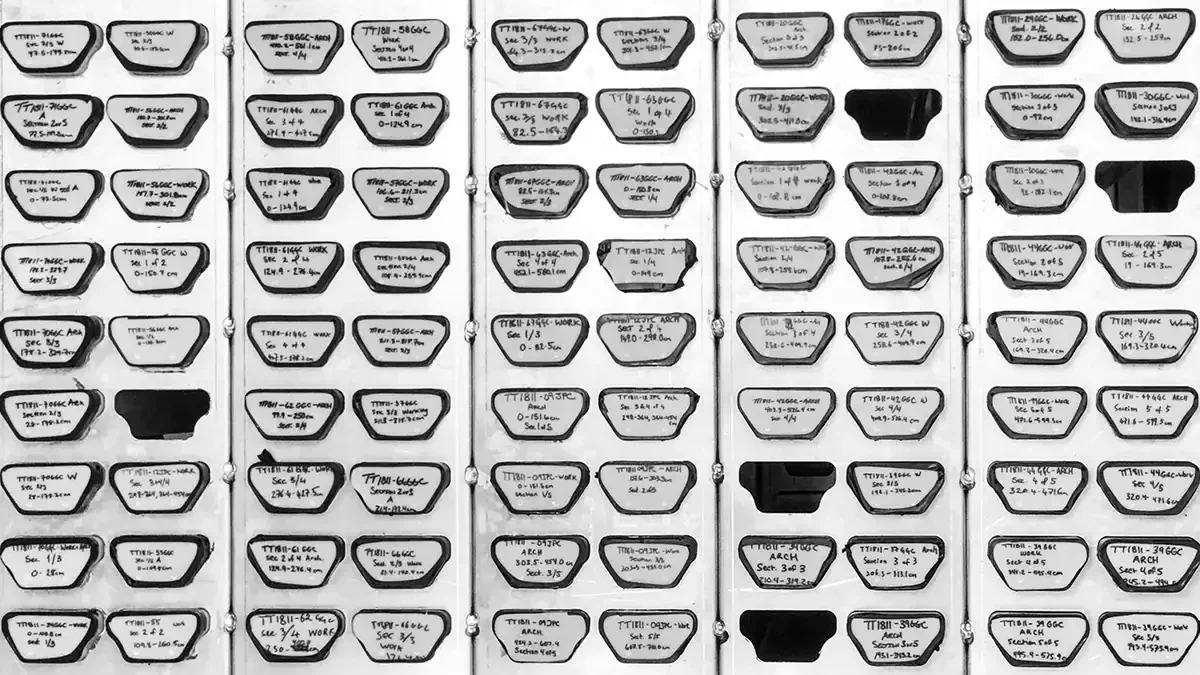
During their studies at Rutgers University, scientists, including Glaubke and his team, collected sediment cores from a unique location where deep ocean waters rise to the surface. These cores, which consist of layered mud, provide a historical record of ocean conditions.
Unlike typical sediment cores that reflect surface conditions, the cores taken from this area reveal changes in both the upper ocean and the deep waters that influence it. The presence of ancient foraminifera shells in these sediments offers insights into the ocean's past chemical state.
"What we found was a geochemical signature indicating the presence of old carbon, coinciding with a significant increase in upper ocean salinity," Glaubke noted. "This supports the concept of a 'salty blob' mechanism for carbon retention."
Transitioning Climates
Patrick Rafter, a chemical oceanographer not involved in the study, remarked on the importance of salinity in global ocean currents. He acknowledged that the findings align with his understanding of salinity's role in ocean circulation.
"The more evidence you gather, the more plausible the theory becomes," Rafter stated, emphasizing the study's rigor and the replication of findings across different species of foraminifera.
The upwelling waters of the Southern Ocean contribute to a global network of ocean currents, which are vital in transitioning from glacial to interglacial periods. Glaubke argues that the salty blob not only released carbon during this transition but also played a significant role in enhancing these currents, facilitating the planet's shift out of the ice age.
"This salty blob might have dual contributions to ending the last ice age, both through carbon release and its impact on global circulation patterns," Glaubke concluded.