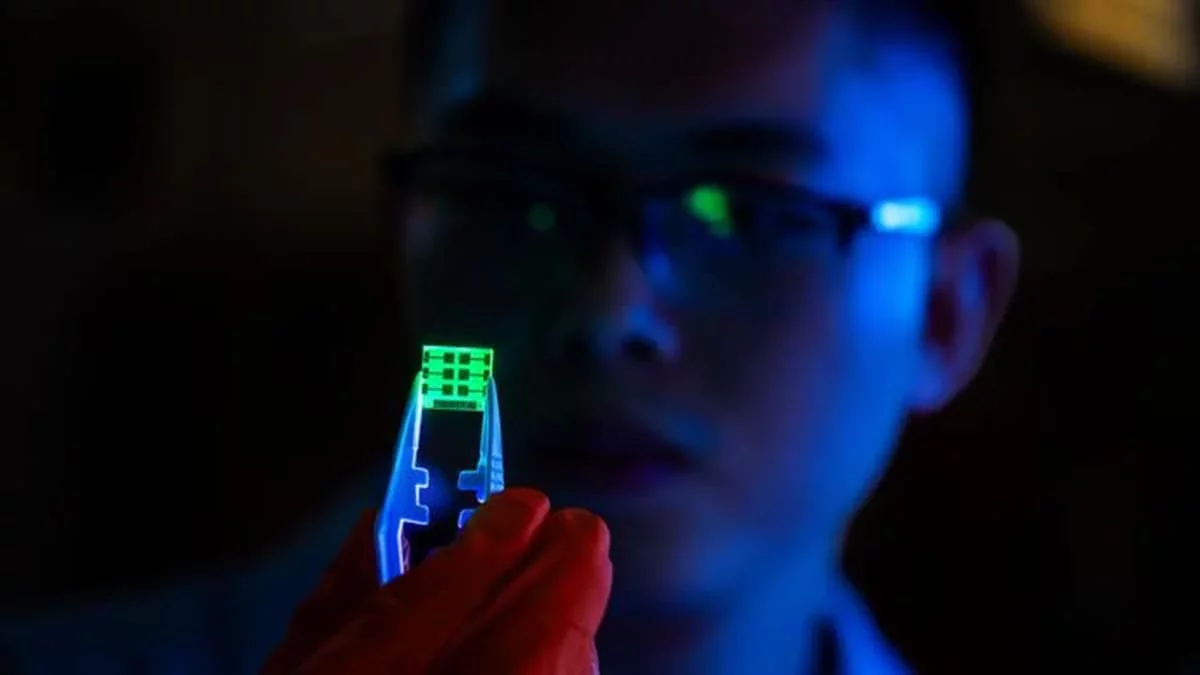
A groundbreaking innovation in lighting technology is emerging with the introduction of perovskite LEDs. These light-emitting diodes are crafted from a mineral known as perovskite, which is typically linked to cost-effective solar panels. Not only are these LEDs efficient and inexpensive to produce, but they also present a more sustainable alternative to traditional lighting solutions.
Feng Gao, a professor specializing in optoelectronics at Linköping University, emphasizes the advantages of perovskite LEDs: "They are more affordable and simpler to manufacture than conventional LEDs, while also offering vivid and striking colors for screens. This technology represents the next evolution in LED lighting."
Understanding Perovskite LEDs
In contrast to conventional LEDs that utilize costly and energy-demanding materials like gallium nitride, perovskite LEDs (PeLEDs) can be produced through less complex and more economical methods.
However, for PeLEDs to take the place of traditional LEDs, they must navigate several challenges. Researchers evaluated the environmental and economic aspects of 18 different PeLEDs, covering a spectrum of colors such as red, green, blue, white, and near-infrared.
The findings revealed that PeLEDs demonstrate impressive environmental performance, rivaling that of established organic LEDs (OLEDs). Yet, the study also pinpointed critical areas needing enhancement to ensure the sustainability of PeLEDs.
To gauge the overall impact of PeLEDs, researchers conducted an extensive life-cycle assessment (LCA), examining every phase from raw material extraction to disposal. The research highlighted that the environmental footprint of PeLEDs largely arises from the materials and energy consumed during production, particularly organic solvents like acetone and isopropanol.
Enhancing Longevity
Researchers project that PeLEDs need a lifespan of at least 10,000 hours to mitigate their environmental effects. Currently, most perovskite LEDs last only a few hundred hours. Achieving the 10,000-hour benchmark poses a challenge, yet it remains within reach with ongoing technological advancements.
"The progress in perovskite LED development is rapid, and their longevity is improving," states Muyi Zhang, a PhD candidate at Linköping University.
Beyond general lighting, PeLEDs have potential applications in displays, telecommunications, and medical devices. Notably, a recent study demonstrated that perovskite LEDs can be "a thousand times brighter than OLEDs." The anticipated cost for future PeLEDs could be around $100 per square meter, positioning them competitively against current OLED technologies.
The research concludes that perovskite LEDs possess "significant potential for long-term commercialization." If their lifespan can be successfully extended, they could not only compete with but also surpass traditional LEDs in terms of cost-effectiveness and environmental impact.
The results of this study were published in Nature Sustainability.