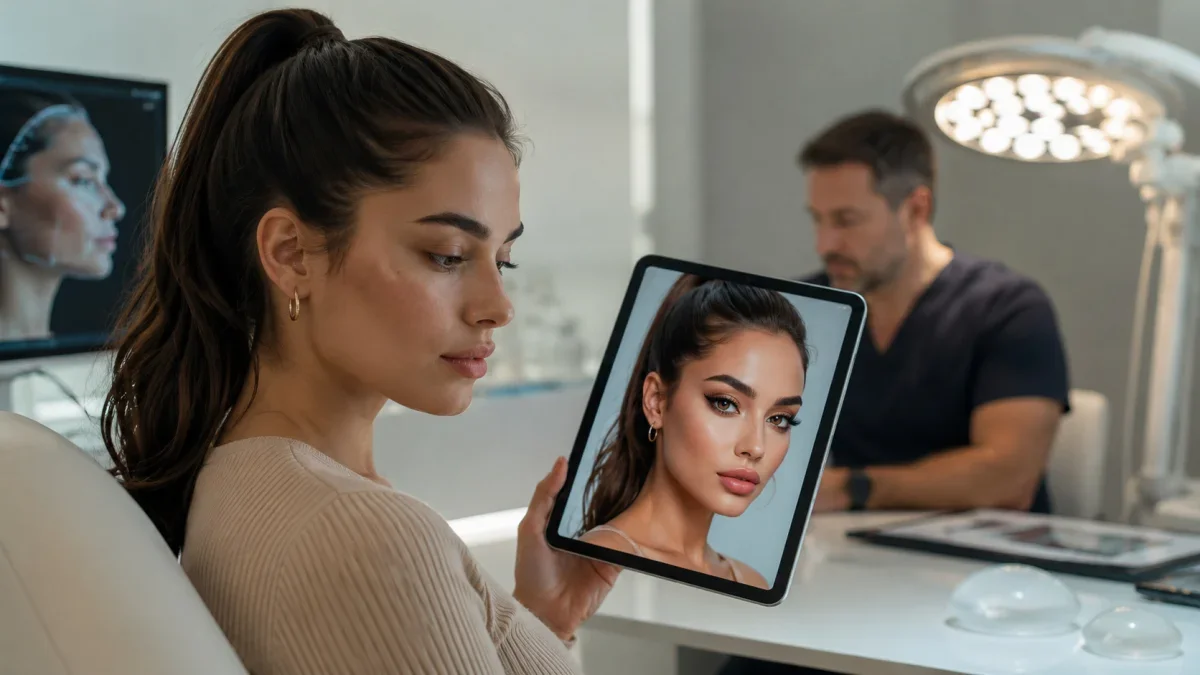
As artificial intelligence continues to shape various aspects of our lives, it has now made its way into the realm of personal aesthetics. Increasingly, individuals are approaching plastic surgeons with AI-generated images of themselves, seeking to achieve a version of beauty that aligns with these digital renderings. Patients request enhancements such as smoother skin, more defined jawlines, and larger eyes, aspiring to attain a level of perfection reminiscent of AI's artistic capabilities.
The "Bratz Doll" Aesthetic
The cosmetic surgery industry has long been associated with the pursuit of idealized beauty, often influenced by celebrities and social media. In recent years, a significant trend has emerged where patients express a desire to look like their AI-generated counterparts. This phenomenon, dubbed "AI dysmorphia," allows individuals to present a synthetic version of themselves that retains their identity while altering many physical features.
Dr. Rachel Westbay, a cosmetic dermatologist from New York, highlights a striking example where a patient brought in an exaggerated AI image with doll-like features. This trend reflects a shift from traditional beauty standards to a new, digitally influenced aesthetic, characterized by larger eyes and fuller lips.
Expectations Over Vanity
The implications of this trend extend beyond mere vanity; they touch on the evolving standards of beauty shaped by three powerful forces: cosmetic medicine, social media, and generative AI. With AI-generated images appearing more attainable than celebrity comparisons, patients may feel that they are merely enhancing an existing version of themselves. However, the unrealistic expectations set by these images can lead to disappointment post-surgery.
Dr. Waqqas Jalil explains that while patients may believe they are pursuing a more achievable ideal, the AI-generated images are not constrained by the realities of human anatomy or surgical safety. This can create expectations that are difficult, if not impossible, to fulfill.
While AI tools can assist in providing simulations for potential surgical outcomes, there is a fine line between responsible use and fostering unrealistic ideals. A recent survey from Beth Israel Deaconess Medical Center indicates that those who enhance their images with AI often expect more from their surgical results than those who do not.
AI and Surgical Precision
Despite the challenges, there are promising applications for AI in cosmetic surgery. Dr. Justin Sacks from Washington University suggests that AI can help surgeons simulate realistic outcomes, guiding patients through the range of achievable results and the implications of surgical choices.
However, the risk remains that reliance on AI could lead to new sets of unrealistic expectations. As the beauty landscape evolves, it is essential for both patients and surgeons to navigate these changes responsibly, ensuring that the pursuit of an idealized self remains grounded in reality.
As AI continues to influence our perceptions of beauty, it is crucial to foster a dialogue about the balance between aspiration and authenticity, paving the way for a future where technology enhances, rather than distorts, our sense of self.