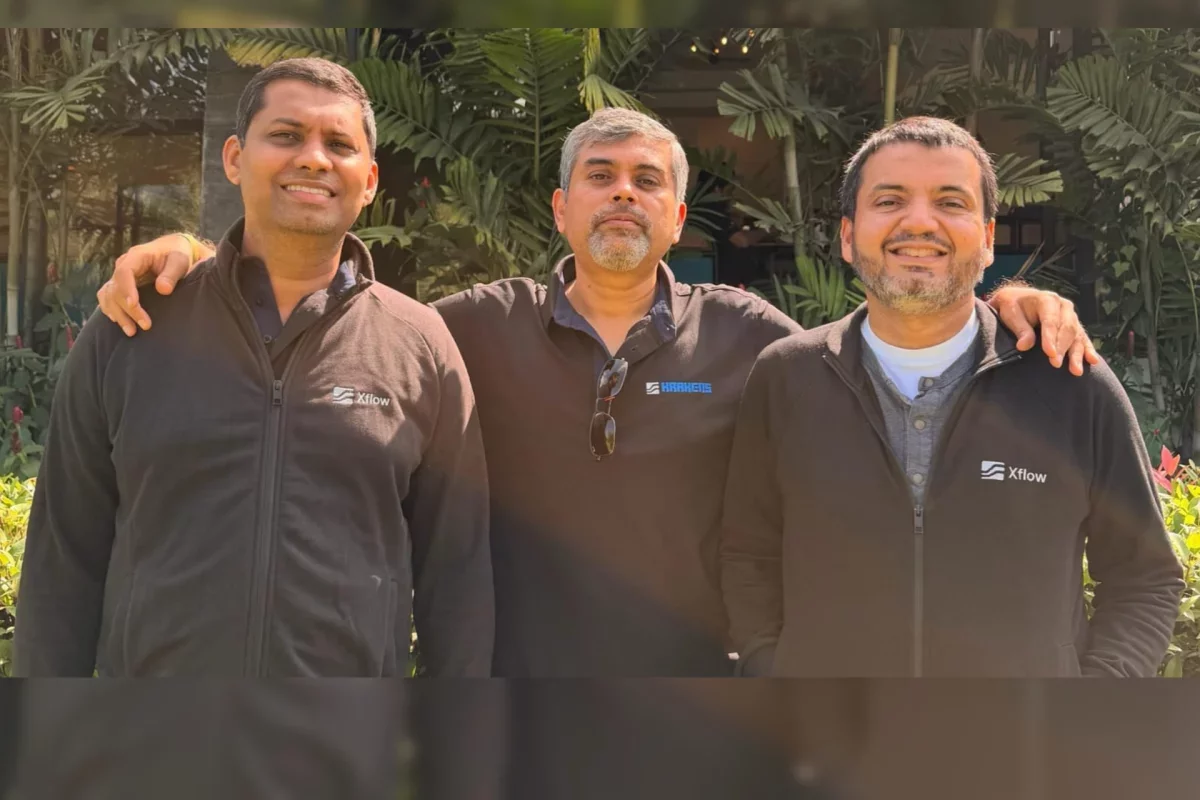
Xflow, an innovative fintech startup from India, has successfully raised $16.6 million in a funding round backed by industry giants Stripe and PayPal Ventures. This investment positions Xflow to enhance its capabilities in the cross-border B2B payments sector, a domain still largely controlled by traditional banks and outdated manual processes.
The Series A funding round was spearheaded by General Catalyst, with contributions from existing investors such as Square Peg, Lightspeed, and Moore Capital, alongside PayPal Ventures joining as a new supporter. Following this investment, Xflow's valuation has reached $85 million, bringing its total funding to over $32 million.
Despite significant advancements in domestic payment digitization, Indian exporters still face challenges with cross-border B2B transactions, primarily relying on banks that offer limited visibility into fees and settlement timelines. This creates a unique opportunity for fintech companies like Xflow, which aim to provide enhanced transparency and efficiency in international money transfers.
Founded in 2021, Xflow delivers cross-border payment solutions tailored for a diverse range of clients, including exporters, SaaS companies, and freelancers, enabling them to streamline international payments and manage currency exchange effectively.
"Cross-border B2B payments have lagged behind the advancements seen in domestic systems like UPI," noted co-founder Anand Balaji. He emphasized the need for innovation in this space, having previously contributed to the growth of Stripe's operations in India. Alongside co-founders Ashwin Bhatnagar and Abhijit Chandrasekaran, Balaji is committed to transforming the payments landscape.
In the past year, Xflow facilitated payment collections for Indian businesses from over 100 countries in more than 25 currencies, processing nearly $1 billion in annualized cross-border payment volume--a tenfold increase from the previous year.
The startup's clientele has expanded to approximately 15,000 businesses, including IT service exporters and global capability centers. Transaction sizes vary significantly, with global capability centers averaging $1-2 million, while exporters typically handle $30,000-$40,000, and freelancers around $3,000.
Xflow distinguishes itself by functioning as a payments infrastructure provider rather than a direct payment application, offering APIs that enable businesses to integrate cross-border payment solutions into their platforms.
"Our vision is not just to create another payment platform but to empower the next wave of payment innovators," Balaji stated. The startup has also launched an AI-driven foreign exchange tool designed to assist finance teams in optimizing currency conversion timings, enhancing decision-making through data insights.
This tool allows businesses to establish target conversion rates, akin to limit orders in trading, thus improving their foreign exchange strategies. Currently, the model offers a three-day forecast with a high confidence level, although independent verification of this claim is pending.
While Xflow faces competition from banks and other fintech players like Wise and Payoneer, its focus on high-value transactions and API-driven infrastructure sets it apart. The new funding will be directed towards developing additional products and obtaining regulatory licenses in new markets, including Canada and Singapore, while continuing to prioritize its operations in India.
Xflow has received preliminary approval from the Reserve Bank of India for a Payment Aggregator-Cross Border license, which will facilitate both exports and imports. Collaborations with platforms like Easebuzz and Drip Capital will further enhance its cross-border capabilities.
With a growing team of around 65 employees, Xflow is poised to scale its cross-border payment solutions and redefine the future of international transactions.