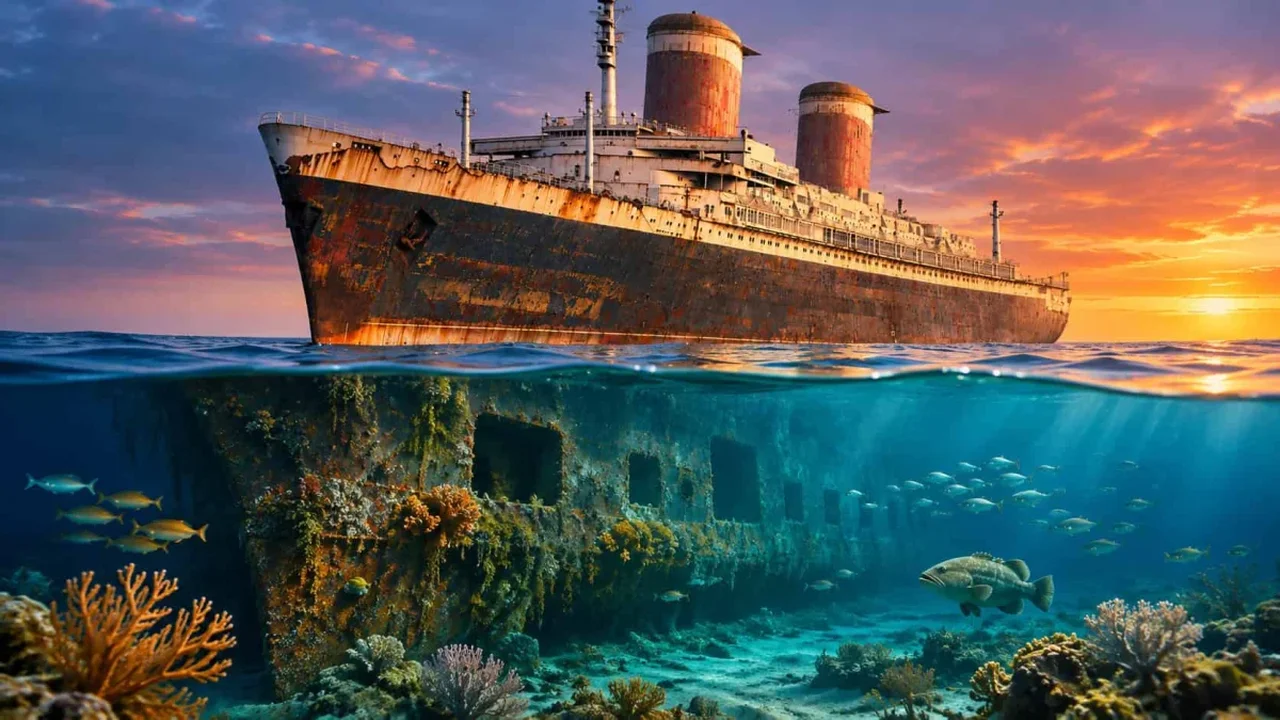
The SS United States, once the fastest ocean liner to cross the Atlantic, has been deliberately sunk in the Gulf of Mexico off Florida. The 302-meter vessel is set to become the world's largest ship-based artificial reef.
The ship went under on November 11, after a controlled operation that took more than seven hours. Beforehand, crews removed hazardous materials, fuel residues and other equipment, then prepared openings in the hull to help it settle on the seabed. Its resting place is about 22 nautical miles southwest of Destin, in roughly 55 meters of water.
From record-breaking liner to marine habitat
On its maiden voyage in 1952, the SS United States crossed the Atlantic in three days, 10 hours and 40 minutes, setting a speed record that remains unbeaten for an eastbound passenger-liner crossing. Designed by naval architect William Francis Gibbs, it carried notable guests before commercial aviation reshaped transatlantic travel. The ship retired in 1969.
Florida's Okaloosa County acquired the vessel in 2024 for the reef project. Its steel structure will offer places for marine organisms to settle, with fish potentially using its openings and ledges for shelter. Artificial reefs can attract marine life, though their ecological effects vary by location and materials.
A rare opportunity for marine research
The Woods Hole Oceanographic Institution plans a multi-year study to track how marine communities develop around the ship. Researchers will survey the site and collect water samples from 132 locations, monitoring biological changes as well as metals released as the steel corrodes.
The vessel's funnels, mast and other artifacts are planned for display in a shore-based museum. Its new role will give researchers an unusual opportunity to observe an ecosystem taking shape, and the findings may help guide future artificial-reef projects.