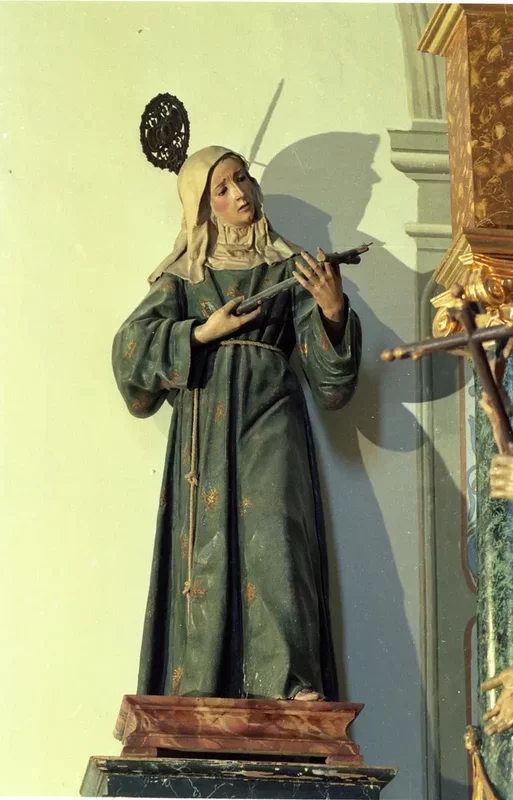
In a significant turn of events, the High Court of Justice of Andalusia has overturned a four-year prison sentence for Spanish antiques dealer Santos Boy Jiménez Cortés, stemming from a complex case involving a 17th-century sculpture. This case, which began in 2018, revolves around a Baroque wood sculpture titled Saint Margaret of Cortona, created by the artist José de Mora, and originally housed in the convent of Our Lady of the Angels of Granada.
The convent, established in 1538, ceased operations in 2018. Following its closure, a Sister Josefa arrived with a Vatican decree to manage the transfer of the convent's assets. However, she allegedly took matters into her own hands, leading to the sale of various artifacts, including the revered sculpture.
Jiménez Cortés, hailing from Alagón near Zaragoza, purchased the sculpture for €21,600 ($25,500). Unsure of its true value, he later sold it to the Nicolás Cortés Art Gallery in Madrid for €90,000 ($106,250). An expert subsequently appraised the sculpture at €350,000 ($413,200), and it was later assigned an export value of €400,000 ($472,200) by Spain's Ministry of Culture. The sculpture was showcased at TEFAF New York in 2019, raising concerns about compliance with a 1985 heritage law that restricts the church's ability to sell its assets freely.
The situation escalated when a visitor to a Madrid antiques dealer recognized the sculpture as belonging to the Granada convent, prompting police intervention. By this time, the Saint Margaret sculpture had already made its way to New York, leading the nuns to request the return of all items sold to Jiménez Cortés.
In 2024, Jiménez Cortés was convicted of misappropriation and sentenced to prison. However, he appealed the ruling, and the High Court ultimately found the nuns' testimony inconsistent and unreliable. The court noted that their claims regarding the sale and alleged restoration of the sculpture lacked credibility.
Furthermore, Jiménez Cortés had refunded the convent for the purchase price, raising questions about the validity of the accusations against him. The court concluded that his version of events was more convincing than that of the nuns, who had also claimed he returned a poor imitation of the original sculpture. After extensive examination, the court determined that the alleged copy could not have deceived anyone.
Today, the Saint Margaret sculpture has been returned to the Museum of Fine Arts of Granada, while the convent has been sold to the Buddhist order of the New Kadampa Tradition, marking a new chapter in this intriguing story of art, history, and cultural heritage.