A groundbreaking type of plastic has been engineered by scientists in South Korea, demonstrating the ability to withstand extreme heat without succumbing to melting.
This innovative polymer composite maintains its integrity even when exposed to flames nearing 1,000 °C, paving the way for advancements in lightweight aircraft engines, enhanced safety in electric vehicle batteries, and various other heat-sensitive technologies. Their research findings have been published in Advanced Composites and Hybrid Materials.
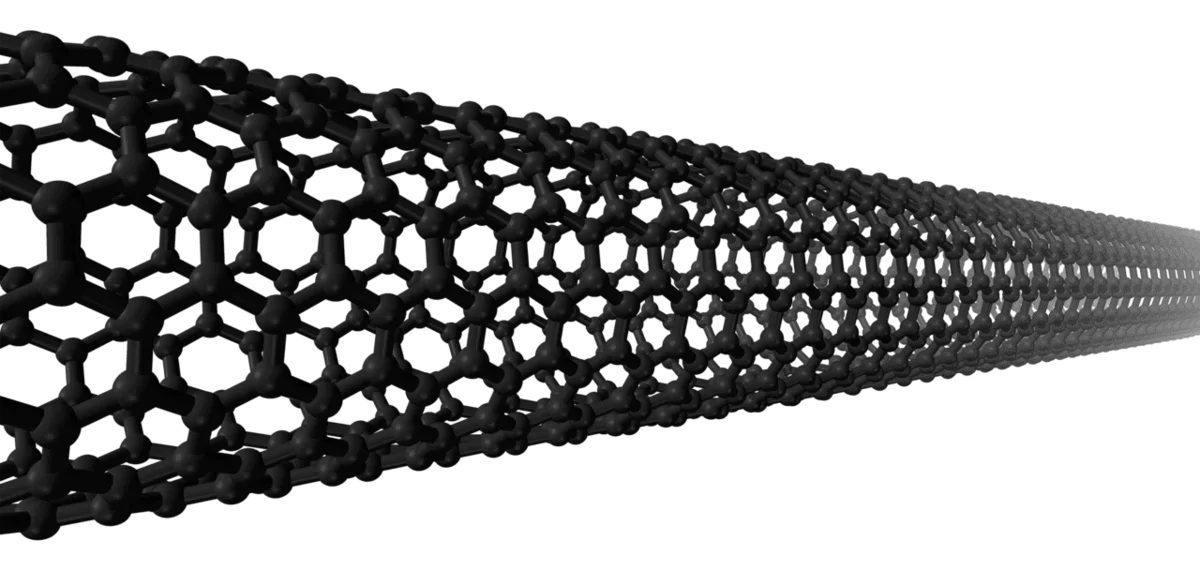
The key to this development lies in a unique architectural approach. Rather than altering the chemical properties of plastics, the research team has constructed a three-dimensional framework using carbon nanotubes that physically confines polymer chains, restricting their movement under heat.
A Nanoscale Framework
Modern aircraft and vehicles heavily depend on polymer composites for their light weight and moldability. However, heat management has always posed a challenge. When temperatures exceed certain thresholds, increased molecular motion can lead to a loss of stiffness, compelling engineers to resort to heavier metals like titanium.
Previous attempts to enhance polymer durability through chemical methods or by incorporating nanoparticles yielded limited results. In contrast, this new study emphasizes nanoconfinement, which involves surrounding polymer chains with a rigid structure to limit their mobility.
The researchers created a porous, three-dimensional network of single-walled carbon nanotubes, with nano-sized pores. They subsequently infused epoxy into this "nanocage," forming interlocking networks of nanotubes and polymer. This configuration prevents the polymer chains from moving freely, significantly reducing the material's susceptibility to heat-induced softening. Tests confirmed that the chains remain effectively locked within the cage.
This innovative plastic retains its stiffness at temperatures where conventional epoxy would deform, exhibiting minimal creep under stress and negligible thermal expansion--over 98% less than the original polymer.
Bridging the Gap with Metals
To enhance the material's practicality for real-world applications, the researchers combined the nanotube cage with carbon-fiber fabric, resulting in a layered composite that merges nanoscale strength with traditional reinforcement durability. This hybrid material preserved more than 90% of its stiffness up to approximately 370 °C, maintaining rigidity at temperatures where many aerospace titanium alloys begin to weaken.
In flame tests exceeding 1,000 °C, structures incorporating the nanocage demonstrated remarkable resistance to visible burning compared to standard carbon-fiber composites. This advancement suggests potential applications in high-heat environments, including lighter engine components, heat-resistant structures for supersonic vehicles, and battery casings that can slow fire spread. Even minor enhancements in materials can lead to substantial environmental and economic benefits across aviation and transportation sectors.
The research team aims to further increase the material's glass-transition temperature to 500 °C and explore its manufacturability at an industrial scale.
"We anticipate progressing towards commercialization by ensuring process scalability and economic viability," stated lead researcher Oh Young-seok.