Salesforce showcased its robust performance in the latest earnings report, aiming to reassure investors that the ongoing AI revolution will not spell doom for the company. The tech giant reported impressive fourth-quarter earnings of $10.7 billion, reflecting a 13% year-over-year growth. For the entire fiscal year, Salesforce achieved $41.5 billion in revenue, a 10% increase from the previous year, largely driven by its strategic acquisition of data management firm Informatica for $8 billion last May.
Net income reached $7.46 billion, and Salesforce provided an optimistic forecast for the upcoming year, projecting revenues between $45.8 billion and $46.2 billion, marking a 10% to 11% increase. The company also highlighted its remaining performance obligation (RPO) of over $72 billion, indicating substantial revenue that is contracted but not yet recognized.
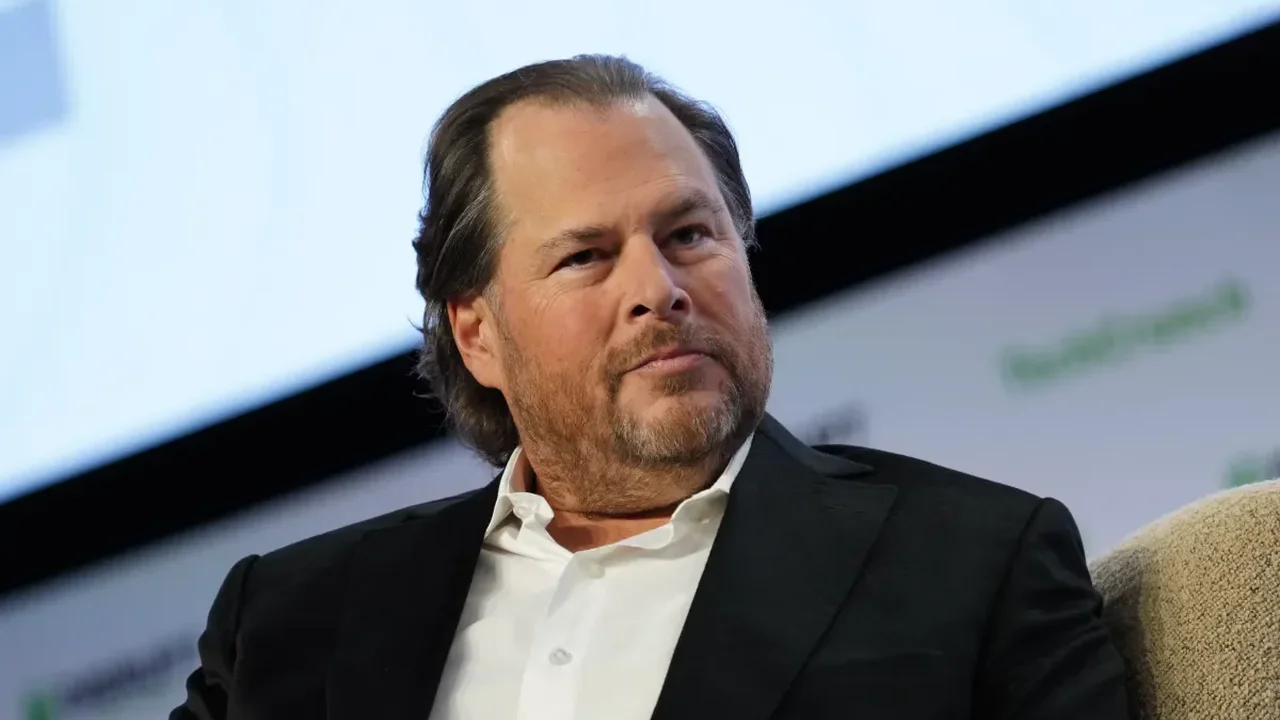
Despite these positive figures, the software-as-a-service (SaaS) sector, with Salesforce at the forefront, has faced considerable scrutiny as fears mount that AI advancements may render traditional business models obsolete. This apprehension has given rise to the term "Saaspocalypse," a phrase that CEO Marc Benioff referenced multiple times during the earnings call.
Benioff remarked, "You've heard about the SaaSpocalypse? And it isn't our first. We've had a few of them," suggesting that while challenges exist, many companies continue to benefit from SaaS innovations, particularly with the integration of AI agents.
In a bid to bolster investor confidence, Salesforce announced a nearly 6% increase in its dividend to $0.44 per share and launched a $50 billion share buyback program. These moves are designed to enhance shareholder value by creating demand for shares and reducing the total number in circulation.
The earnings call took on a unique format, blending elements of a podcast and infomercial, featuring interviews with three prominent Salesforce customers. Leaders from SharkNinja, Wyndham Hotels and Resorts, and SaaStr expressed their enthusiasm for Salesforce's AI-driven products, emphasizing their transformative impact on operations.
Salesforce also introduced a new performance metric called Agentic Work Units (AWU), which measures the completion of tasks by AI agents rather than just their processing capabilities. This approach aims to provide a more meaningful assessment of AI contributions to business processes.
Additionally, Salesforce shared its vision for the future of SaaS and AI integration, positioning itself as a leader in the tech stack while suggesting that AI model developers will play a background role. This perspective counters recent market reactions to OpenAI's enterprise agent platform, which has sparked concerns about the future of traditional SaaS providers.
To further capture investor attention, Benioff's striking appearance in a black leather jacket echoed the style of influential tech leaders, reinforcing his commitment to navigating the evolving landscape of AI.