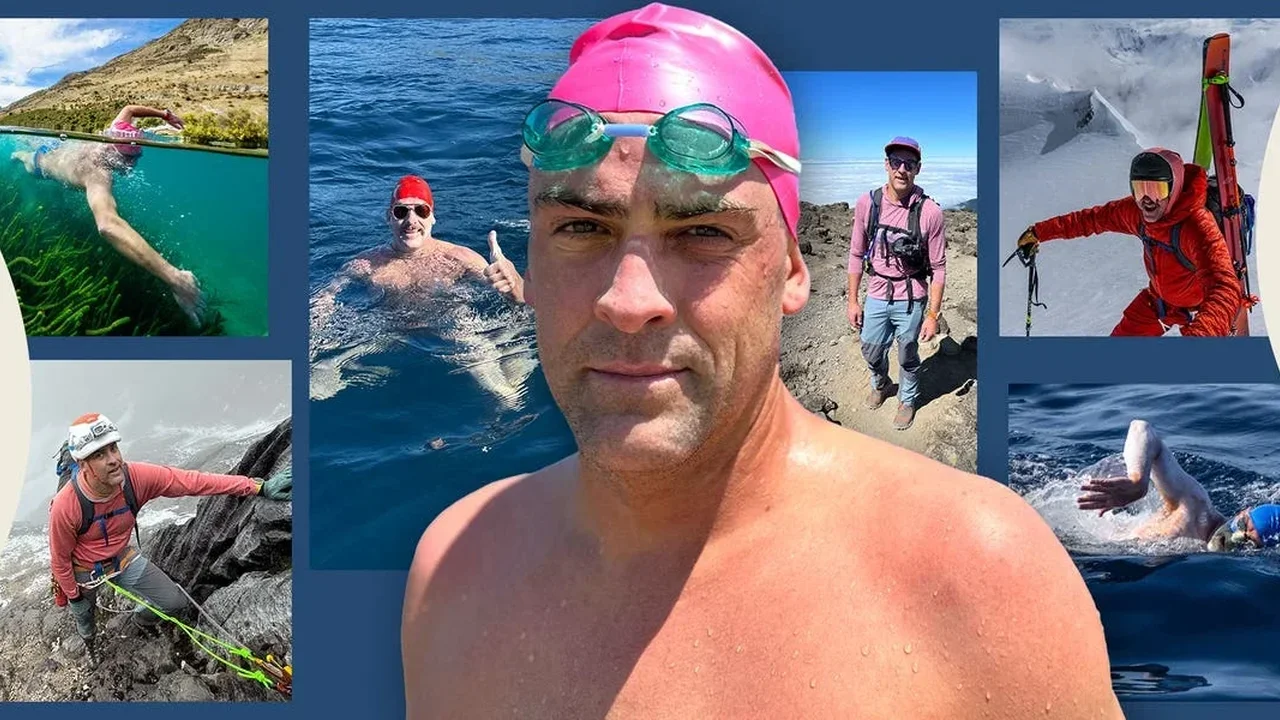
At 44, Rob Lea has completed one of endurance sport's most demanding combinations: the Seven Summits and the Oceans 7 challenge. His final milestone came on June 30 with a crossing of Japan's Tsugaru Strait, closing a 17-year pursuit that blended climbing, open-water swimming, and long-distance discipline.
Lea's path began after an ankle reconstruction in 2017 pushed him to set a new goal beyond rehabilitation. A former All-American swimmer at UC Davis and 2012 70.3 triathlon world champion, he chose a challenge that matched both his athletic background and his appetite for exploration.
He had already climbed Aconcagua and Denali before taking on Everest and the English Channel in 2019, within six months of each other. From there, the project expanded into the full Double Seven: summiting the highest peak on each continent and completing the world's most iconic channel swims, including Catalina, North Channel, Gibraltar, Cook Strait, Molokai, and Tsugaru.
Lea says his preparation was guided less by rigid metrics and more by feel, experience, and consistency. One area he treated with special care was cold-water adaptation, using cold baths, extra body weight, and training swims in chilly conditions to prepare for the demands of open water.
He also relied on technical mountain training and a practical nutrition plan built around steady fueling, liquid calories, and maintaining energy through long efforts. For Lea, the challenge was never only about performance data, but about staying adaptable across changing environments.
Looking back, he describes the journey as a lesson in commitment, patience, and showing up even when success felt uncertain. After 17 years, he now plans to rest, recover, and continue with a charity run at the New York City Marathon. His story points to a future where endurance sport keeps redefining what human persistence can achieve.