WC-Co cemented carbides are crucial materials for industries requiring exceptional wear resistance and hardness, notably in cutting tools and construction equipment. Traditionally, these materials are crafted through powder metallurgy, where WC and Co powders are subjected to high pressure and heat in sintering machines. Although this method yields robust products, it is resource-intensive and often results in material wastage.
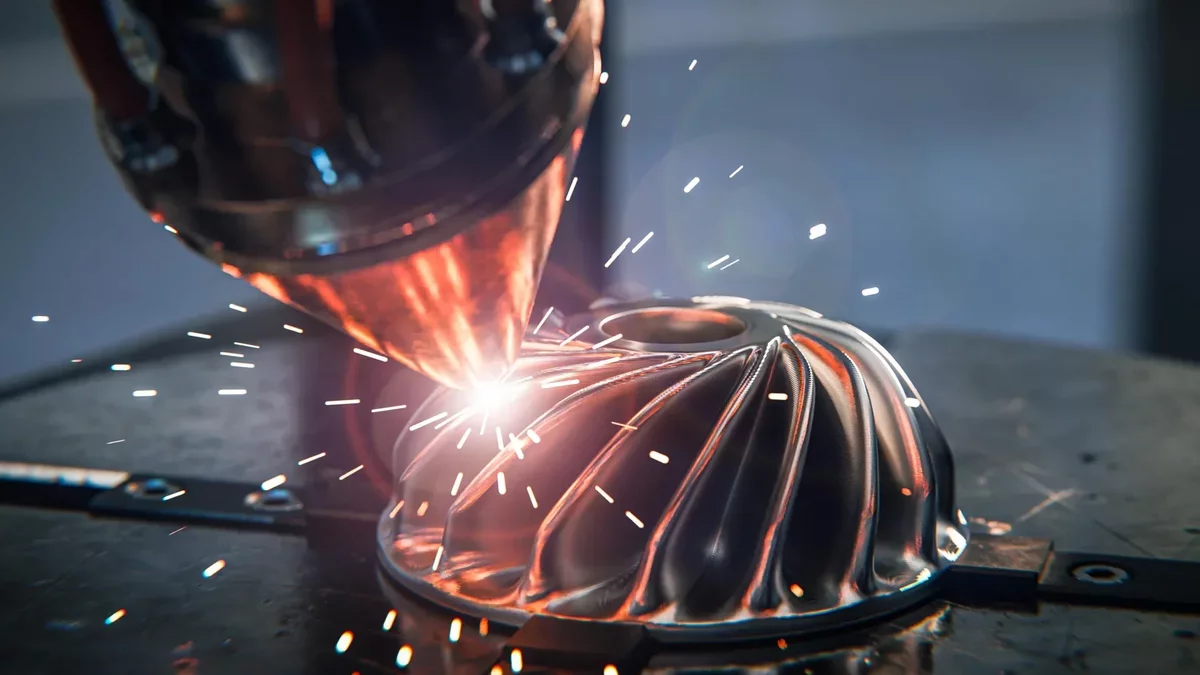
To tackle these challenges, researchers have turned to additive manufacturing (AM), commonly known as 3D printing, combined with a technique called hot-wire laser irradiation. This innovative approach aims to produce cemented carbides that maintain their strength while minimizing both waste and costs.
The groundbreaking findings were documented in the International Journal of Refractory Metals and Hard Materials and will feature in the April 2026 issue.
Innovative Laser-Based Manufacturing
The study explored two distinct fabrication techniques utilizing hot-wire laser irradiation, which merges a laser beam with a heated filler wire. This combination enhances the deposition rate and overall efficiency of the manufacturing process. In one method, the cemented carbide rod directs the fabrication, while the laser irradiates the top. In another, the laser leads the process, directing energy between the base material and the rod. These methods soften the materials during production without fully melting them, allowing for a robust cemented carbide structure.
Keita Marumoto, an assistant professor at Hiroshima University's Graduate School of Advanced Science and Engineering, noted, "Cemented carbides are highly valued for their hardness, but the expensive raw materials limit their use. By employing additive manufacturing, we can deposit materials precisely where needed, significantly reducing consumption."
Achieving Industrial Hardness Without Defects
The experiments confirmed that this new manufacturing strategy can achieve the hardness and mechanical strength typical of conventional methods. The produced materials reached hardness levels exceeding 1400 HV, a measure of resistance to penetration, while avoiding defects. Such hardness places these materials among the toughest used in industrial applications, just below superhard substances like sapphire and diamond.
However, variations in fabrication methods did yield different results. The rod-leading approach faced challenges with decomposition near the top, leading to defects, while the laser-leading method struggled to maintain necessary hardness levels. Researchers introduced a nickel alloy-based intermediate layer and fine-tuned temperature conditions, allowing for successful production of cemented carbide while preserving hardness.
Looking Ahead: Future Applications
The results present a promising foundation for future advancements. Researchers plan to focus on minimizing cracking during fabrication and enabling the production of more intricate shapes. "Our novel approach of softening metals rather than fully melting them could extend beyond cemented carbides to other materials," Marumoto stated.
Future goals include developing cutting tools, exploring additional materials, and enhancing the durability of components produced with this technique. This innovative manufacturing method could redefine how we produce essential industrial materials, paving the way for more sustainable and efficient practices.