Kidney stones affect approximately 12% of the global population, leading to discomfort and often requiring invasive treatments. However, a groundbreaking approach developed by a team of researchers offers hope for millions suffering from this condition.
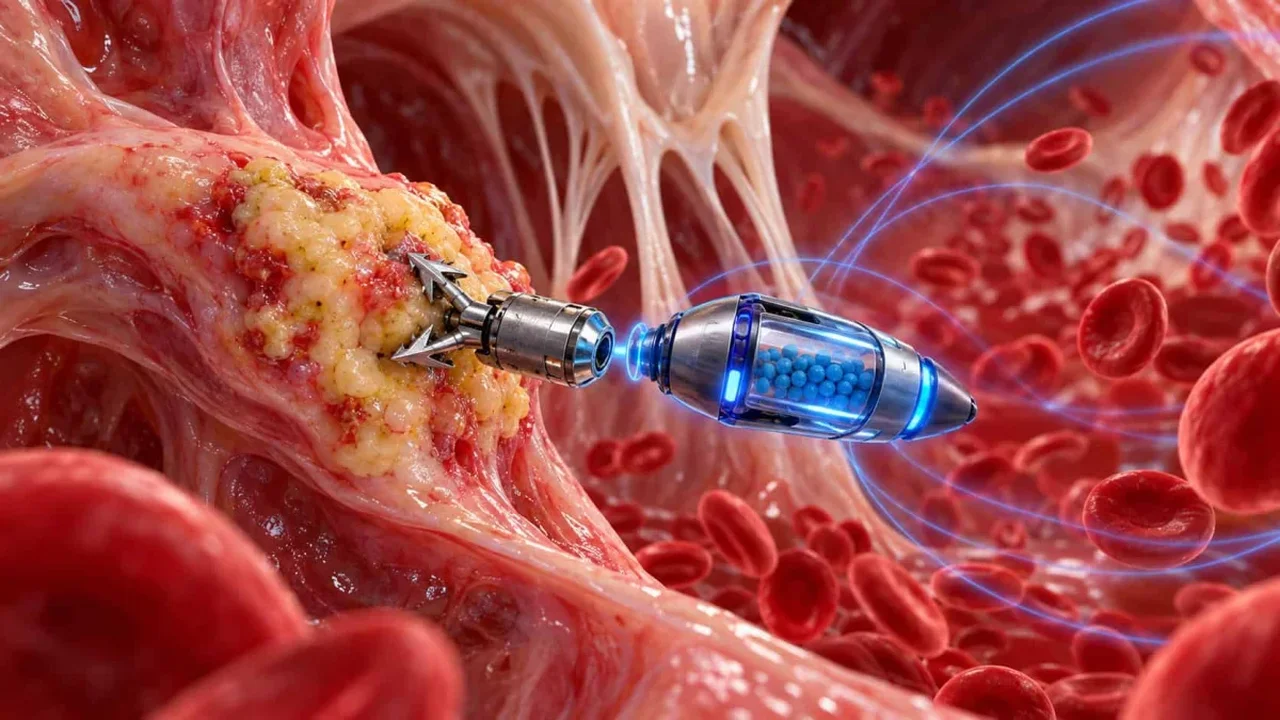
These innovative soft robots, designed to navigate the urinary tract, can dissolve kidney stones directly at their source. Acting as localized chemical plants, they remain in close proximity to the stones, facilitating their breakdown.
Tackling Tough Stones
Kidney stones form as solid deposits within the urinary tract and have a tendency to recur, sometimes up to 70% of the time, necessitating prolonged drug treatments or repeated surgeries. Among these, uric acid stones, which constitute about 13% of cases, can be dissolved by altering the urine's pH levels. Traditionally, this has involved lengthy oral medication regimens, which often fail to effectively reach the stones.
The new robotic solution, however, promises a more efficient approach. Each robot, measuring just one millimeter in width and twelve millimeters in length, contains a micromagnet for navigation and is filled with urease, an enzyme that helps increase local pH levels around the stones.
Impressive Results
In trials, these robots achieved a remarkable 30% reduction in stone mass within just five days. This advancement was spearheaded by Professor Veronika Magdanz and her team at the University of Waterloo, who collaborated with urologists from Spain and Canada.
One of the challenges in utilizing microrobots in medicine is visibility. The researchers addressed this by employing ultrasound technology, allowing doctors to track the robots' movements in real-time during procedures. The robots appear as bright signals on ultrasound scans, facilitating precise navigation within the complex anatomy of the kidneys.
The Future of Urology
Imagine a future where patients with recurring kidney stones visit a clinic to have these robots introduced into their urinary tract. With the aid of a catheter and magnetic steering, doctors can guide the robots to the stones, allowing them to dissolve the stones while the patient continues with daily activities. Once sufficiently reduced, the tiny robots can be naturally expelled from the body.
While further research is necessary to ensure safety and efficacy in real-world applications, the implications of this technology extend beyond kidney stones. The ability to navigate the urinary tract with such precision opens doors for targeted treatments for bladder tumors, clearing other obstructions, and potentially delivering therapeutic agents like stem cells.
This pioneering study was published in Advanced Healthcare Materials, marking a significant step forward in the field of urology.