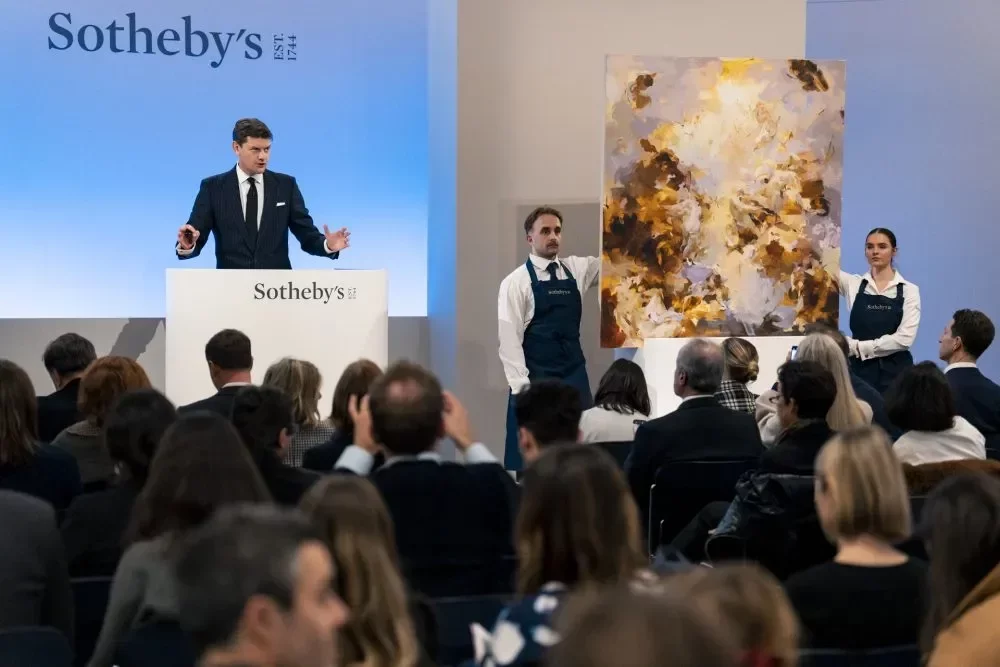
The art market has undergone significant transformations over the past decade, with collectors and speculators fervently pursuing emerging talents, often overlooking established artists. However, the latest Art Basel & UBS Art Market Report, authored by economist Clare McAndrew of Arts Economics, indicates a shift in this trend.
While the global art market experienced a rebound last year, achieving approximately $59.6 billion in sales--a 4% growth after two years of decline--the segment for postwar and contemporary art has seen a downturn. Sales in this category fell from $8.5 billion in 2021 to $4.5 billion last year.
Despite this decline, postwar and contemporary art remains the dominant force in the auction market, highlighting its significance over the last twenty years. Interestingly, collectors are now gravitating back towards the works of artists with established reputations. Auction sales of Impressionist and Post-Impressionist art surged by 47% last year, while Old Masters saw a 30% increase, signaling a revival after years of stagnation.
During the pandemic, a surge of newly created works flooded the auction scene, with pieces from the last two decades accounting for 34% of postwar and contemporary sales by value in 2021. However, this figure has since dropped to 19% in 2025, with the number of works selling for over $10 million plummeting from twenty-one in 2021 to just three in 2025.
The report distinguishes between "Postwar and Contemporary" art and the more speculative ultra-contemporary segment, which predominantly features works created in the past two decades. Notable contemporary artists like Avery Singer, Lucy Bull, and Jadé Fadojutimi have become symbols of this fast-evolving sector.
As the market stabilizes, the focus has shifted towards longevity and the enduring value of established artists. In uncertain economic climates, buyers often lean towards safer investments, favoring renowned names such as Monet and Degas, whose legacies are less likely to fade with changing trends.
While contemporary art continues to hold its place in the market, the prevailing mood is changing, reflecting a renewed appreciation for the timelessness of older works. Auction houses still heavily feature postwar artists to anchor their sales, and galleries remain committed to introducing fresh talent each season. However, the current climate suggests a balance is being struck between innovation and tradition.
This evolving landscape indicates a promising future for the art market, where a blend of new and classic influences may lead to a more diverse appreciation of artistic expression.