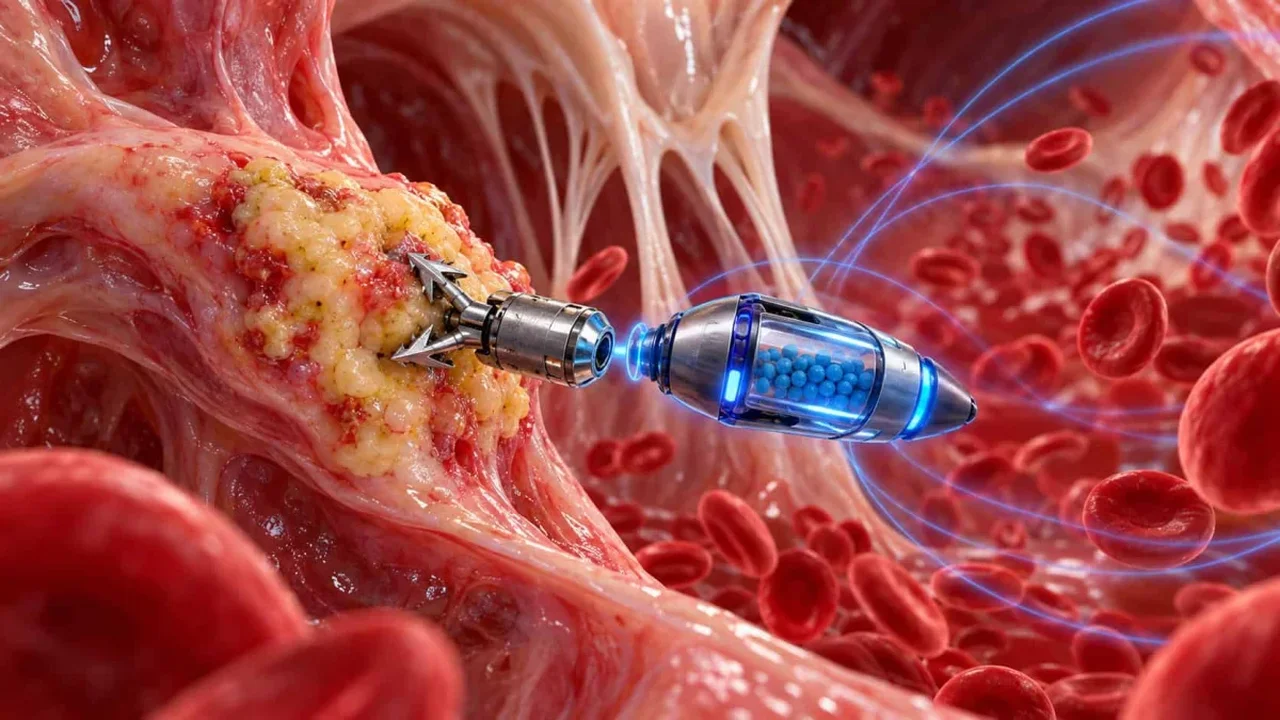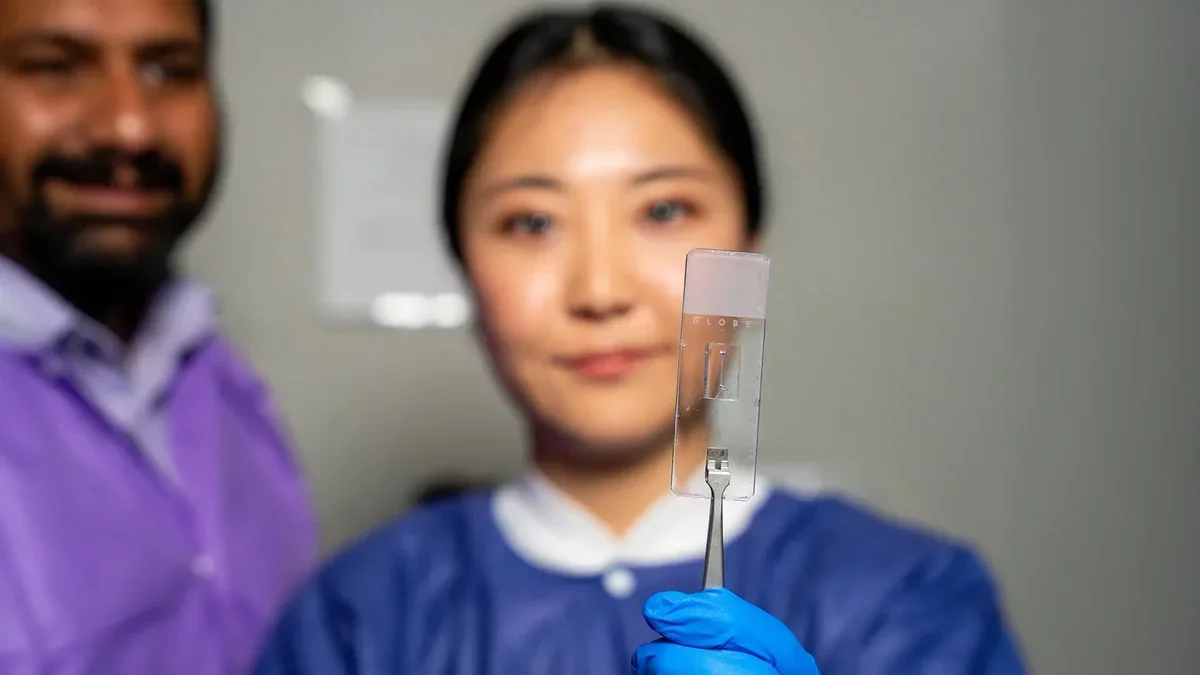
In a groundbreaking achievement, scientists from the Department of Biomedical Engineering at Texas A&M University have engineered a customizable vessel-chip system that accurately mimics the intricate structure of human blood vessels. This innovative method enhances the study of vascular diseases and serves as a robust platform for drug testing.
The vessel-chips are advanced microfluidic devices designed to replicate human blood vessels on a micro scale. They can be personalized for individual patients, providing a non-animal alternative for investigating blood flow and assessing potential treatments. Jennifer Lee, a master's student in biomedical engineering, collaborated with Dr. Abhishek Jain to create a sophisticated vessel-chip that captures the diverse shapes found in actual blood vessels.
"Our model accommodates various vessel types, including branched vessels and aneurysms, which alter blood flow patterns significantly. These variations impact the shear stress experienced within the blood vessels," Lee explained. "Our goal was to replicate these dynamics."
Innovating Beyond Traditional Designs
Lee's research builds on previous work conducted in the same lab. A few years prior, her mentor, Dr. Tanmay Mathur, developed a straightforward vessel-chip design. Both projects were executed in the Bioinspired Translational Microsystems Laboratory, led by Jain, who is also an associate professor and a faculty fellow in biomedical engineering. Lee's findings were published in Lab on a Chip and will feature on the cover of the journal's May 2025 edition.
"We are now able to explore vascular diseases in unprecedented ways," Jain remarked. "These structures can be made complex, allowing us to incorporate actual cellular and tissue materials, making them living models. Understanding these sites is crucial for addressing vascular diseases."
From Student Research to Scientific Publication
Lee joined Jain's lab as an undergraduate honors student eager for hands-on research experience, initially unfamiliar with organs-on-a-chip technology. Her growing interest in this field motivated her to continue her studies through the Master of Science fast-track program.
"Jennifer showcased determination, curiosity, and creativity, quickly engaging in meaningful research projects. Our fast-track program empowers students like her to undertake impactful research and see it through to publication," Jain noted.
Enhancing Complexity in Living Vessel Models
While the current design of the vessel-chip offers a more authentic representation of blood vessels, the research team aims to expand their work. Presently, Lee's model includes only endothelial cells--the cells forming the blood vessel lining--but future iterations may introduce additional cell types. This inclusion could enhance understanding of tissue interactions and blood flow dynamics.
"We are advancing towards what we term the fourth dimensionality of organs-on-a-chip, emphasizing not just cells and flow, but their interactions in increasingly complex architectural configurations, marking a new frontier in the field," Jain explained.
Developing Skills Beyond the Lab
In addition to gaining technical expertise, Lee credits the lab environment for fostering essential skills that extend beyond academic learning. Collaborating with peers, graduate students, and postdoctoral researchers has provided her with valuable experience in teamwork, communication, and problem-solving.
"The lab offers an excellent environment for interacting with others, allowing us to learn about collaboration, work ethic, and experimentation. It's an invaluable opportunity for students," she stated. "We have exceptional faculty-led research labs."
This project received support from various esteemed organizations, including the U.S. Army Medical Research Program, NASA, the Biomedical Advanced Research and Development Authority, the National Institutes of Health, the U.S. Food and Drug Administration, the National Science Foundation, and the Texas A&M University Office of Innovation Translational Investment Funds.