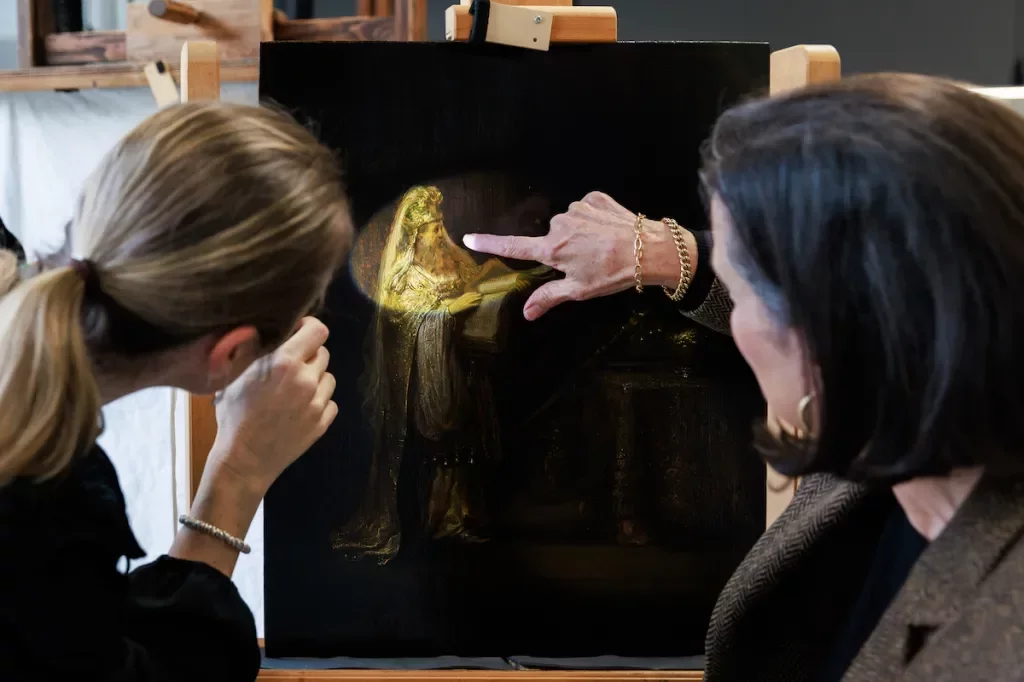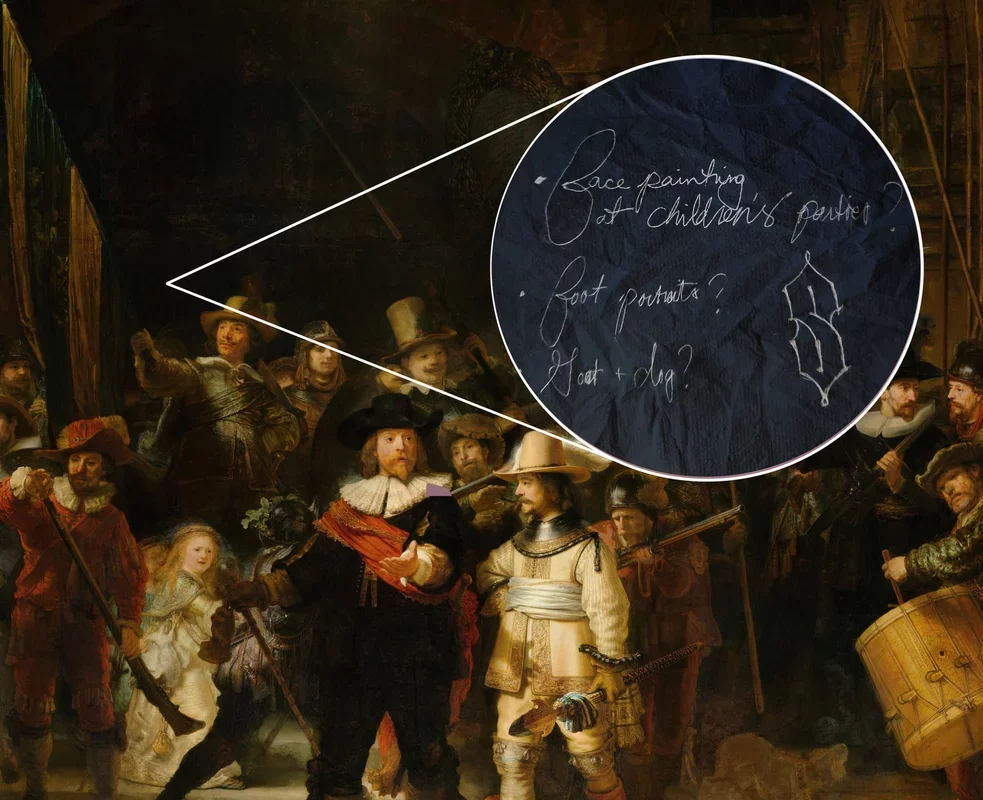
Recent conservation efforts on Rembrandt van Rijn's iconic painting, "The Night Watch" (1642), have unveiled a fascinating glimpse into the artist's early thoughts on potential business ventures. Researchers at the Rijksmuseum discovered a handwritten list of unconventional business ideas inscribed on the raw canvas beneath the masterpiece.
Utilizing advanced macro X-ray fluorescence (MAXRF) technology, scientists were able to identify a series of rather peculiar entrepreneurial concepts. Among these ideas was a proposal for a for-profit psychiatric institution aimed at supporting painters affected by toxic materials. This list dates back to shortly after Rembrandt opened his first studio at just 19 years old in 1625.
Interestingly, the artist also contemplated a variety of whimsical endeavors, including face-painting at children's parties, running an umbrella repair shop, crafting luxury combs from fish bones, breeding cross-bred dogs and goats for pets, and even marketing himself as a foot portrait artist.
Snacko Gibbetz, a researcher involved in the project, noted, "We have confirmed that the list was written in red chalk, a material favored by Rembrandt as a draughtsman. The handwriting is unmistakably his, characterized by the same distinctive flourishes and exaggerated loops found in his letters."
The Rijksmuseum expressed its astonishment at this discovery, emphasizing the unexpected nature of these ideas during the Dutch Golden Age, a period marked by significant commercial and maritime prosperity. "It is quite puzzling to see an artist of Rembrandt's caliber considering such unusual and mundane revenue streams," the museum stated.
Gibbetz humorously speculated on the reasons behind Rembrandt's shift back to painting, suggesting, "I can't help but wonder if an incident, perhaps involving oils at a face-painting gig, led him to abandon the list and return to his studio." He added, "It's fortunate he didn't pursue the combs; sculpting wasn't his strong suit."
This intriguing revelation not only sheds light on Rembrandt's creative process but also serves as a reminder of the diverse paths artists may consider before finding their true calling. The implications of such discoveries could enrich our understanding of artistic evolution and the myriad influences that shape a creator's journey.