Last fall, a startup unveiled its intention to use generative AI to recreate lost scenes from Orson Welles' iconic film "The Magnificent Ambersons." Initially, I found this concept perplexing, questioning the rationale behind investing resources into a project that could potentially alienate film enthusiasts while lacking substantial commercial appeal.
This week, a comprehensive profile by Michael Schulman in the New Yorker shed light on the initiative. It reveals the heartfelt motivation behind the startup, Fable, and its founder, Edward Saatchi, stemming from a profound admiration for Welles and his cinematic legacy.
Saatchi, whose father co-founded the renowned advertising agency Saatchi & Saatchi, reminisced about his childhood spent watching films in private screenings with his passionate parents. He first encountered "Ambersons" at the age of twelve.
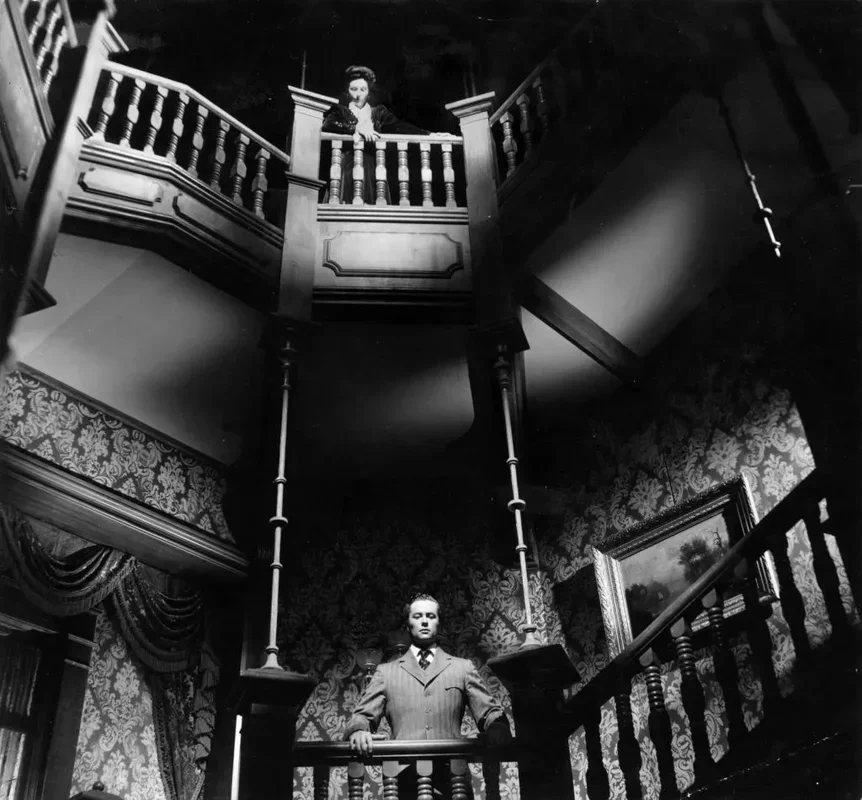
The article highlights that, although "Ambersons" is less celebrated than Welles' earlier masterpiece "Citizen Kane," it remains a tantalizing enigma. Welles himself regarded it as superior to "Kane," but a disastrous preview led to the studio cutting 43 minutes from the film and ultimately destroying the excised footage.
"To me, this is the holy grail of lost cinema," Saatchi expressed. "It just seemed intuitive that there would be some way to undo what had happened."
Saatchi is not the only admirer of Welles dreaming of restoring the lost footage. Fable is collaborating with filmmaker Brian Rose, who has invested years attempting to recreate the scenes through animation based on the film's script, photographs, and Welles' notes.
While Fable employs cutting-edge technology by filming live-action scenes and later overlaying them with digital renditions of the original actors, this endeavor can be seen as a more sophisticated and well-funded evolution of Rose's previous efforts. It represents a fan's quest to unveil Welles' artistic vision.
Notably, the New Yorker piece features clips of Rose's animations alongside images of Fable's AI-generated actors, but it lacks any footage showcasing the results of Fable's live-action-AI fusion.
Fable acknowledges the significant hurdles ahead, from correcting glaring errors, like a two-headed version of actor Joseph Cotten, to the more nuanced challenge of replicating the intricate lighting and shadows characteristic of Welles' style. Saatchi even mentioned a "happiness" dilemma, where the AI tends to portray female characters in an overly cheerful manner.
Regarding the potential public release of this footage, Saatchi admitted it was a misstep not to consult Welles' estate prior to the announcement. Since then, he has been actively seeking to gain the approval of both the estate and Warner Bros., the rights holder of the film. Welles' daughter, Beatrice, expressed her initial skepticism but acknowledged that she now sees the project being approached with great respect for her father and the film.
Simon Callow, an actor and biographer currently penning the fourth volume of his Welles biography, has also agreed to lend his expertise to the project, describing it as an "excellent idea." Callow shares a personal connection with the Saatchi family.
However, not all voices are in favor. Melissa Galt noted that her mother, actress Anne Baxter, would have disapproved of this initiative, stating, "It's not the truth. It's a creation of someone else's truth. But it's not the original, and she was a purist."
While my perspective on Saatchi's ambitions has softened, I am reminded of a recent essay by Aaron Bady, who compared AI to vampires, asserting that both will ultimately fall short in the realm of art. Bady emphasized that the awareness of mortality and limitations is what makes artistic expression possible.
In this context, Saatchi's belief that "there would be some way to undo what had happened" may come off as somewhat naïve, reflecting a reluctance to accept that certain losses are irreversible. This sentiment parallels a startup founder's claim to eliminate grief or a studio executive's insistence on a happy ending for "The Magnificent Ambersons."