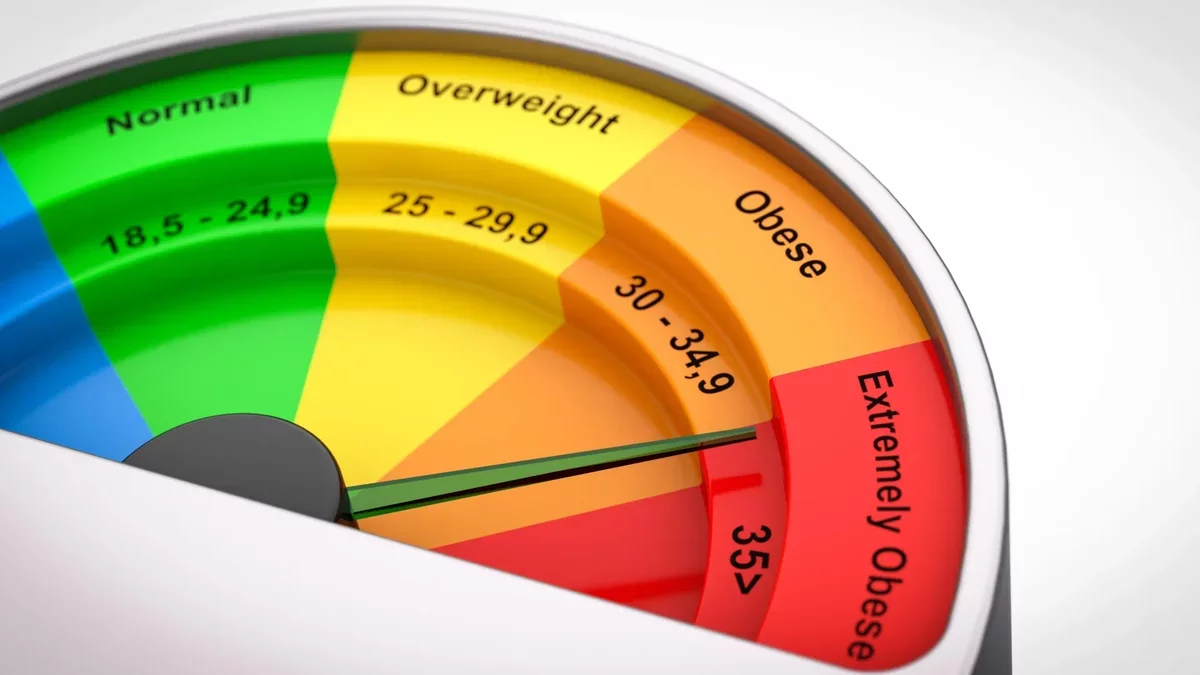
The Body Mass Index (BMI) has come under scrutiny as it fails to accurately assess body fat and its distribution. Professor Marwan El Ghoch from the University of Modena and Reggio Emilia emphasizes that these limitations hinder BMI's ability to reflect true adiposity. Despite this, BMI continues to be a prevalent tool in clinical and non-clinical settings, including general practice and health insurance.
Study Employs DXA for Enhanced Accuracy
To investigate BMI's reliability, researchers from the University of Verona and Beirut University analyzed a diverse population whose body fat was measured using Dual-Energy X-ray Absorptiometry (DXA). This advanced method provides a more precise classification of weight based on age and body fat percentage, offering a clearer picture of adiposity.
The study focused on 1,351 adults aged 18 to 98, with a majority being female (60%). All participants were referred to the Department of Neurosciences, Biomedicine and Movement Sciences at the University of Verona, and were predominantly White Caucasian, reflecting known BMI variations across different ethnicities.
According to the World Health Organization's BMI classifications, 19 participants (1.4%) were categorized as underweight (BMI under 18.5), 787 (58.3%) as normal weight (BMI 18.5-25), 354 (26.2%) as overweight (BMI 25-30), and 191 (14.1%) as obese (BMI over 30). This resulted in a combined overweight and obesity prevalence of approximately 41%, aligning with regional data from Veneto, Italy. Researchers then reassessed participants using the BF% determined by DXA.
Notable Misclassifications Identified
The comparison unveiled significant discrepancies. Among those classified as obese by BMI, over one-third (34%) were actually categorized as overweight based on DXA results. The misclassification was even more pronounced among individuals labeled overweight by BMI, with more than half (53%) miscategorized. Of these, approximately 75% were actually within the normal weight range, while the remaining 25% met obesity criteria.
Both BMI and DXA showed greater congruence among individuals classified as normal weight (BMI 18.5 to 25), with an alignment in 78% of cases. However, 22% of these individuals were categorized differently when assessed with DXA, revealing 9.7% as underweight, 11.4% as overweight, and 0.8% as obese.
The most significant discrepancies appeared in the underweight group, where two-thirds (68.4%) of those identified as underweight by BMI were reassigned to a different category by DXA, indicating they should be considered normal weight.
Ultimately, DXA results indicated a combined overweight and obesity prevalence of around 37% (23.4% overweight and 13.2% obese), contrasting with the 41% figure derived from BMI.
Call for Updated Weight Assessment Guidelines
Professor El Ghoch states, "Our findings reveal that over one-third of adults in the Italian population are misclassified under the traditional WHO BMI system, leading to an overestimation of underweight, overweight, and obesity prevalence compared to DXA measurements." Co-author Professor Chiara Milanese adds that while both systems may indicate similar overall rates of overweight and obesity, they do not always identify the same individuals, highlighting the need for improved classification methods.
The researchers advocate for updating public health guidelines in Italy to incorporate additional assessment tools alongside BMI, such as direct body composition measurements or simpler alternatives like skinfold assessments and waist-to-height ratios. They suggest that similar misclassification issues may also be present in other White Caucasian populations worldwide, necessitating further research to explore these findings across diverse ethnic groups.