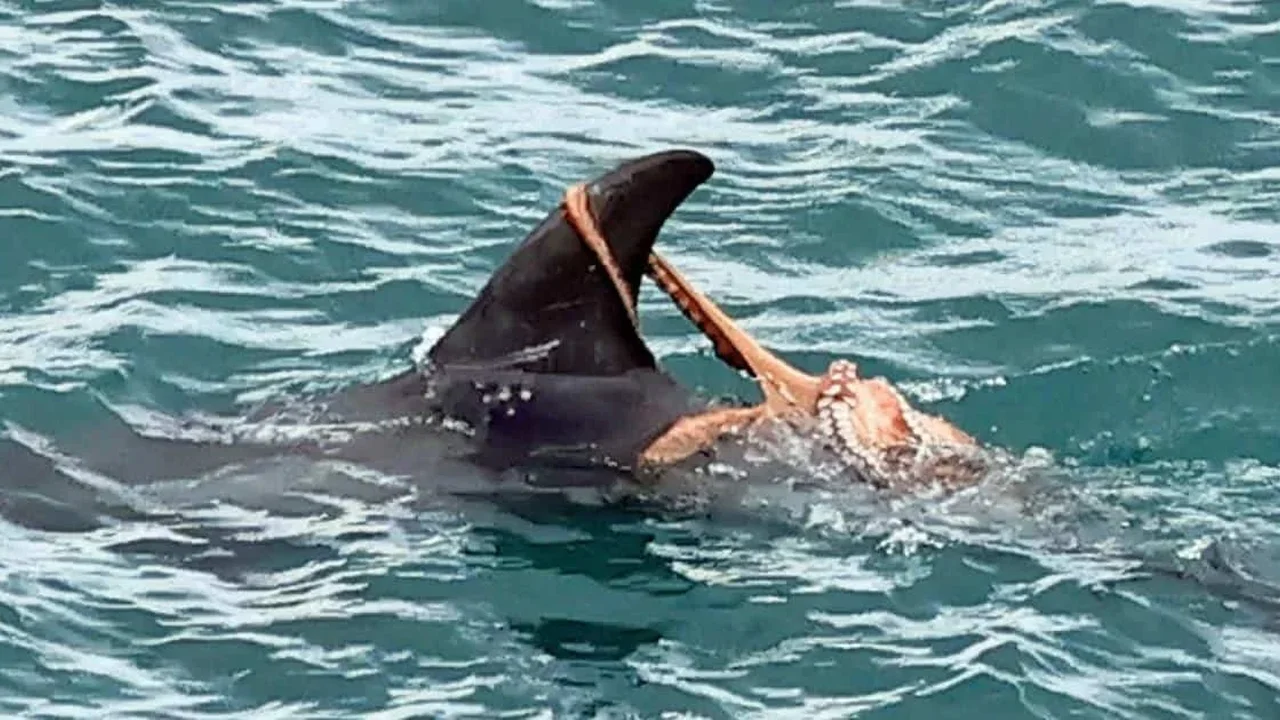
Waters off Berry Head in Devon have revealed an unusual marine interaction: a common octopus was observed clinging to the dorsal fin of a Risso's dolphin as the animal moved through the sea.
The moment coincides with an exceptional rise in common octopus numbers along the coasts of Devon and Cornwall. Researchers describe the increase as the largest recorded in the region for at least 75 years, creating new opportunities to study how marine species respond to shifting conditions.
A changing underwater food web
Risso's dolphins typically inhabit deeper offshore waters and feed largely on squid and other cephalopods, a group that includes octopuses. The encounter may offer a rare insight into how predator and prey interactions unfold when a food source becomes unusually abundant.
Scientists at the Marine Biological Association and the University of Exeter are tracking Risso's dolphins to better understand their feeding patterns and movements. Their work suggests that changing prey availability can influence how dolphins use coastal habitats.
In 2025, commercial common-octopus landings in the area reached nearly 65 times recent annual averages. Comparable blooms have only been documented a few times since the end of the 19th century.
Warm seas and new ecological patterns
Ocean-current modelling indicates that young octopuses may have reached southwest Britain from populations near the Channel Islands and northern France, supported by sustained easterly winds. Warmer water is also thought to have improved survival, growth and breeding success, with evidence suggesting successful reproduction in British waters.
The State of the South-West's Seas 2025 assessment described the period as the "Year of the Octopus," reflecting wider changes in marine life associated with warmer seas. Researchers stress that individual blooms have multiple causes, but note that past major events in the region have also coincided with unusually warm conditions.
This remarkable encounter underlines the close connections within coastal ecosystems. Continued monitoring could help reveal how warming seas reshape marine biodiversity, species behaviour and the future balance of life around Britain's shores.