Solar storms can significantly impact the technology we rely on daily. These storms occur when charged particles and magnetic fields interact with Earth's magnetic field, a phenomenon categorized as "space weather."
Currently, Earth is enduring one of the most severe solar storms in the last twenty years, highlighting the importance of developing methods to better understand such events.
An international research team is collaborating on a spacecraft mission designed to investigate the conditions that lead to solar storms, aiming to enhance space weather forecasting.
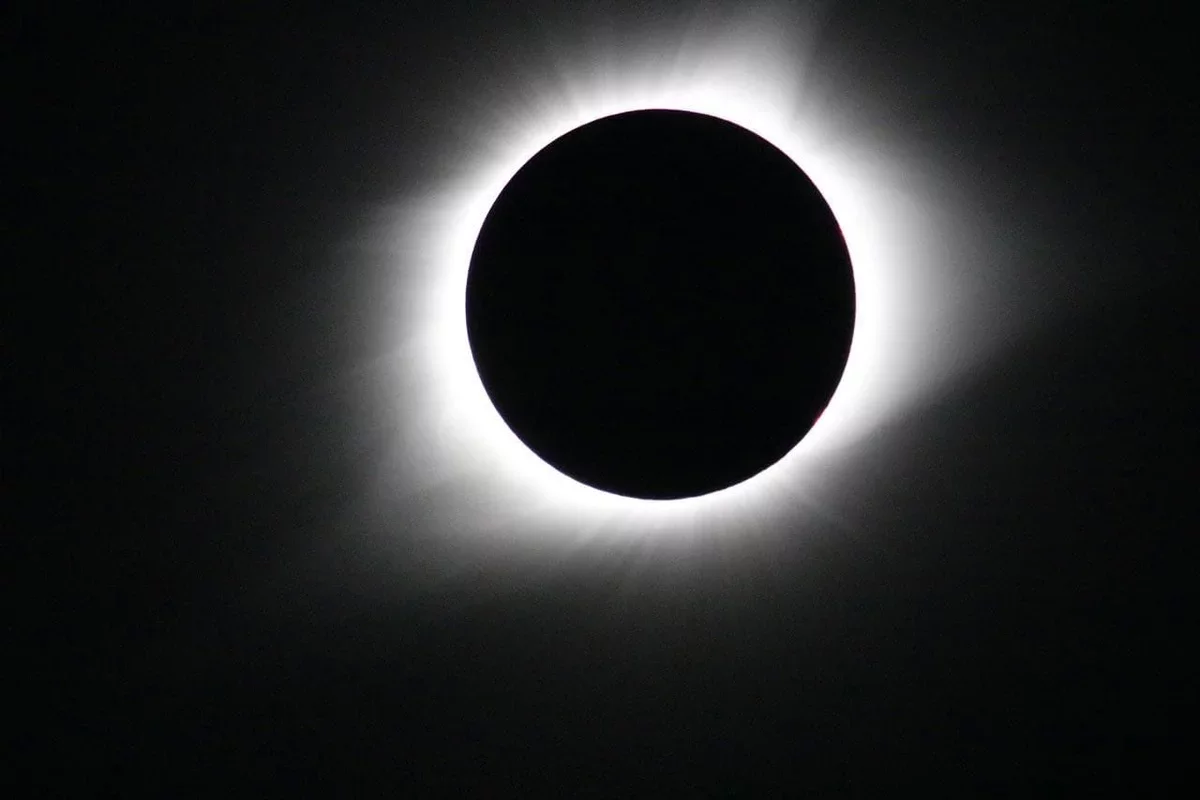
This initiative, named the Mesom (Moon-enabled Sun Occultation Mission), proposes to generate total solar eclipses in space, allowing scientists to observe the Sun's atmosphere with unprecedented clarity.
The necessity for improved solar storm comprehension is underscored by past incidents. For instance, in 1989, a powerful coronal mass ejection (CME) caused a nine-hour blackout in Quebec, Canada, resulting in significant financial losses.
In May 2024, a series of similar solar eruptions led to thousands of satellites in low-Earth orbit losing altitude, causing GPS disruptions that cost US farmers an estimated $500 million.
In contrast, the Carrington Event of 1859, a powerful CME, had severe repercussions on telegraph systems across North America and Europe, demonstrating the potential dangers of solar activity.
Today, a similar event would pose even greater risks to our technology-dependent society, as acknowledged by various UK governments since 2012.
Despite advancements, our ability to view the Sun's outer atmosphere, the solar corona, is hindered by its intense brightness. A new UK-led mission aims to overcome this challenge by recreating total solar eclipse conditions in space.
Enhanced Forecasting
During total solar eclipses, the Moon obscures the Sun's bright surface, revealing the faint glow of the corona. Observing the corona across various timescales and wavelengths is essential for improving space weather predictions and unraveling long-standing mysteries about solar dynamics.
However, total solar eclipses are infrequent and last only a few minutes. The predicted eclipses of the 21st century will each last under seven minutes, occurring roughly every 18 months.
Ground-based observations during these eclipses are affected by weather and atmospheric distortions, limiting the quality of data collected.
For decades, scientists have utilized coronagraphs--telescopes designed to block out the Sun's overwhelming brightness--to study the corona. Despite their utility, these instruments still struggle to capture the innermost layers of the solar atmosphere due to imaging artifacts and limitations.
Recent missions, such as the European Space Agency's Proba-3, attempt to recreate eclipse conditions with two satellites working in tandem. However, they too face challenges in imaging the solar atmosphere's deepest layers.
Utilizing Celestial Bodies
Another innovative approach proposed by UK Airbus engineers involves using celestial bodies as natural occulters. This method would allow a spacecraft to gather prolonged, high-quality measurements of the corona while avoiding atmospheric interference.
The Moon, being a nearly perfect sphere without a thick atmosphere, serves as an ideal natural occulter for this purpose. Engineers at the Surrey Space Centre are exploring the feasibility of using the Moon for solar corona studies through the Mesom concept.
Mesom is a mini-satellite mission that leverages the dynamics of the Sun-Earth-Moon system, enabling high-quality observations of the inner solar corona monthly, with observation windows lasting up to 48 minutes--far exceeding the duration of terrestrial total solar eclipses.
Supported by the UK Space Agency, the feasibility study for Mesom has evolved into a broader international collaboration led by UCL's Mullard Space Science Laboratory, involving institutions from Spain, the US, and Australia.
The mission is currently under consideration by the European Space Agency, with a proposed launch in the 2030s. It aims to provide at least 400 minutes of high-resolution observations during its two-year operational phase.
To gather the same volume of data on Earth would require over 80 years of waiting for eclipses, making Mesom a unique opportunity to uncover secrets of the Sun's atmosphere.