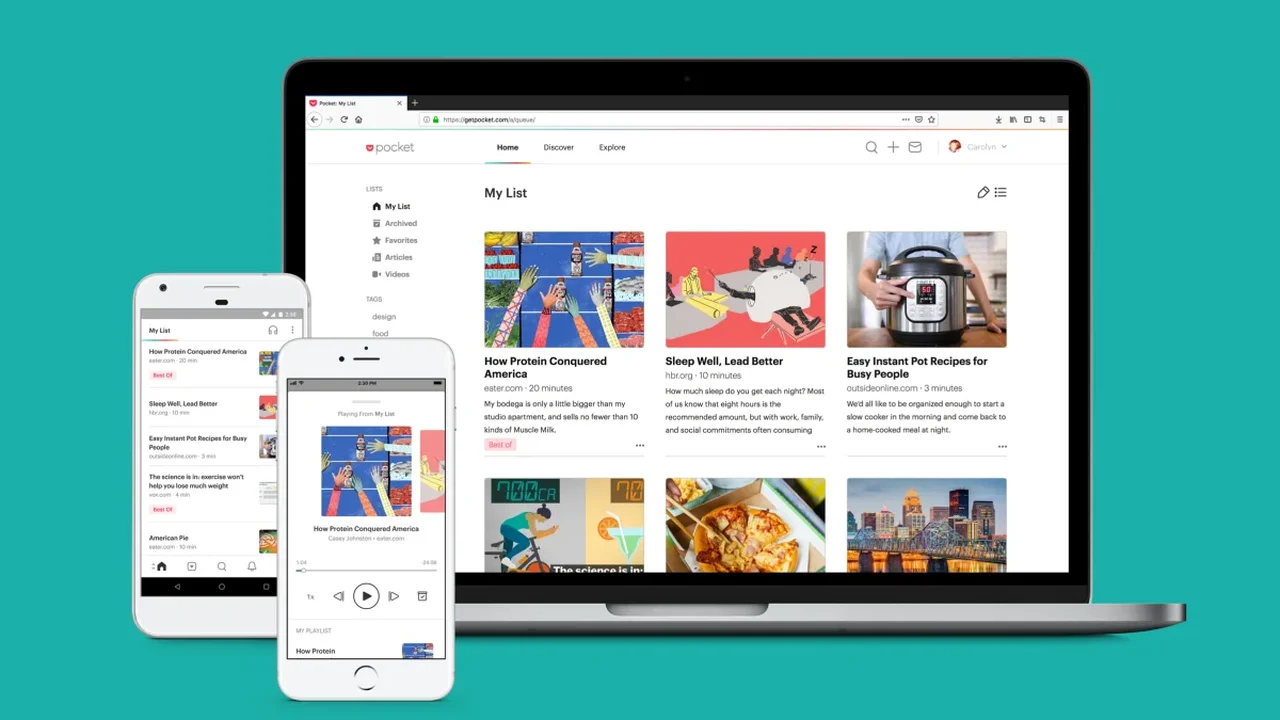
Mozilla's decision to close Pocket in 2025 has accelerated interest in read-it-later tools, pushing users toward apps that help organize articles, notes, videos, and research for later use. The shift reflects how digital reading habits are evolving, with more emphasis on cross-device access, AI support, and smarter content management.
Leading alternatives
Matter stands out with iOS support, browser extensions, article listening, and podcast transcription. Its premium plan adds stronger transcription, reading controls, and integrations with note apps, Gmail, and Kindle.
Instapaper, one of the oldest names in the category, remains a simple and reliable option for saving unlimited articles and videos. Its paid tier adds notes, permanent archives, text-to-speech playlists, search, and Kindle delivery.
Raindrop.io blends bookmarking with reading, offering unlimited saves on the free plan and AI-assisted organization on paid tiers. It is built for users who want a broader content library across web and mobile.
Other notable choices include Readwise Reader, which combines reading with annotation and AI tools; Wallabag, an open-source option with broad export support; and Obsidian Web Clipper, which connects saved web content directly to a personal knowledge base.
Newer apps such as Karakeep, Folio, Recall, and Omphalis show how the category is moving beyond simple saving. These tools increasingly use AI to summarize, tag, surface, and restructure information, turning reading lists into active knowledge systems.
As Pocket users migrate their archives, the market is becoming more diverse, more intelligent, and more personalized. This transition may shape the future of digital reading around smarter curation and seamless knowledge capture.