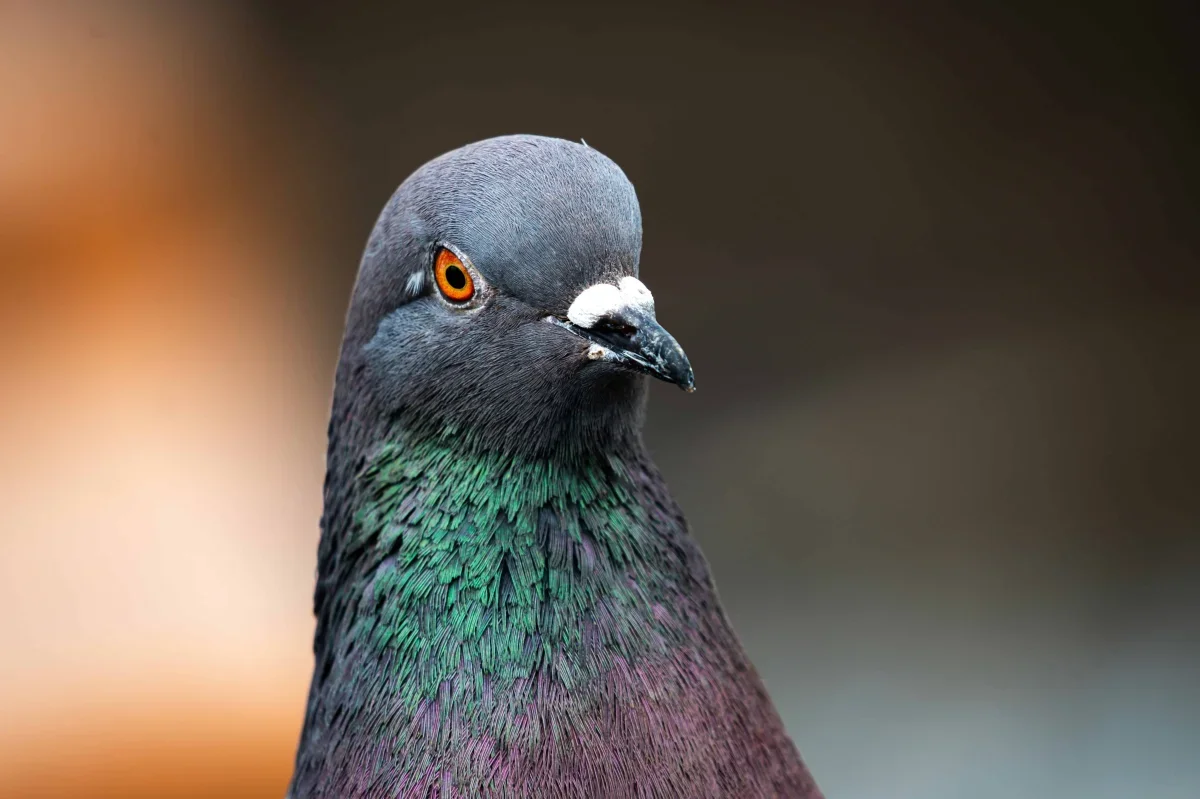
Long before the advent of artificial intelligence in medical diagnostics, a remarkable discovery emerged involving the common pigeon (Columba livia). In a groundbreaking study conducted in 2015, these small birds demonstrated an impressive capability: they could accurately distinguish between benign and malignant breast tissue images, achieving results comparable to trained professionals.
After just two weeks of training, individual pigeons attained an accuracy rate of around 85% in identifying cancerous samples. Even more astonishing, when collaborating as a group, their accuracy soared to an extraordinary 99% in specific diagnostic tasks.
A Bird Brain for Pattern Recognition
Despite their small brain size, comparable to a human's fingertip, pigeons excel in recognizing complex patterns. Research shows that they can identify human faces, emotional expressions, and even artworks by renowned artists like Monet and Picasso. In the 2015 study led by Professor Richard Levenson from the University of California, Davis, and Professor Edward Wasserman from the University of Iowa, pigeons were trained to analyze digitized breast biopsy slides. They pecked at buttons corresponding to benign or malignant tissue, receiving food as a reward for correct responses.
The pigeons exhibited remarkable memory, recalling over 1,800 images, including those that were very similar. However, their true strength lay in recognizing new images they had never encountered before, focusing on visual features indicative of malignancy. When researchers combined the decisions of four pigeons--a method humorously termed "flock-sourcing"--the accuracy reached 99%.
While these findings were based on controlled images, the pigeons struggled with more complex tasks, such as evaluating suspicious mammographic masses. Nevertheless, their performance is a testament to their unique abilities.
The Evolutionary Edge
The pigeons' aptitude for image analysis may stem from evolutionary adaptations. Their survival depends on quickly scanning diverse environments filled with visual cues--recognizing food hidden among pebbles or detecting predators. This instinctual skill translates well to the task of identifying cancerous tissues.
In the study, pigeons were tested on images of breast tissue at various magnifications, mirroring the methods used by pathologists. They learned to classify images even when color cues were diminished or when images were compressed--a vital aspect in modern digital pathology.
A recent study proposed that pigeons arrive in laboratories already "pre-trained" by their aerial views, which may share visual characteristics with stained tissue slides. This hypothesis was supported by experiments using neural networks trained on aerial images, which mirrored the pigeons' performance on histopathology tasks.
As we look to the future, the insights gained from these studies highlight the importance of visual recognition in diagnostics. While pigeons won't be replacing medical professionals, their unique abilities could inspire advancements in AI and medical training, enhancing our understanding of how various eyes--human, animal, or artificial--perceive and diagnose disease.