Philip Guston's artistic journey took a decisive turn in the late 1960s, when he moved from abstraction toward a more figurative, cartoon-like visual language. That shift unfolded alongside a deep exchange with poets, especially Clark Coolidge, whose work he illustrated in drawings, magazine covers, and small-press publications.
The exhibition Life With P. - Philip Guston: Paintings and Drawings 1964-1978 at Hauser and Wirth highlights this period of reinvention, showing how Guston reduced drawing to its essentials: line, shape, and a few charged marks. His collaboration with poets was not peripheral to his practice; it helped shape the way he thought about image, rhythm, and meaning.
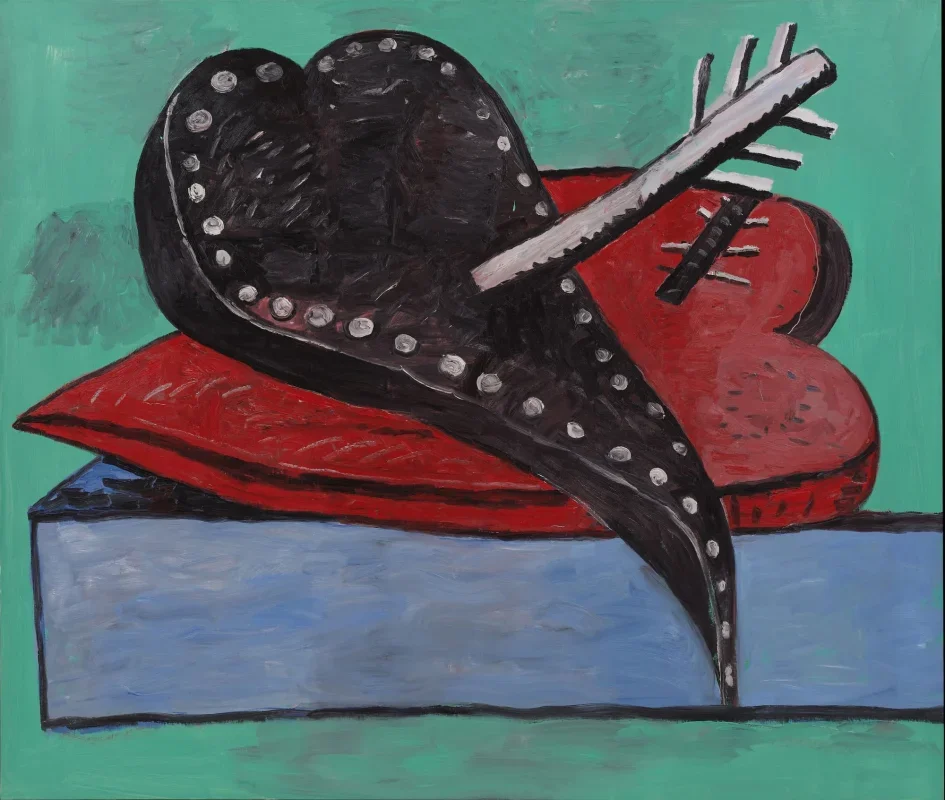
Among the works on view are paintings that center on his relationship with Musa McKim, his wife and creative partner. In pieces such as Untitled (1976), Blue Cover (1977), and Two Hearts (1978), Guston uses restrained compositions and vivid color to explore intimacy, vulnerability, and the passage of time. Pink, blue, gray, and cadmium red create a tension between warmth and unease, giving the paintings a distinctive emotional charge.
The exhibition also includes poem-drawings made with McKim's texts, revealing a shared attention to ordinary objects and daily life. Her concise writing and Guston's evolving visual vocabulary meet in a language of shoes, books, teapots, bricks, and other familiar forms. These motifs reflect his move away from polished abstraction toward a more personal, tactile world.
By placing poetry and painting in conversation, the exhibition shows Guston's belief that art can be both intimate and intellectually restless. His work from this period continues to resonate as a model of creative reinvention, where simplicity becomes a powerful tool for expression and future artistic dialogue.