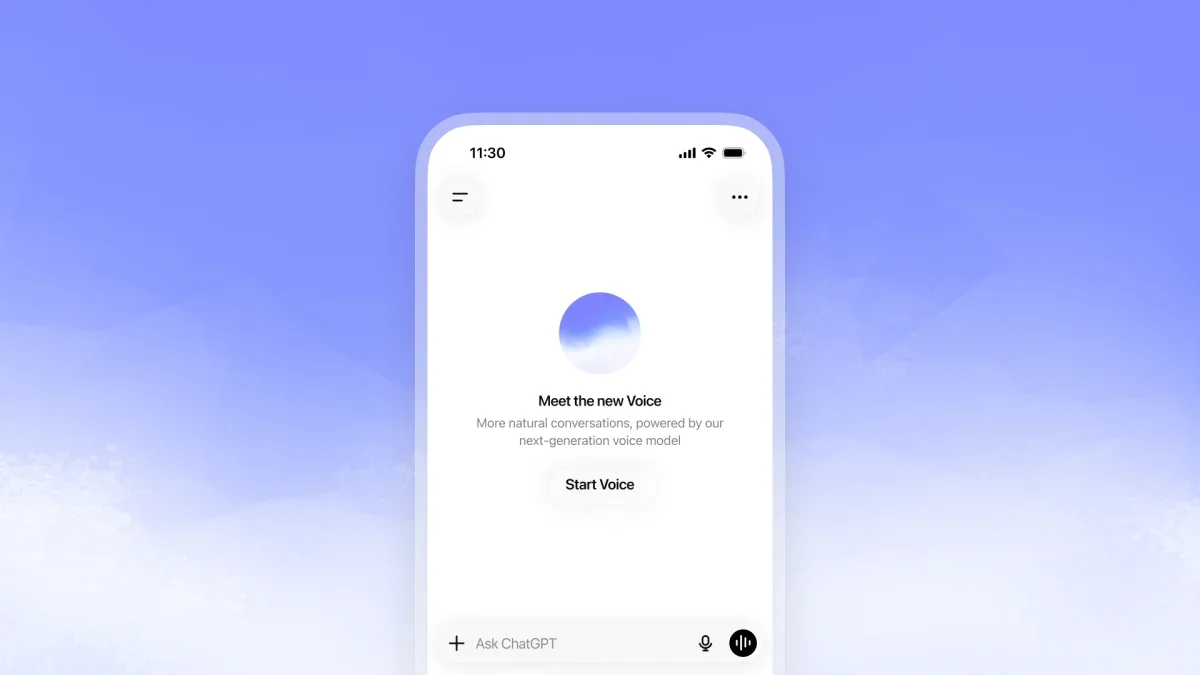
OpenAI has unveiled GPT-Live-1 and GPT-Live-1 mini, two new conversational models designed to make spoken interactions feel smoother, faster, and more human-like. Built as full-duplex systems, they can listen and respond at the same time, making interruptions, pauses, and turn-taking feel far more natural.
The company said GPT-Live-1 mini will become the default voice experience in ChatGPT, while paid users will also gain access to the larger GPT-Live-1 model. The new setup moves beyond the earlier pipeline of speech recognition, language generation, and text-to-speech by creating a more integrated conversation flow.
OpenAI says the upgrade is meant to reduce awkward overlaps, improve response quality, and support longer exchanges. The models can also route requests to newer text systems such as GPT-5.5 for search, reasoning, and agent-like tasks while the conversation continues in real time.
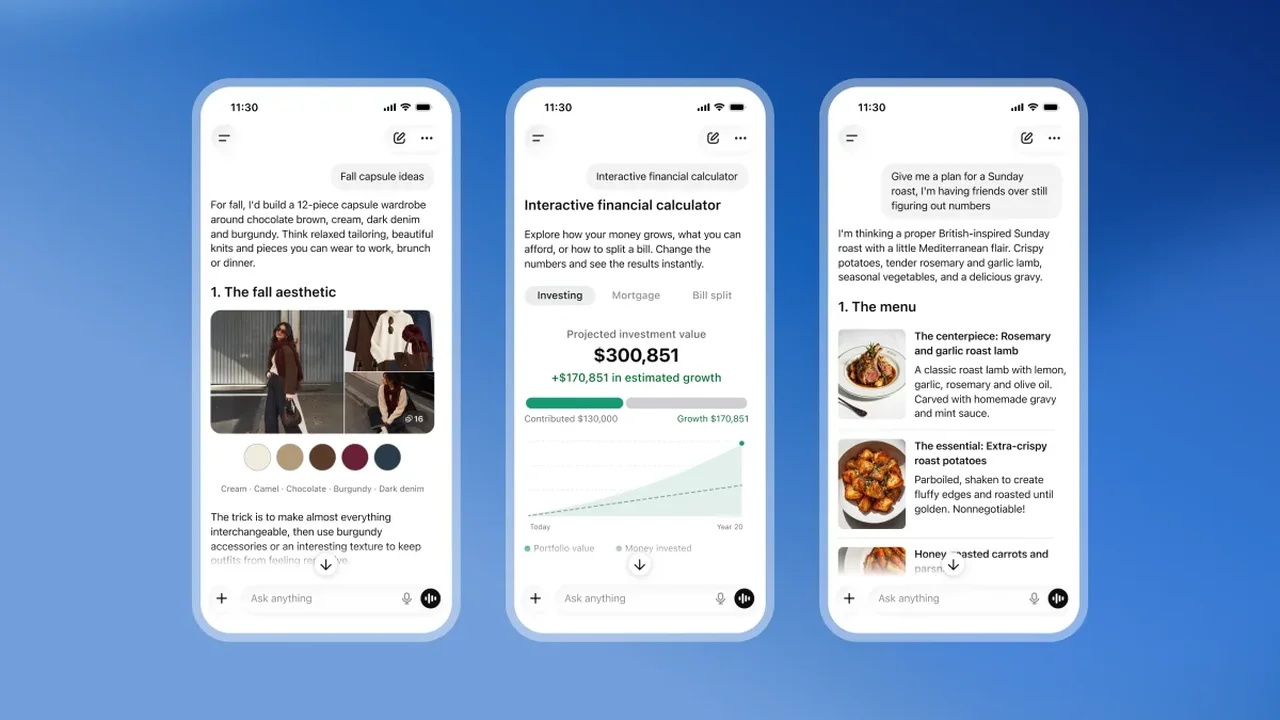
Another key feature is the ability to remain quiet and absorb context until the user speaks again. In demonstrations, the voice system also showed support for visual-style responses, reflecting a broader trend in AI assistants becoming more interactive and adaptable.
OpenAI noted that more than 150 million people already use voice and dictation tools in ChatGPT. The company also positioned voice as a possible future interface for complex work, where users could manage long-running tasks through natural speech instead of traditional menus and screens.
At the same time, OpenAI said the new mode is not designed as an AI companion. It includes safeguards for age-appropriate replies and guidance in sensitive conversations. While the system still has room to improve in some languages, the launch marks another step toward voice-first computing that could reshape how people interact with digital tools in the years ahead.