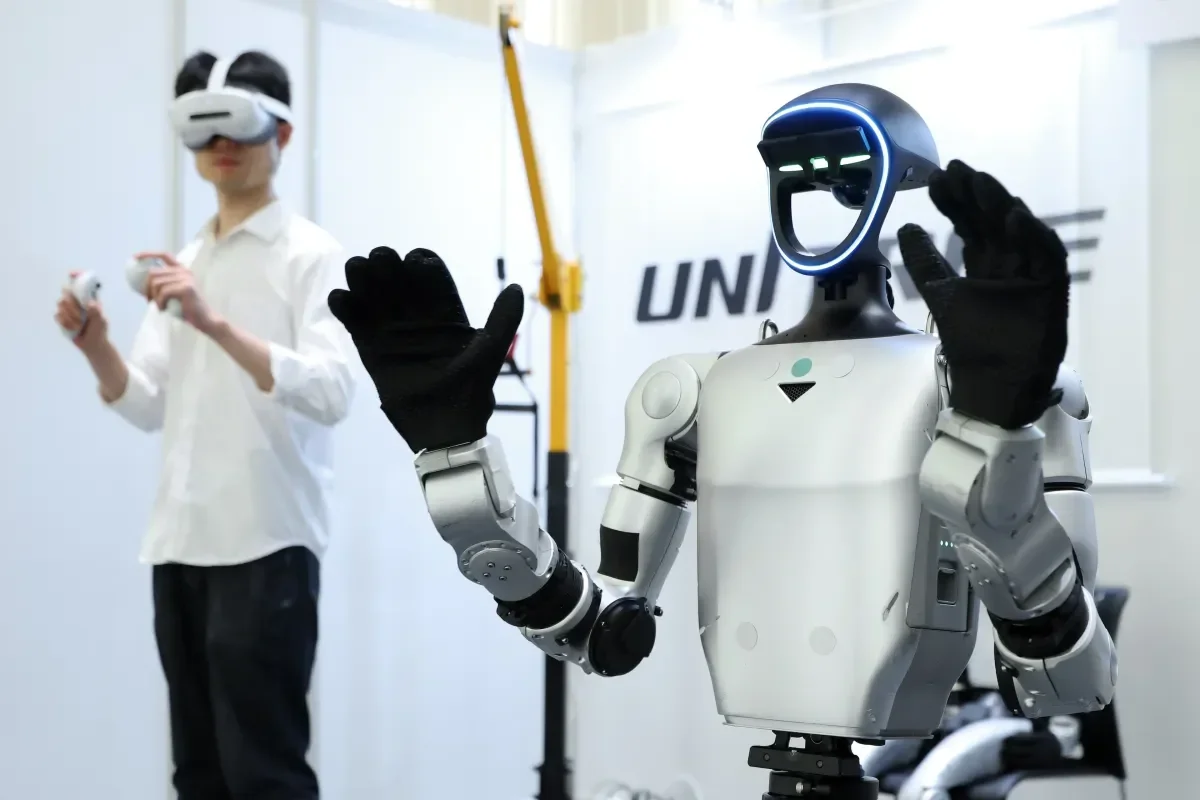
The Pentagon has recently expanded its list of companies it claims support the Chinese military, adding major players such as Alibaba, Baidu, electric vehicle manufacturer BYD, and robotics innovator Unitree. This move signifies a potential tightening of restrictions for U.S. companies engaging with these entities, further intensifying the ongoing tensions between the United States and China.
Known as the 1260H list, this compilation was established under the 2021 National Defense Authorization Act and serves as a mechanism for the U.S. to impose limitations on Chinese technological enterprises. Historically, various administrations, including that of President Donald Trump, have employed tariffs to exert pressure on China, exemplified by the imposition of a 100% tax on imported Chinese electric vehicles.
This update to the 1260H list was initially made public in February but was subsequently removed from the Federal Register without explanation. As reported by Bloomberg News, the current iteration includes a total of 188 companies, with the majority of China's leading artificial intelligence firms now represented, following the addition of Tencent last year.
Alongside the tech companies, the Pentagon has also incorporated several automotive industry participants this year. In addition to BYD, the list now features Nio, known for its stylish electric vehicles, and battery manufacturers CALB Group and EVE Energy. Furthermore, Robosense, a prominent manufacturer of lidar sensors, joins its rival Hesai on the list, while Baidu stands out as a leader in autonomous vehicle technology.
As this situation evolves, the implications for international business and technological collaboration are significant. The growing restrictions may reshape the landscape of U.S.-China interactions in the tech sector, potentially leading to a future where innovation is driven by more localized solutions.