Electric vehicle enthusiasts and smartphone users are increasingly excited about the potential of silicon anode batteries, which promise significant improvements in energy density and reduced charging times.
Over the past decade, various companies have been exploring silicon anodes, with some starting to integrate this technology into consumer gadgets. For instance, wearable technology company Whoop has adopted materials from Sila, while Group14's innovative batteries are already featured in a range of smartphones.
However, the real opportunity lies within the electric vehicle sector, which surpasses consumer electronics in scale, as reported by Benchmark Minerals. To penetrate this market effectively, startups must ramp up production of silicon anode materials to unprecedented levels.
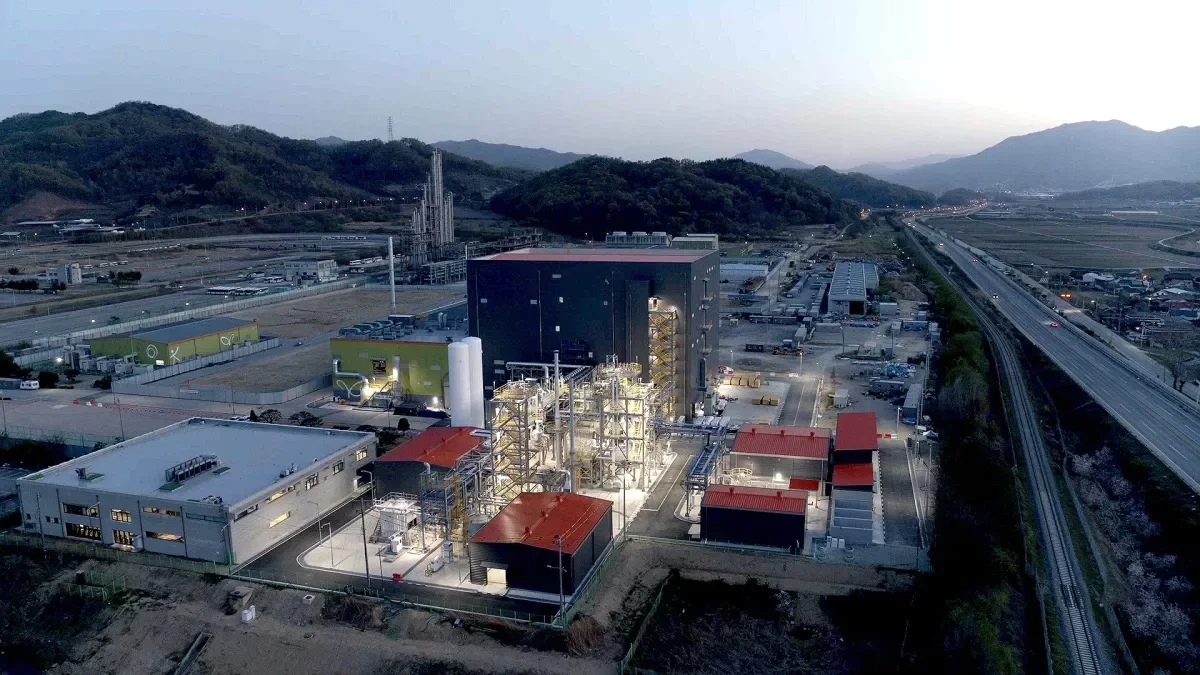
In a decisive move, Group14 has commenced operations at its BAM-3 factory located in South Korea, which is designed to produce up to 2,000 metric tons of silicon battery materials annually. This output is sufficient to support around 10 gigawatt-hours of energy storage, equivalent to powering approximately 100,000 long-range electric vehicles.
"This is a significant milestone for us and a pivotal moment for the industry," stated Rick Luebbe, co-founder and CEO of Group14.
The BAM-3 facility originated from a collaboration between Group14 and SK, a leading Korean battery manufacturer. Initially, SK held a 75% stake in the project but divested its interest to Group14 last summer.
"SK faced various challenges, including financial issues and a shift in their battery strategy, which created an opportunity for us to take over," Luebbe explained.
Group14 has partnered with several prominent companies, including Porsche's Cellforce Group, StoreDot, Molicel, and Sionic. Porsche has also invested in Group14 through its venture arm.
Traditionally, modern batteries utilize carbon for anodes, which, while effective, do not match the potential of silicon. Silicon can accommodate up to ten times more lithium ions, but its durability has been a concern due to swelling and crumbling during charging cycles.
Group14 addresses these challenges by employing a hard carbon scaffold that securely holds tiny silicon particles, preventing deterioration. This innovative structure features nanoscale holes that facilitate the movement of lithium ions and electrons, enhancing the anode's charging speed without compromising its integrity.
Some of Group14's clients, such as Sionic, are leveraging silicon anodes to increase energy density by as much as 50%. Others, like Molicel, are focusing on rapid charging capabilities, with designs that can fully charge a battery in just 90 seconds.
This application of silicon anodes could revolutionize the electric vehicle landscape. For instance, BYD, a Chinese electric vehicle manufacturer, recently unveiled a battery pack capable of charging from 10% to 70% in only five minutes. Luebbe suspects that BYD's innovation involves silicon-carbon technology.
Should charging infrastructure adapt to support such fast-charging electric vehicles, concerns about range could diminish significantly. Automakers are currently striving to achieve 300 to 400 miles of range, which necessitates larger batteries that add weight and cost. Quick charging solutions could enable manufacturers to design lighter, more cost-effective battery packs.
"I drive a Rivian with a hefty 130-kilowatt-hour battery, which is quite expensive," Luebbe remarked. However, with advancements in flash charging, concepts like inductive charging at traffic lights may soon become viable, making the idea of charging a vehicle almost obsolete.