OpenAI has reported that one of its internal AI models found a counterexample to a long-standing conjecture by mathematician Paul Erdős, reshaping a problem that has challenged researchers since 1946.
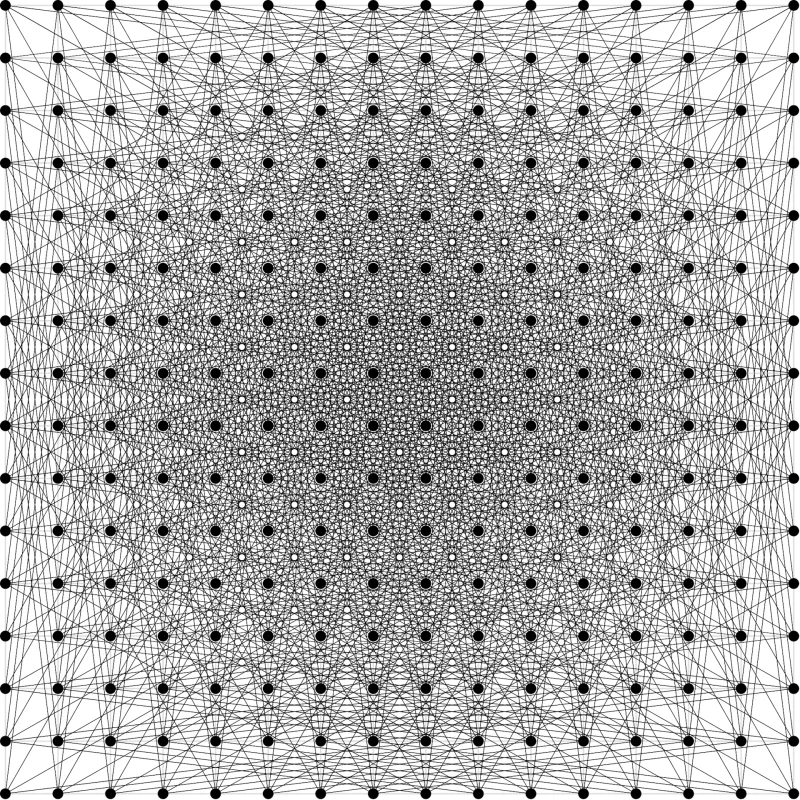
The puzzle, known as the planar unit distance problem, asks how many pairs of points can be placed exactly one unit apart on a plane. For decades, the square grid was seen as a strong candidate for the best arrangement, especially as the number of points grows.
According to the new result, that intuition does not hold in every case. The model identified point patterns that create more unit-distance pairs than the square grid for infinitely many values of n, using ideas from algebraic number theory.
Mathematicians have responded with strong interest. Canadian mathematician Daniel Litt called it the first AI-produced result he found genuinely compelling on its own, while Fields Medalist Timothy Gowers said a human-authored paper with the same result would have been worthy of publication without hesitation.
The development also stands out because it came from a general-purpose model rather than a system built specifically for mathematics. Soon after, US mathematician Will Sawin extended the reasoning to improve the result further, and a Google DeepMind team used its own model to solve nine smaller Erdős problems.
Beyond the specific theorem, the episode highlights a broader shift in research. AI is increasingly able to explore large idea spaces, test conjectures, and support the kind of mathematical discovery that once depended almost entirely on human persistence and intuition.
As these systems become more capable, they may help accelerate future breakthroughs in mathematics and other fields where pattern recognition and conceptual exploration matter most.