Researchers in Japan have identified an unusual new material formed where melted plastic and coral rubble become physically fused. Named plasticoral, the hybrid was documented on beaches in Okinawa by teams from the Okinawa Institute of Science and Technology and the University of the Ryukyus.
During shoreline surveys in August 2024, scientists collected five pieces of dead coral containing brightly coloured plastic. Three samples were found at Sosu Beach, while Ibu and Odo beaches each yielded one. The limited number means researchers cannot yet determine how common plasticorals may be.
A Material Locked Into Coral
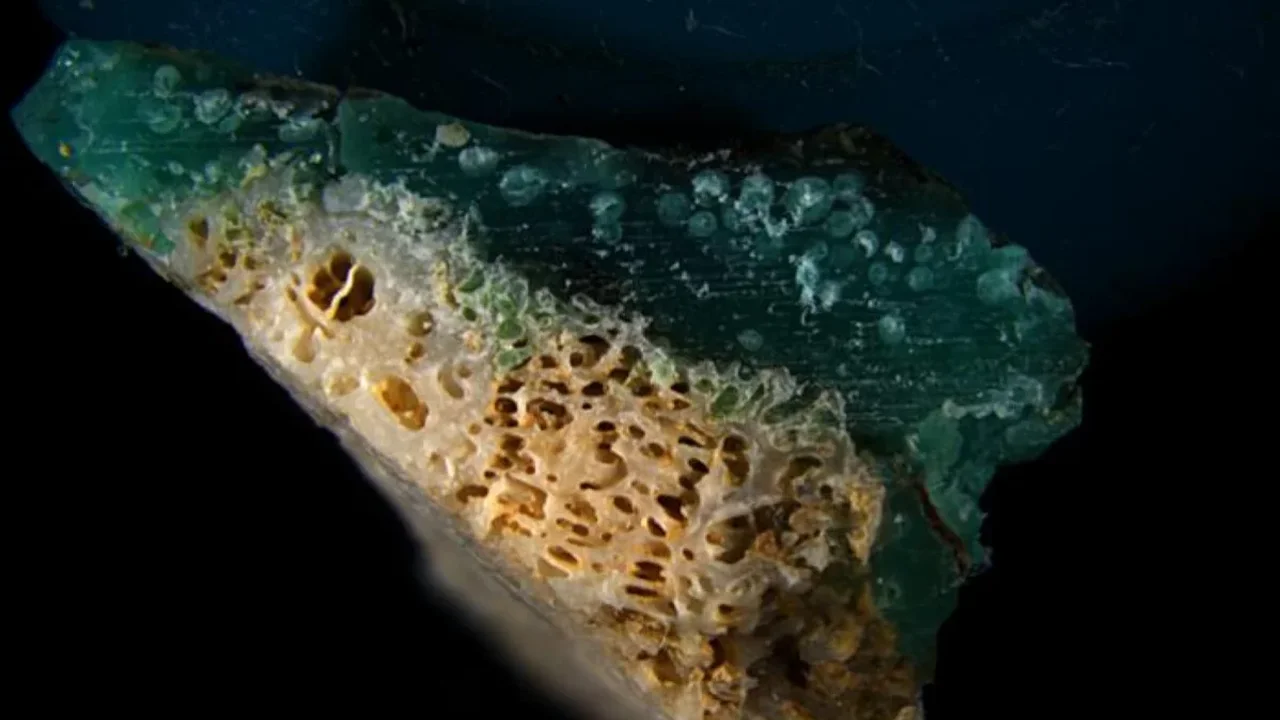
Laboratory analysis identified the embedded material as polyethylene in four samples and polypropylene in one. These widely used polymers had softened and flowed across the coral's complex surface, entering pores within its carbonate skeleton.
Microscopy and micro-CT imaging showed that the connection was more than surface-level contact: the plastic had mechanically locked into the coral structure. Researchers believe heat may be central to this process, particularly where coral rubble is used beneath beach fires.
Plasticoral differs from previously described materials such as plastiglomerates and plastic-coated rocks because it forms with biogenic coral carbonate. Its porous architecture provides spaces where softened polymer can settle and solidify into a single composite material.
A New Question for Reef Science
Coral rubble can move back into coastal waters, where it may contribute to reef structure and provide surfaces for young corals and small marine life. The study did not assess biological effects, but it highlights a new area for research into how hybrid materials interact with reef environments.
Published in Marine Pollution Bulletin, the research also raises an intriguing geological question: could these composites become part of future sediment layers? Broader surveys and controlled experiments will help determine whether plasticoral is a rare local finding or a wider coastal phenomenon.
As material science and marine research converge, plasticoral could offer a distinctive way to understand how human-made materials are becoming integrated into Earth's natural systems.