Fusion energy has long been regarded as a paradox. While the process of fusion itself can be relatively straightforward--illustrated by a recent undergraduate who successfully constructed a simple fusion device in his own room--the challenge lies in efficiently converting that reaction into usable electricity.
According to Daniel Velásquez, the materials science lead at Avalanche Energy, "There are fusion reactors capable of generating power, but the true innovation will be a reactor that effectively produces electricity." This distinction highlights the current stagnation in the industry.
Fusion reactions yield substantial energy by merging lighter atoms into heavier ones. However, the conventional method of harnessing this energy--utilizing steam turbines--has proven inefficient, achieving a maximum efficiency of only about 60%.
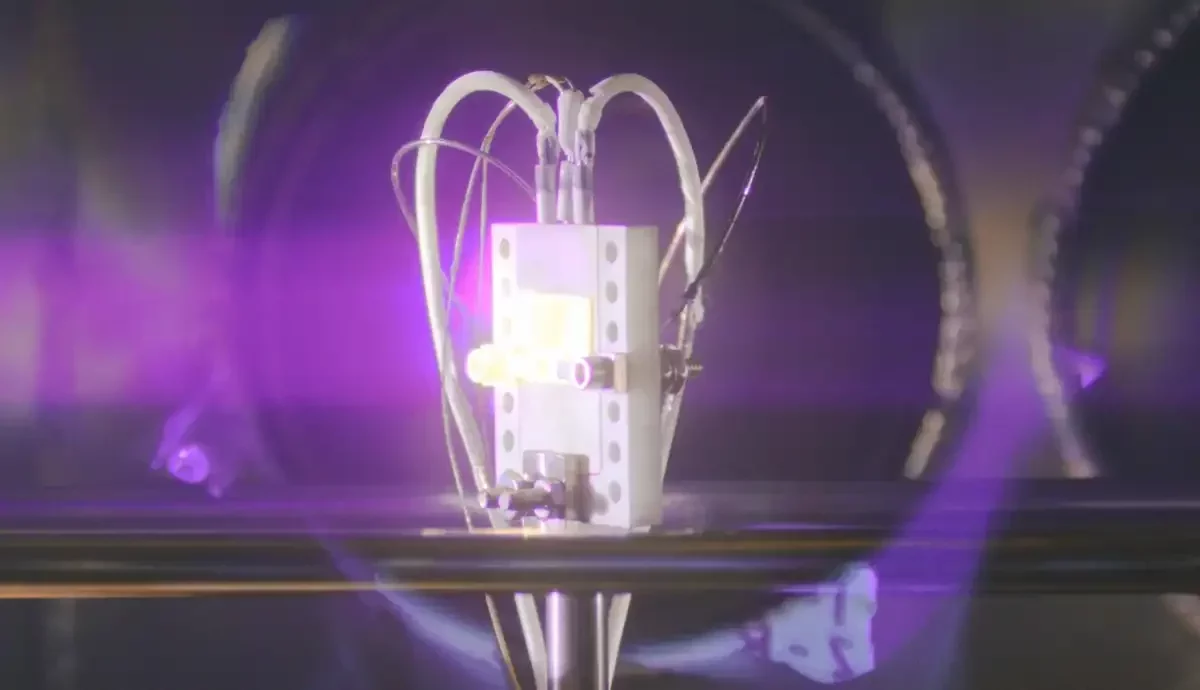
Avalanche Energy aims to enhance energy capture through the development of innovative materials termed radiovoltaics. These materials share similarities with traditional solar panels, employing semiconductors to convert radiation into electricity. Despite their potential, current radiovoltaic technologies face limitations, as they are prone to damage from the very radiation they collect and yield minimal electricity.
Recently, Avalanche Energy secured a $5.2 million contract from DARPA to advance their radiovoltaic technology. The Pentagon research agency is particularly interested in these materials for a new generation of nuclear batteries, which utilize radioactive decay from elements like polonium to generate electricity. Such batteries could power spacecraft and satellites for extended periods, and they may also support energy-intensive military operations where logistical constraints exist.
While this DARPA initiative aligns with Avalanche's broader objectives, the company is primarily focused on developing a desktop-scale fusion reactor that could replace diesel generators at remote military installations.
The challenge remains, as both fusion reactions and nuclear batteries emit alpha particles--high-energy radiation capable of damaging equipment, including reactor walls. By innovating new radiovoltaics for nuclear batteries, Avalanche could also enhance reactor components that capture alpha particles, thereby safeguarding the reactor and increasing its electricity output.
Additionally, Avalanche received a $1.25 million award from the U.S. Air Force's AFWERX research lab to leverage computational advancements for expedited materials discovery.
The race to achieve a scientific milestone known as breakeven--where the power generated by fusion exceeds the energy required to sustain it--continues among fusion startups. Effectively utilizing alpha particles to generate electricity could simplify the path to commercial fusion power.
Avalanche is not alone in developing reactors that produce alpha particles. Success in this endeavor could position the company to supply other fusion enterprises with essential technology, fostering collaborative advancements within the burgeoning sector.