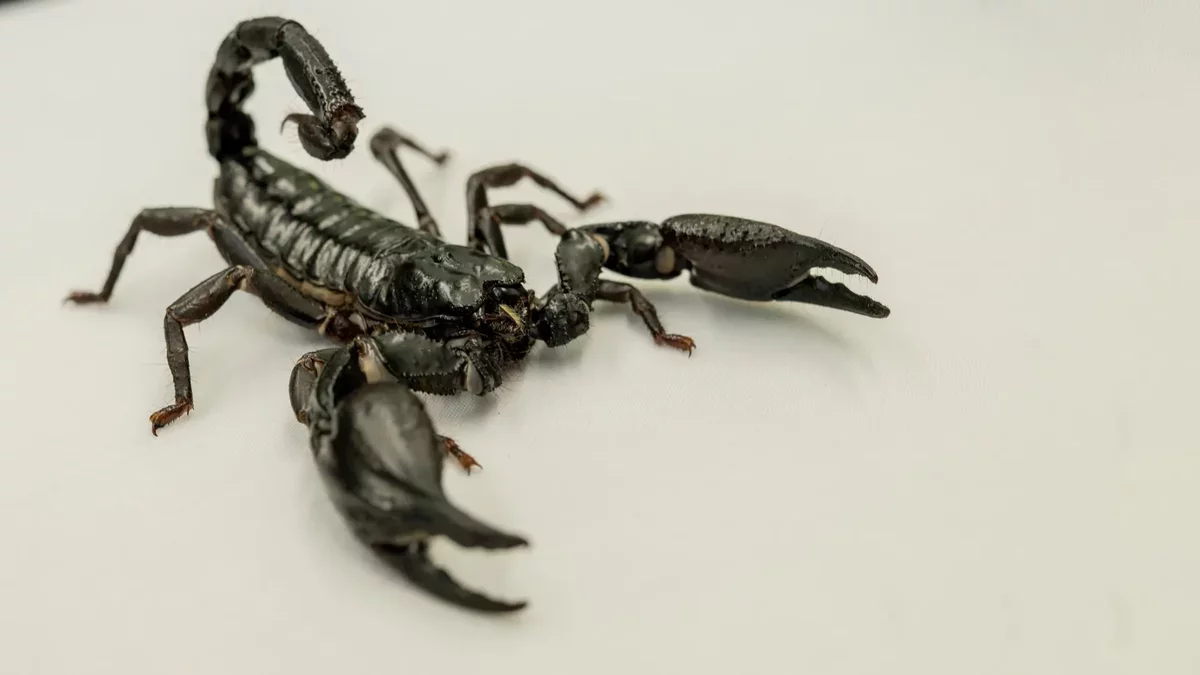
Scientists have conducted a groundbreaking study that maps the environmental factors influencing the distribution of highly venomous scorpions, providing crucial insights into where stings are likely to occur in tropical regions worldwide.
The research team combined field studies in Africa with sophisticated computer modeling techniques. This innovative approach enabled them to forecast the habitats of high-risk scorpion species and understand the environmental conditions that dictate their presence.
The findings revealed a significant correlation between soil type and scorpion distribution, while temperature--both average and seasonal--also plays a critical role for certain species.
Interestingly, not all scorpions behave similarly in response to their surroundings. Some species are adaptable and cover extensive areas, while others are confined to specific habitats, creating zones where the risk of stings is notably higher.
This project was spearheaded by researchers from the University of Galway, in collaboration with the University Ibn Zohr in Morocco. Published in the journal Environmental Research Communications, the study highlights central Morocco as a prominent hotspot for scorpion stings. The insights gained aim to enhance prevention strategies and facilitate the development of better diagnostic tools and antivenoms.
Dr. Michel Dugon, the Head of the Venom Systems Lab at the University of Galway and the study's senior author, emphasized the potential life-saving implications of the research. "By identifying areas where dangerous scorpions are likely to be found, health authorities can tailor awareness initiatives, train medical personnel, and focus community prevention efforts, particularly to protect vulnerable populations like children," he stated. This methodology can be adapted to regions globally, from Brazil to the Middle East and India.
Understanding Scorpion Stings as a Health Concern
Scorpion stings are a significant yet often neglected public health issue, especially in tropical and subtropical climates, with over 2 million people affected annually. While many stings result in mild symptoms, some species can deliver venom that leads to severe health complications or even fatalities, particularly among children and the elderly. Globally, scorpion stings are estimated to claim the lives of over 3,000 children each year.
Although antivenoms are available for various species, medical professionals frequently encounter challenges in identifying the specific scorpion responsible for a sting, complicating effective treatment.
Innovative Mapping Techniques
To bridge this gap, the researchers employed a computer-based mapping technique known as Maximum Entropy. This method allowed them to predict the habitats of dangerous scorpions and the environmental conditions they prefer.
By integrating globally available data on soil types, temperatures, and other habitat characteristics, the team demonstrated that high-risk scorpion areas can be identified beyond Morocco. This is particularly beneficial in tropical regions where detailed species distribution records are scarce.
The research involved collaboration among senior scientists and doctoral researchers from both universities, with support from undergraduate students from the University of Galway's Bachelor of Science Zoology program who travel to Morocco annually.
Dr. Dugon remarked, "Our understanding of scorpions, their venom, and the most effective treatments for stings is still limited. Our international collaborative efforts aim to develop new tools for prevention, diagnosis, and treatment of scorpion stings on a global scale, requiring multidisciplinary teams that include public health experts, clinicians, zoologists, and local community members."
Fouad Salhi, a doctoral researcher at the University Ibn Zohr and the study's lead author, added, "This research illustrates how biodiversity data can influence public health policies. By merging extensive fieldwork with ecological modeling, we have pinpointed where dangerous scorpions are most likely to thrive. Our goal is to create a tangible impact--supporting prevention strategies, enhancing medical readiness, and ultimately reducing the incidence of scorpion stings in Morocco and beyond."
Dr. Colin Lawton, Head of Zoology at the University of Galway and co-author of the study, stated, "The University of Galway is establishing itself as a center of excellence in zoological research, tackling globally significant questions, from fish stocks to mammal conservation and animal-borne disease mitigation. We take pride in integrating our BSc Zoology students into our research activities and international partnerships."