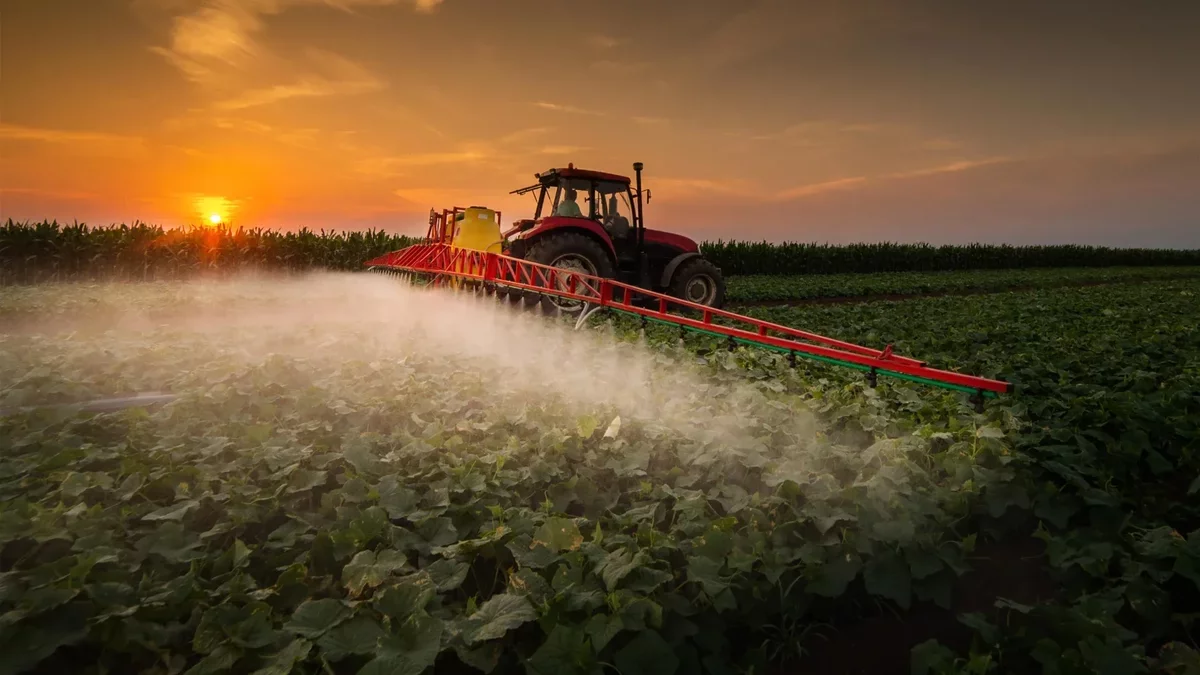
Pesticides are prevalent in our food supply, water sources, and the environment, often appearing as intricate mixtures rather than isolated compounds. This complexity has made it challenging to assess their health implications. Unlike earlier studies that focused on individual chemicals in controlled environments, recent research adopts a broader perspective, investigating how various pesticides interact and impact populations in real-world scenarios.
Peru's Unique Research Landscape
Peru serves as an ideal backdrop for this investigation, featuring regions characterized by intensive agriculture, diverse climates, and notable social and geographic disparities. As cancer rates rise, certain communities face particularly high levels of pesticide exposure.
The study reveals that specific groups, particularly Indigenous and rural farming communities, encounter significantly elevated exposure levels. On average, individuals in these populations are subjected to approximately 12 different pesticides at once, often at heightened concentrations.
Mapping Pesticide Exposure and Cancer Correlation
To elucidate the connection between pesticide exposure and cancer, researchers developed comprehensive models illustrating the distribution of agricultural chemicals across Peru. Their analysis included 31 commonly used pesticides, none of which are recognized as known carcinogens by the World Health Organization (WHO). Nevertheless, the cumulative presence of these substances in the environment was meticulously monitored.
Jorge Honles, PhD in epidemiology at the University of Toulouse, explains, "We first modeled the dispersion of pesticides in the environment over six years, from 2014 to 2019, allowing us to create a high-resolution map that pinpointed areas at heightened risk of exposure."
The team compared these exposure maps with health records from over 150,000 cancer patients documented between 2007 and 2020. This analysis unveiled a distinct pattern: regions with greater pesticide exposure also exhibited increased rates of specific cancers, with an average cancer risk elevated by 150% in these areas.
Stéphane Bertani, a molecular biology researcher at the French National Research Institute for Sustainable Development (IRD), notes, "This is the first instance where we have linked pesticide exposure on a national scale to biological changes indicating a heightened cancer risk."
Early Biological Impacts of Pesticide Exposure
The research underscores that pesticide exposure may affect the body long before cancer manifests. Although tumors can arise in various organs, some share underlying biological vulnerabilities linked to their cellular origins, potentially influenced by pesticide exposure.
The liver, a crucial organ for processing chemicals, acts as a marker for environmental exposure. Molecular studies at the Institut Pasteur, led by Pascal Pineau, demonstrate that pesticides can disrupt normal cellular functions, with these changes occurring early and accumulating over time without clear symptoms.
Such alterations could render tissues more vulnerable to additional harmful factors, including infections and environmental stress.
Revising Health Policies and Risk Assessments
The findings challenge conventional safety assessments, which typically evaluate chemicals in isolation and set exposure limits deemed safe. This study suggests that these methods may neglect the risks associated with combined exposures and real-world environmental conditions.
Moreover, it highlights the influence of external factors, such as climate events, on pesticide use and movement. The researchers advocate for updated risk assessment and prevention strategies that consider these complexities.
A Global Health Perspective
While the focus is on Peru, the implications of this research resonate globally. It emphasizes how environmental changes, agricultural practices, extreme weather, and social inequalities can converge to impact health outcomes, particularly for vulnerable populations.
Looking ahead, the research team aims to further explore the biological mechanisms at play and develop improved prevention tools, striving for public health policies that address real-world environmental exposures equitably.