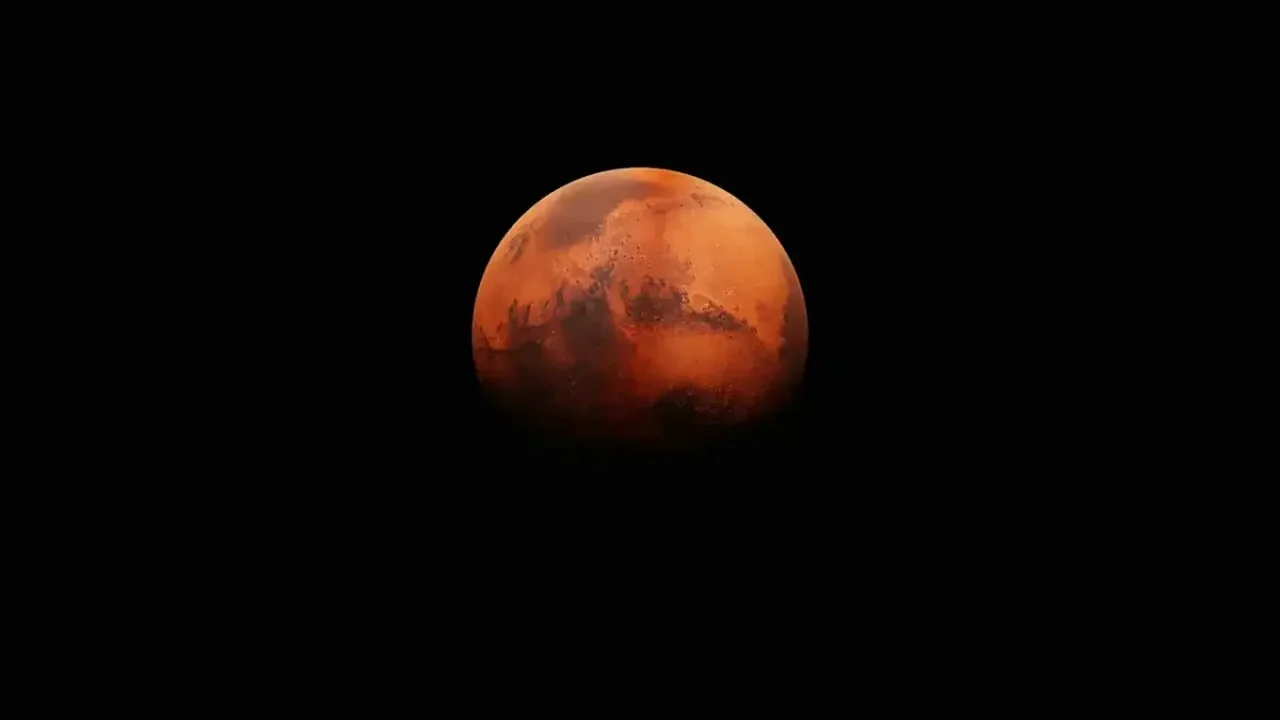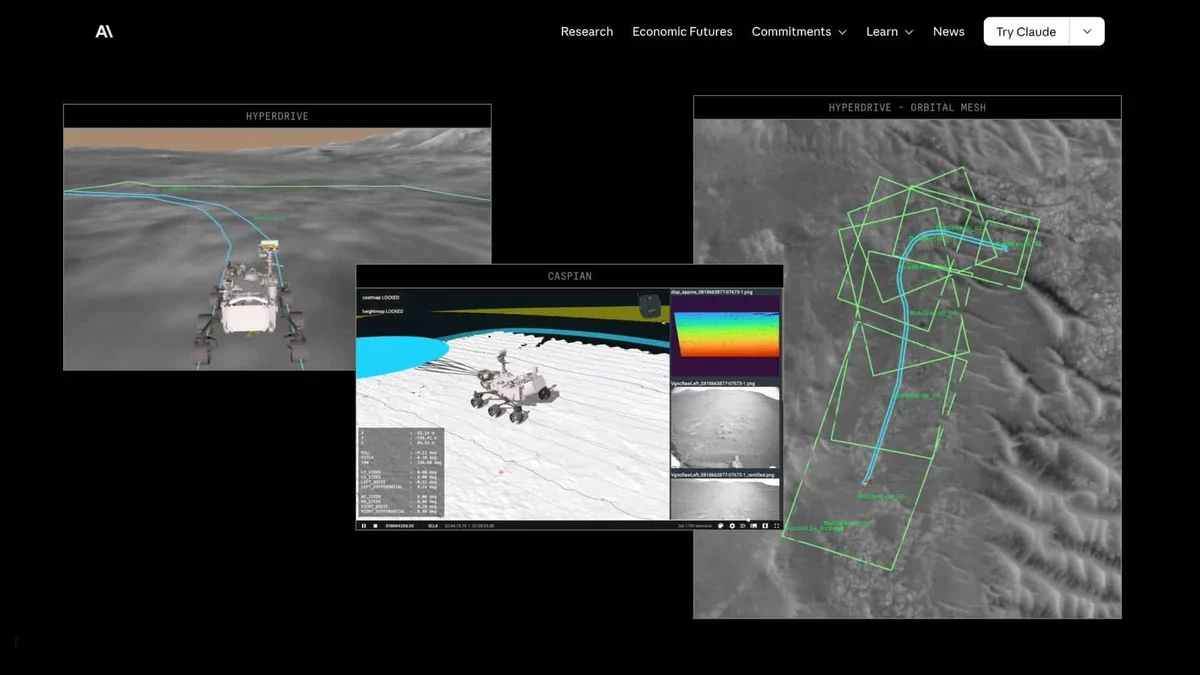
The Perseverance rover from NASA has marked a significant milestone in the realm of interplanetary exploration. It successfully traversed the challenging terrain of Jezero Crater, following routes meticulously planned by Anthropic's Claude AI.
On December 8 and 10, 2025, the rover covered a distance of 456 meters across the Martian landscape, with waypoints generated by an AI that analyzed the terrain from orbit.
AI's Promising Future in Space Exploration
NASA has deployed six rovers to Mars, with two currently operational: Curiosity, which landed in 2012, and Perseverance, which arrived in 2021. Operating these high-value machines is a critical task. Since 1997, human operators at the Jet Propulsion Laboratory (JPL) have dedicated countless hours to plotting paths over 140 million miles away. A single error could lead to disastrous consequences for the rover.
Perseverance is currently navigating the edge of Jezero Crater, an ancient delta where water once flowed. The terrain is filled with challenging features such as sand ripples and sharp bedrock. Traditionally, these routes are planned in segments of 100 meters.
In December, the team entrusted the route planning to Claude, for the most part.
Utilizing high-resolution images from the Mars Reconnaissance Orbiter, the AI assessed the bedrock and boulder fields. It processed the same data available to human operators but did so at a much faster pace, creating a continuous and safe path in ten-meter increments.
NASA engineers did not solely rely on the AI's suggestions. They validated each proposed command through a "digital twin"--a highly accurate virtual replica of Perseverance--checking over 500,000 variables. The AI excelled in this assessment, with NASA making only minor adjustments to the final route based on additional ground-level images.
Navigational Successes
The results were impressive. On December 8, the AI-assisted rover covered 210 meters, and just two days later, it traversed another 246 meters.
"This demonstration illustrates the advancements in our capabilities and expands our approach to exploring other worlds," stated NASA Administrator Jared Isaacman. "Autonomous technologies like this can enhance mission efficiency, adapt to difficult terrains, and boost scientific returns as we venture further from Earth. It exemplifies the careful and responsible application of new technology in real operations."
This initiative is not merely an experiment; it reflects NASA's ongoing need to maximize efficiency. The agency is tasked with returning to the Moon, preparing for Mars, and exploring the icy moons of Jupiter, all while facing budget constraints and workforce reductions. Last year, NASA experienced a staff cut of about 20%. This means fewer operators are available, even as scientific ambitions grow.
By integrating AI to manage the time-consuming planning processes, JPL engineers estimate they can reduce route-planning time by 50%. This allows remaining engineers to concentrate on addressing more complex scientific questions rather than routine planning tasks.
The Future of Exploration
NASA envisions the continued application of this technology in upcoming missions.
"Picture intelligent systems not just on Earth, but also in our rovers, helicopters, drones, and other surface elements, all trained with the collective expertise of our NASA engineers, scientists, and astronauts," said Matt Wallace, manager of JPL's Exploration Systems Office. "This is the transformative technology we need to establish the necessary infrastructure for a sustained human presence on the Moon and propel the U.S. to Mars and beyond."
This development is a remarkable testament to the rapid progress in technology.
A couple of years ago, AI models struggled to navigate simple digital environments. Today, they are paving the way for humanity's most advanced laboratory on a distant planet.
The future holds limitless possibilities.