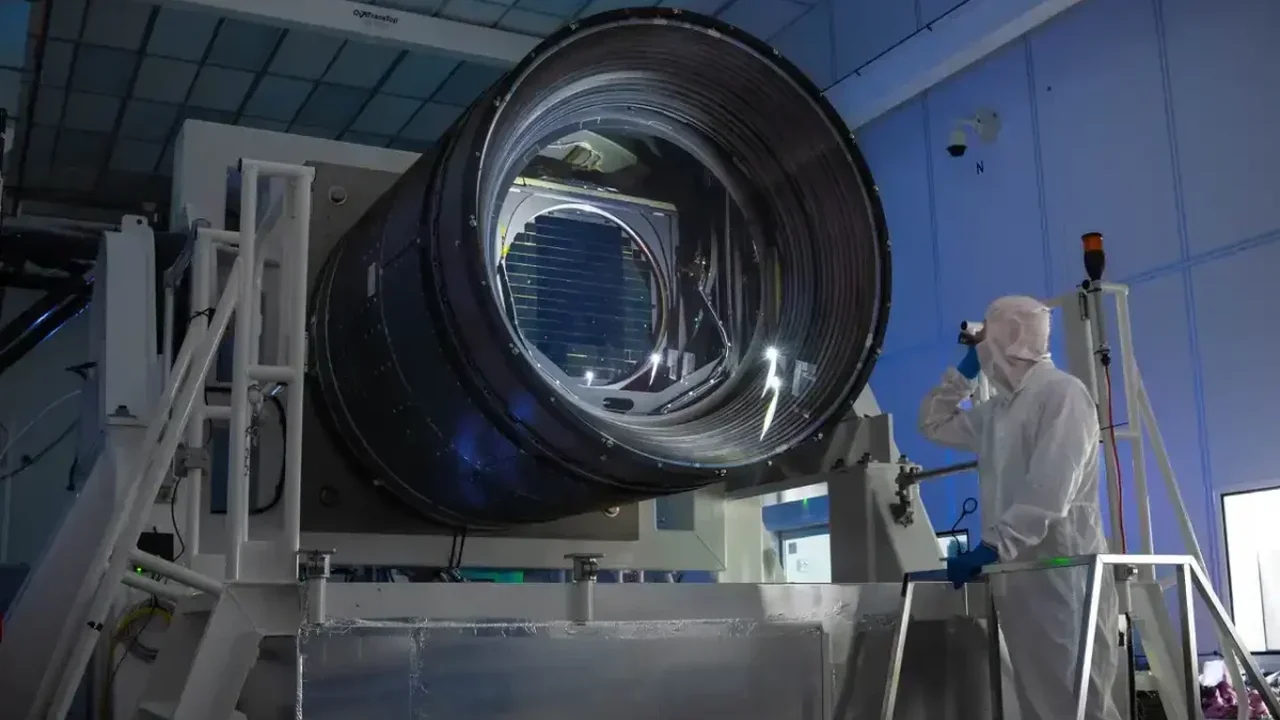
In a groundbreaking event in 2023, a neutrino collided with the Mediterranean Sea, unleashing an astonishing amount of energy that has captured the attention of physicists worldwide. This particular neutrino, a fundamental particle that typically passes through matter without interaction, struck the KM3NeT experiment's detectors with an energy level of approximately 220 PeV, which is about 100,000 times greater than the particles produced by the Large Hadron Collider.
This extraordinary detection has left astrophysicists puzzled, as there are no known sources capable of generating a neutrino with such a unique energy profile. Furthermore, the IceCube observatory in Antarctica, which has been monitoring the cosmos for over a decade, failed to detect any similar events, raising questions about our current understanding of cosmic phenomena.
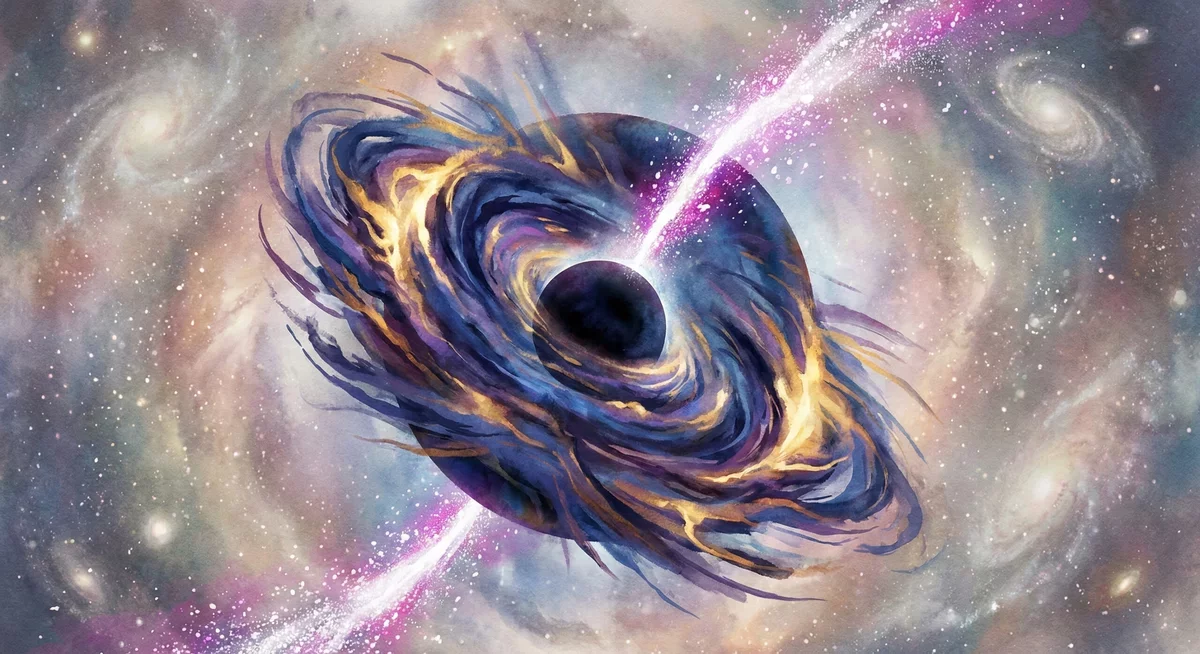
A team of researchers from the University of Massachusetts Amherst has proposed an intriguing hypothesis: the neutrino may have originated from a "quasi-extremal primordial black hole," an ancient and electrically charged entity from the early universe that could hold clues to the nature of dark matter.
The Origins of the Universe
To comprehend the significance of this neutrino event, we must delve into the universe's infancy. Soviet physicists Yakov Zel'dovich and Igor Novikov theorized in 1966 that the chaotic conditions of the Big Bang could have led to the formation of primordial black holes (PBHs), which are significantly smaller than the stellar black holes we observe today.
These primordial black holes are theorized to emit particles through a process known as Hawking radiation, gradually leading to their evaporation and potential explosive events. According to physicist Andrea Thamm, as these black holes lose mass, they become increasingly hotter and emit more radiation, which could result in spectacular explosions.
A Tale of Two Detectors
When KM3NeT recorded this unprecedented neutrino event, scientists were eager to find explanations. If such primordial black holes were frequently exploding, IceCube should have detected many similar occurrences. However, the lack of evidence from IceCube suggests a fundamental flaw in our understanding of black holes.
The UMass team proposed that the black holes in question might not be ordinary Schwarzschild black holes but rather charged black holes hidden within a "dark sector." This innovative perspective could bridge the gap between the findings of both detectors.
Exploring the Dark Sector
The researchers introduced the concept of primordial black holes carrying a "dark charge," which could dramatically alter their life cycle. This dark charge might interact through a form of "dark electromagnetism," a theoretical extension of the Standard Model that governs interactions in a hidden realm of the universe.
The Cosmic Coma
As these primordial black holes shrink and their dark charge density increases, they reach a state known as "quasi-extremal," where gravitational and electrical forces balance. In this state, they become long-lived and dormant until their dark electric field intensifies, leading to explosive events that release high-energy particles detectable by experiments like KM3NeT.
A Potential Dark Matter Candidate?
If these quasi-extremal black holes exist, they could represent a significant portion of dark matter in the universe. Traditional primordial black holes have been largely dismissed as dark matter candidates due to their explosive nature, which would produce detectable gamma radiation. However, the dormant state of these charged black holes allows them to remain hidden until their explosive finale.
The UMass team's findings suggest that if these black holes are confirmed, they could revolutionize our understanding of dark matter and the universe's composition.
Looking Ahead
The implications of this research are profound. If the hypothesis holds true, we may be surrounded by tiny, charged black holes that sporadically explode, illuminating our understanding of the universe. The next decade will be crucial for verifying these claims, as the unique signatures of these events may soon be observed.
"If such explosions are confirmed," Thamm states, "we could create a definitive catalog of all known subatomic particles, unlocking secrets that have eluded us since the Big Bang."