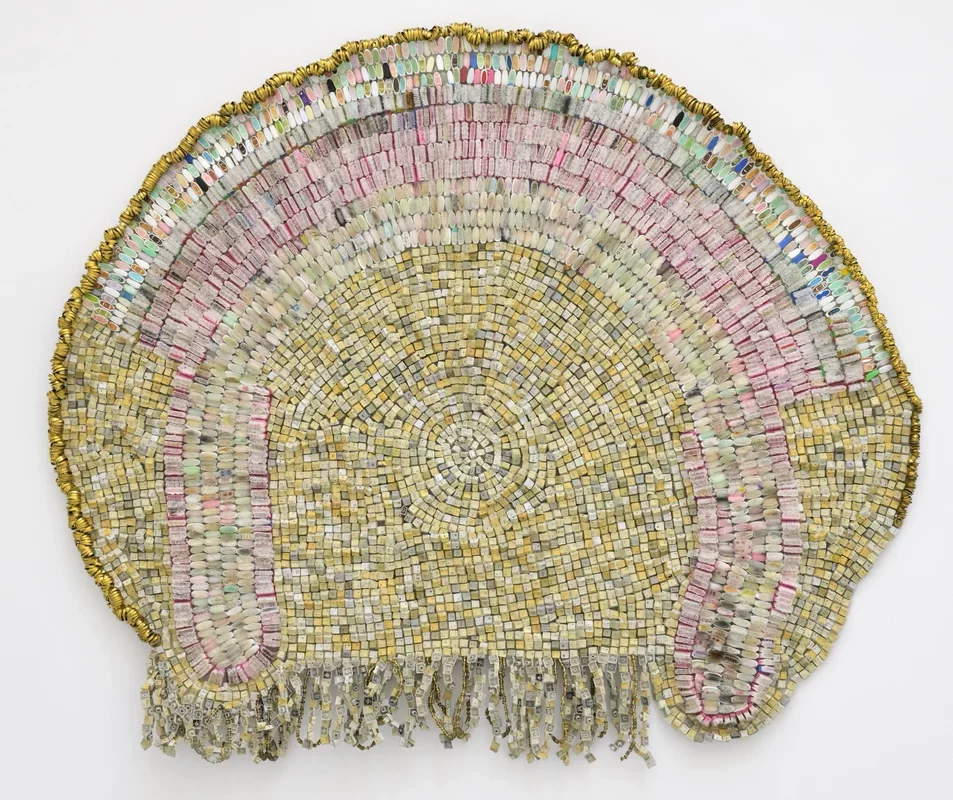
Zimbabwean artist Moffat Takadiwa transforms discarded materials into thought-provoking sculptures that address Africa's historical context. For nearly twenty years, Takadiwa has gathered an impressive collection of e-waste and everyday items from landfills in Harare's Mbare neighborhood, where electronic waste accumulates in illegal dump sites. His studio is a vibrant sanctuary filled with meticulously organized colorful debris.
Renowned for his intricate creations, Takadiwa utilizes items like computer keyboard keys, toothbrush heads, and plastic combs--what he refers to as "consumer residue." The interplay of colors and textures in his work evokes an organic feel, despite the artificial origins of the materials.
His current exhibition, The Crown!, hosted at Semiose in Paris, delves into the complexities of visual aesthetics, consumerism, and waste. Curator Fernanda Brenner highlights the exhibition's exploration of Africa's post-colonial narrative, a theme Takadiwa terms the "colonial hangover." Afro combs, once symbols of grooming and tradition, now resonate with themes of resistance and pride in Black identity, as Brenner notes.
Takadiwa's artwork features tapestry-like arrangements with repetitive patterns that oscillate between softness and rigidity. From afar, the individual components merge into a cohesive visual experience, but a closer look reveals the distinct remnants of consumer culture--nail polish brushes, caps, and aged keyboard keys that symbolize overindulgence and wastefulness. Brenner poignantly remarks on the paradox of beauty within these creations, suggesting that aesthetic appeal alone cannot reconcile historical injustices.
"If beauty could settle old scores, the art world would have solved more than it has... Rearranging the materials does not erase their origins," Brenner observes. Takadiwa's work serves as a reminder that discarded items do not vanish; they merely relocate, often to places like Mbare, where he has established an artist-run space in a former colonial beer hall.
The Crown! will be on display until May 16, offering visitors a chance to engage with Takadiwa's compelling narrative of waste and identity.