Asteroids, abundant in metals essential for modern technology, present a unique challenge for resource extraction in space. Recent experiments aboard the International Space Station (ISS) have explored an innovative approach: utilizing microbes.
A research team tested the capability of bacteria and fungi to extract metals from meteorite fragments under microgravity conditions. Their findings, detailed in the journal npj Microgravity, indicate that these microorganisms can effectively leach metals even while orbiting the Earth.
Exploring Metal Leaching
Transporting supplies from Earth becomes increasingly impractical as missions venture deeper into space. To address this, scientists are investigating how outposts beyond our planet could utilize materials found in their surroundings. Asteroids and similar rocky bodies are rich in metals that could support future space infrastructure.
Rather than traditional mining methods, the concept of using microbes for biomining has emerged. This process involves microorganisms producing organic acids that gradually dissolve minerals, allowing for metal extraction.
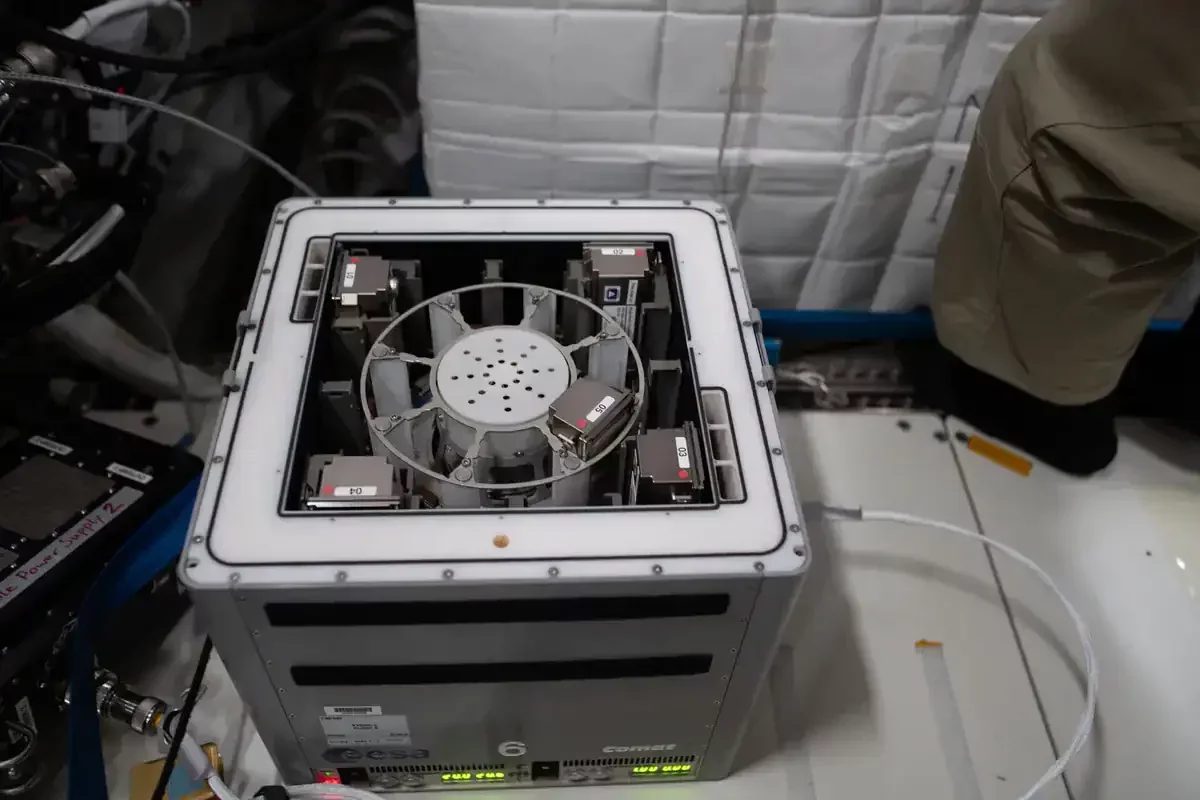
Researchers from Cornell University and the University of Edinburgh launched an experiment named BioAsteroid to the ISS in 2020. They placed fragments of an L-chondrite meteorite in small reactors with two types of microbes: the bacterium Sphingomonas desiccabilis and the fungus Penicillium simplicissimum. Over 19 days, these organisms thrived on the meteorite while astronauts monitored the process.
"This is likely the first experiment of its kind on meteorite samples aboard the ISS," stated Rosa Santomartino, the study's lead author and a biological engineer at Cornell.
Microscopic Space Miners
Upon returning to Earth, the team analyzed elements dissolved from the meteorite. Out of 44 elements studied, microbes facilitated the extraction of 18. Notably, the fungus exhibited enhanced activity in microgravity, producing greater quantities of molecules that aid in mineral dissolution.
Interestingly, the microbes maintained consistent extraction levels regardless of gravity conditions, unlike traditional chemical extraction methods that faltered in microgravity.
The fungi also formed intricate communities on the meteorite surface, demonstrating adaptability to both space and Earth environments.
Practical Applications
The microbes were contained within specialized units designed to simulate their natural environment, complete with nutrient solutions to support their growth. Instead of being released into space, these organisms were carefully monitored to assess their extraction capabilities.
Future asteroid mining operations may employ machines to extract rock and transport it to large, pressurized biological refineries. In these facilities, engineered microbes like Penicillium simplicissimum could efficiently extract valuable metals while also contributing to soil formation for life support systems.
This research builds on earlier studies indicating that microbes can extract rare earth elements in space, suggesting a promising path towards sustainable, self-sufficient habitats beyond Earth.
"Our analysis revealed intriguing differences in microbial behavior between space and Earth," noted researcher Alessandro Stirpe. "The diversity of microbes and the complexity of space conditions present exciting challenges for future exploration."