Shea Cinquemani, a recent graduate in marine biology from Rutgers University, poses a compelling question: "How does life emerge from a lifeless Earth?" In her groundbreaking review published in the Journal of Marine Science and Engineering, she investigates the potential origins of life, focusing on hydrothermal vents--natural formations where heated, mineral-rich water interacts with surrounding environments, fostering the right conditions for complex biochemical reactions.
Cinquemani's research highlights the significance of hydrothermal systems created by meteor impacts, suggesting they may have been crucial yet overlooked environments for the emergence of life on early Earth. These impact-generated systems could have been widespread, positioning them as strong candidates for the cradle of life.
Transforming a Class Assignment into a Scientific Milestone
What began as a class project during Cinquemani's senior year evolved into a peer-reviewed publication, co-authored with esteemed Rutgers oceanographer Richard Lutz. "It's remarkable for an undergraduate to take the lead on such a project," Lutz noted, emphasizing the rarity of such achievements in academia.
The initial assignment required her to explore the possibility of life on Mars, which pushed her to delve into chemistry, physics, and geology. Following her graduation, Cinquemani expanded her work into a comprehensive review, comparing deep-sea vents with impact-generated hydrothermal systems. The paper underwent an extensive peer-review process, with Lutz praising her perseverance through rigorous evaluations.
Hydrothermal Vents: Potential Birthplaces of Life
Scientists have long recognized deep-sea hydrothermal vents as potential sites for life's origins. These ecosystems thrive in complete darkness, relying on chemical energy sources rather than sunlight. The unique conditions allow organisms to flourish in nutrient-rich environments.
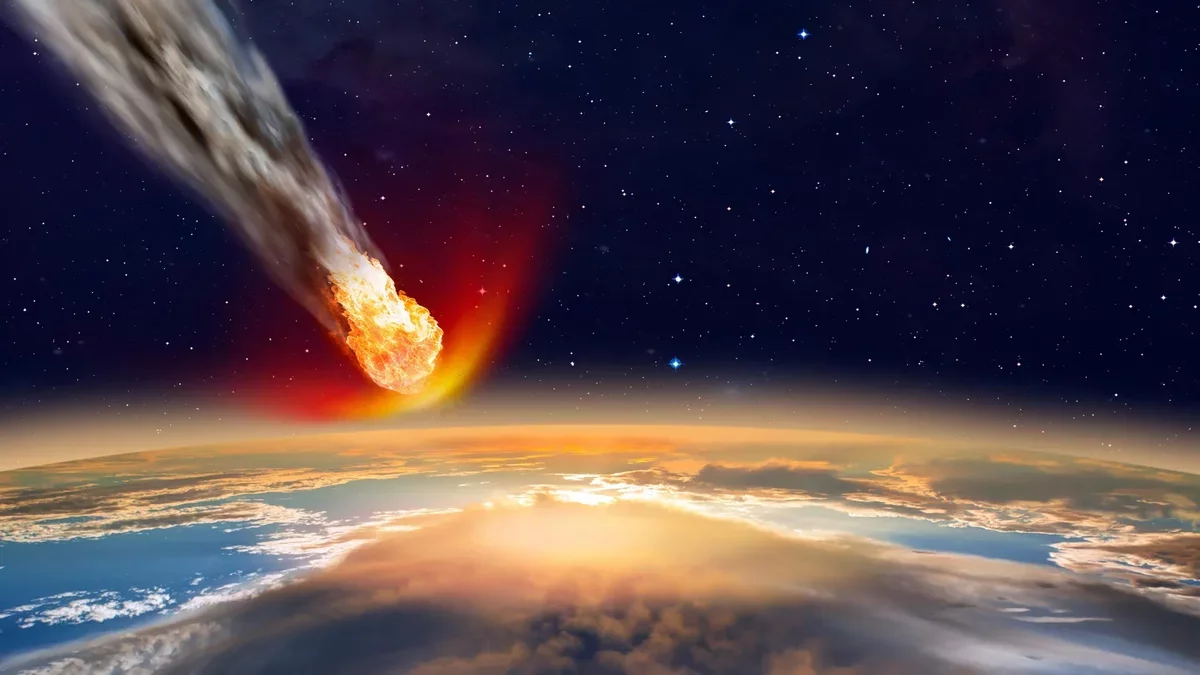
Cinquemani's focus on impact-generated hydrothermal systems reveals how meteor collisions can create conditions conducive to life. When a meteor strikes, it generates intense heat, melting surrounding rock and forming mineral-rich lakes that can develop hydrothermal systems similar to those found in the deep sea.
She examined several notable impact sites, including the Chicxulub crater in Mexico and the Haughton crater in Canada, both of which exhibited long-lasting hydrothermal conditions. These environments can persist for thousands of years, providing ample time for simple molecules to evolve into more complex structures, potentially leading to the emergence of life.
Revisiting Earth's Early Conditions
Given the frequency of asteroid impacts in Earth's early history, these environments may have been common. While often viewed through a lens of destruction, meteor impacts may have also fostered conditions suitable for life, broadening the scope of potential origins.
As Lutz reflects on past discoveries of deep-sea vents, he acknowledges the paradigm shift they sparked in understanding life without sunlight. Cinquemani's research integrates this established knowledge with new insights into the role of impact-generated systems, suggesting they may offer favorable conditions for early biochemical reactions.
Implications for Astrobiology
The implications of this research extend beyond Earth, influencing the search for life on other celestial bodies. Hydrothermal activity is believed to exist on moons like Europa and Enceladus, and similar systems could have formed in impact craters on early Mars. If these environments supported life on Earth, they may guide future explorations in the quest for extraterrestrial life.
Driven by a Quest for Understanding
For Cinquemani, this journey reflects humanity's intrinsic curiosity about our origins. "We may never fully understand how we began, but we can strive to uncover the possibilities," she states, embodying the spirit of scientific inquiry.