Shawn Shen envisions a future where artificial intelligence (AI) can effectively remember and interpret its surroundings. His venture, Memories.ai, is leveraging advanced tools from Nvidia to create a robust framework that enables wearables and robotics to store and retrieve visual memories.
During the recent GTC conference, Memories.ai announced a strategic partnership with Nvidia, utilizing its Cosmos Reason 2 and Metropolis applications. These innovations will enhance the company's capabilities in developing visual memory technology, allowing AI to interact more intuitively with the physical world.
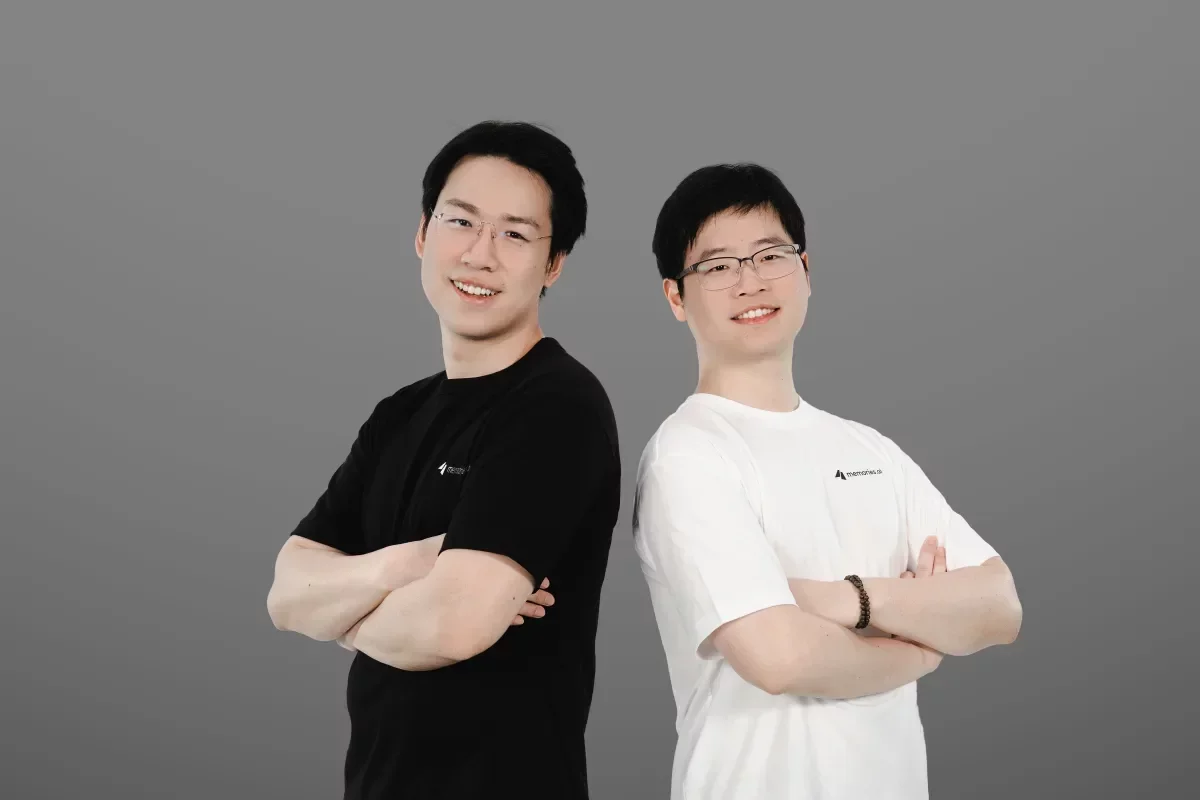
Shen, along with co-founder and CTO Ben Zhou, conceived the idea for Memories.ai while working on the AI behind Meta's Ray-Ban glasses. They recognized the necessity for users to recall the recorded video data in real-world applications, prompting them to establish their own company when they found no existing solutions for visual memory in AI.
"AI has excelled in digital environments, but what about the physical realm?" Shen remarked. "For AI wearables and robotics, memory is essential. We firmly believe that visual memories will be a cornerstone of future AI systems."
The concept of memory in AI is relatively nascent. Recent advancements, such as those from OpenAI, have primarily focused on text-based memory, which, while structured, may not cater effectively to applications that rely on visual interactions.
Founded in 2024, Memories.ai has successfully raised $16 million through funding rounds led by Susa Ventures, with participation from Seedcamp, Fusion Fund, and Crane Venture Partners. Shen emphasized that developing this visual memory layer necessitates creating the infrastructure to store and index videos, as well as the data required for model training.
In July 2025, the company unveiled its large visual memory model (LVMM), designed to facilitate more effective indexing and retrieval of visual data. This model is akin to a smaller version of Nvidia's Gemini Embedding 2, which was introduced recently.
To gather data, Memories.ai developed LUCI, a unique hardware device worn by data collectors that captures video for model training. Although they created this device to suit their specific needs, Shen clarified that they do not intend to enter the hardware market.
Furthermore, the company has partnered with Qualcomm to integrate its LVMM on Qualcomm's processors later this year. While Shen refrained from naming specific wearable partners, he acknowledged the growing demand for their technology and sees tremendous potential in the wearables and robotics sectors in the near future.
"Our focus remains on refining the model and infrastructure, as we believe the market for wearables and robotics will expand significantly in time," Shen concluded.