In the early 1930s, Deere & Company confronted one of the most significant challenges in its long history. The Great Depression severely impacted tractor sales, with the number of manufacturers plummeting from 193 to just 38 by 1930. This economic downturn forced Deere to close its tractor factory that same year, as sales dwindled and stock prices fell dramatically from over $300 to a mere $29.
Despite these hardships, Deere was not on the brink of bankruptcy but faced a funding crisis due to the collapsing U.S. banking system. Adding to the pressure, its main competitor, International Harvester, was thriving, thanks to the success of its innovative Farmall Regular tractor introduced in 1924. In response, Deere launched its Model General Purpose (GP) tractor in 1928, which underwent various enhancements until 1935.
Innovative Solutions in Tough Times
However, the GP quickly fell behind competitors like the Farmall F-12 and F-20, as well as offerings from J.I. Case and Oliver, which boasted superior features. Charles Wiman, a pivotal figure in Deere's history, recognized the need for innovation and established a Power Farming committee in 1931. This committee aimed to develop tractors that would cater to the diverse needs of all farms and crops.
The Visionary Design Team
The committee, consisting of talented engineers like Elmer McCormick and Theo Brown, took on the ambitious task of creating a new tractor line that would not only compete but also excel in performance. Under Brown's leadership, they focused on developing a tractor that would set new standards in the industry.
By 1932, they had completed a prototype named Model GX, leading to the introduction of the General Purpose Wide Tread tractor, or GP-A, in March 1934. Alongside this, a smaller version, the 14 1⁄4-hp Model B, was also in the works, designed to meet the needs of smaller farms.
Revolutionizing Agriculture
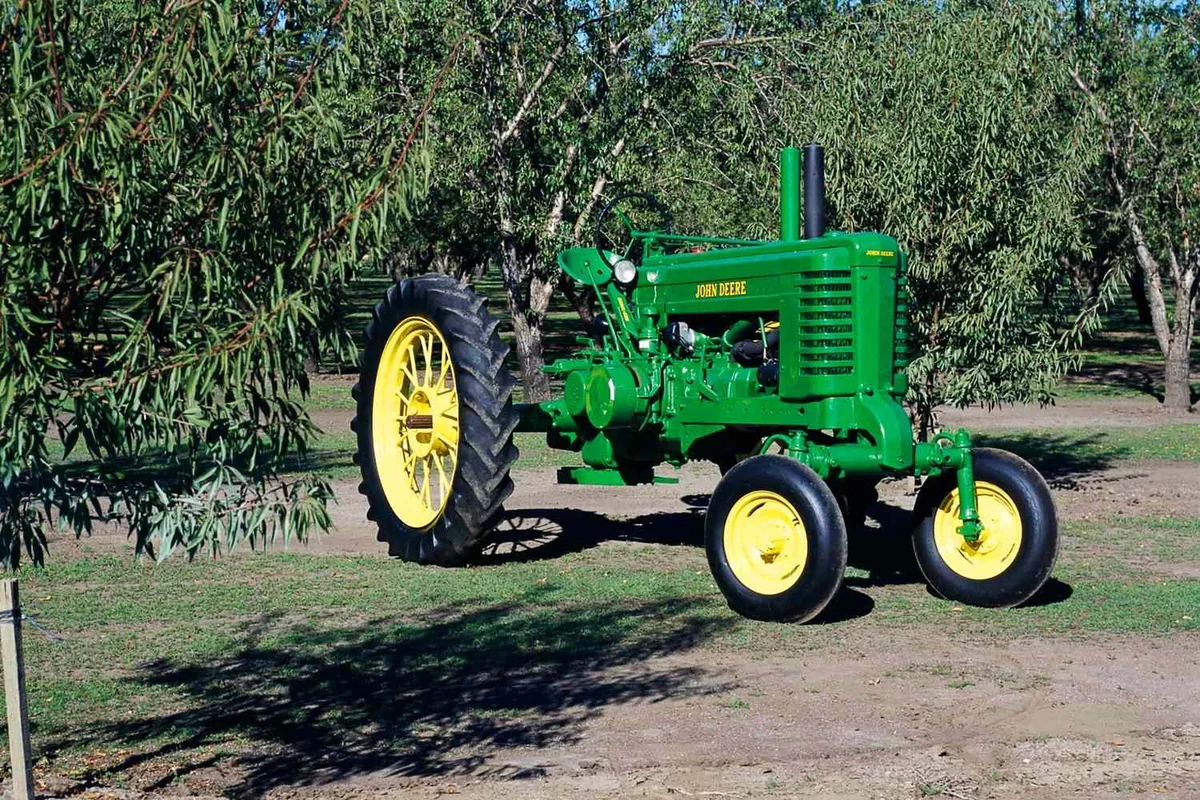
The Models A and B quickly gained popularity due to their innovative features, including a one-piece transmission, a hydraulic Power Lift system, and improved mechanical efficiency. The introduction of adjustable rear treads allowed farmers to customize their tractors for various tasks, enhancing versatility in agricultural operations.
By the end of their production runs, the Model A had sold over 320,000 units, while the Model B reached more than 300,000. These models not only became the most popular tractors in John Deere's history but also marked a pivotal moment for the company, transforming it from an implement-only manufacturer to a comprehensive equipment provider, all during the challenging times of the Great Depression.