Scientists in Japan have recorded an exceptionally rare atmospheric event: a terrestrial gamma-ray flash linked with precision to a lightning strike near a television tower in Kanazawa. The observation, led by researchers including Yuuki Wada of Osaka University and published in Science Advances, offers a new window into the high-energy physics hidden inside thunderstorms.
A split-second burst before the strike
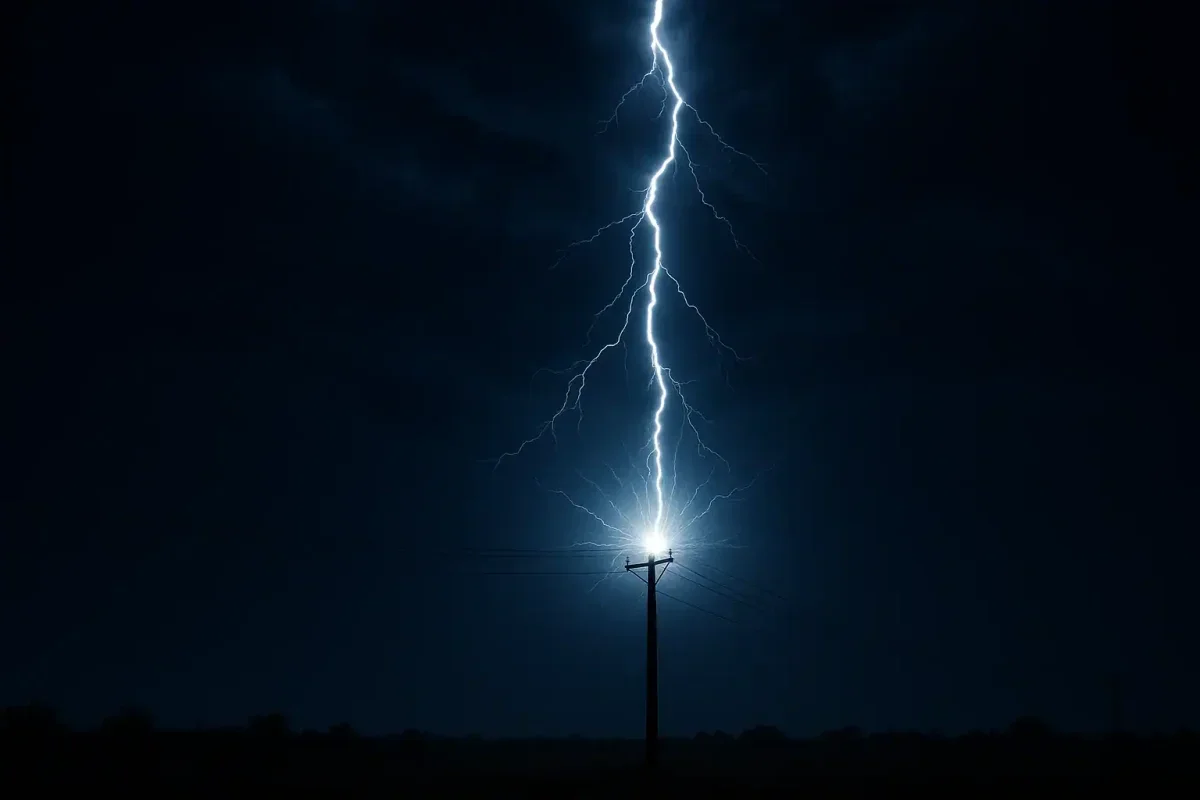
The team tracked two opposing electrical leaders--one descending from a thundercloud and one rising from the tower--until they met about 800 to 900 meters above the ground. Just before that contact, a gamma-ray burst lasting only about 20 microseconds was detected. The timing suggests the radiation appeared in the final moments before the visible lightning flash, not after it.
Using radiation detectors, radio-frequency sensors, and high-speed optical cameras, the researchers captured the event from the ground in unusual detail. Their setup also recorded a brief afterglow, which they link to photonuclear reactions in the air, where energetic gamma rays can interact with atmospheric atoms.
Why this matters for storm science
Gamma-ray flashes from thunderstorms have been known since the 1990s, but they are difficult to observe directly. New airborne and satellite campaigns indicate they may be more common than earlier records suggested, especially when measured close to the storm rather than from orbit.
The Kanazawa observation strengthens the idea that lightning can behave like a natural particle accelerator. As opposite charges approach each other, the electric field can intensify enough to speed up electrons to near-light speeds, producing radiation bursts that reveal the hidden energy of the storm.
Beyond deepening our understanding of lightning, the finding could support better storm monitoring, improved detection systems, and more precise models of Earth's radiation environment. It points to a future where atmospheric science and high-energy physics become even more closely connected.