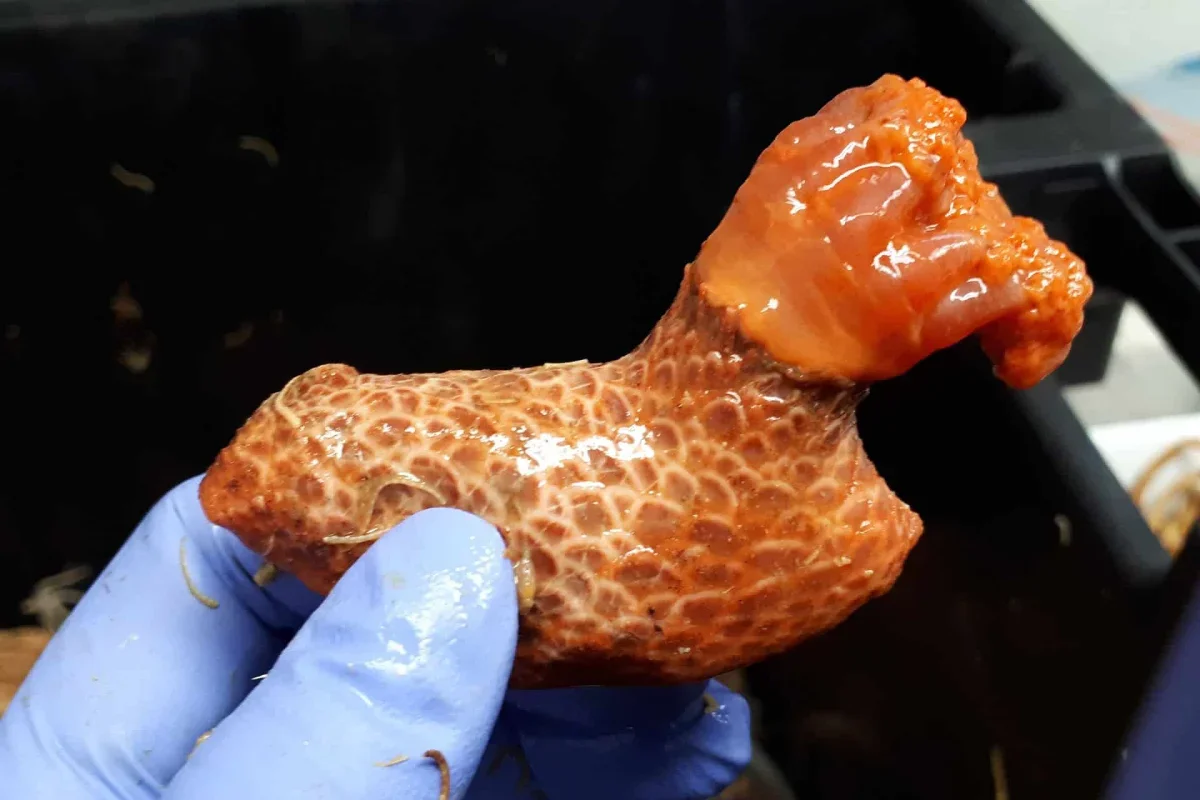
Scientists have identified an unusual case in the North Atlantic and Arctic oceans: a detached limb from the sea cucumber Psolus fabricii remained alive for more than three years after separation.
A surprising survival strategy
Researchers at Memorial University in Canada first noticed the phenomenon while observing live sea cucumbers in aquariums. Some tube feet had stayed attached to the tank walls after the animals were removed, and instead of breaking down, the tissue began to recover, stay active, and keep growing.
To understand what was happening, the team studied tissue fragments in flowing seawater that closely resembled natural conditions. Using microscopy, staining, cell-growth analysis, and nutrient-tracking tests, they confirmed that the samples were not only surviving but also repairing themselves.
The detached tissues closed wounds, gathered immune cells around injured areas, and showed ongoing cell division. They also removed damaged cells through programmed cell death, a normal sign of healthy tissue activity. Even without a mouth, gut, or circulatory system, the fragments absorbed nutrients directly from seawater, including nitrogen-labeled amino acids and ammonium compounds.
Over time, the tube feet changed shape, shrinking at first and then growing into rounded masses of living tissue. More than three years later, they still showed no clear signs of decay and continued to respond to touch, produce new cells, and maintain immune activity.
The researchers named these structures LiPfe, short for living immortal Psolus fabricii explants. When they tested tissues from other echinoderms, including sea stars, sea urchins, and brittle stars, none displayed the same long-term resilience.
Published in Science Advances, the study suggests this sea cucumber species may offer a new model for exploring regeneration, tissue repair, immune defense, and longevity. The discovery could help shape future research on how living tissues adapt, heal, and endure in challenging environments.