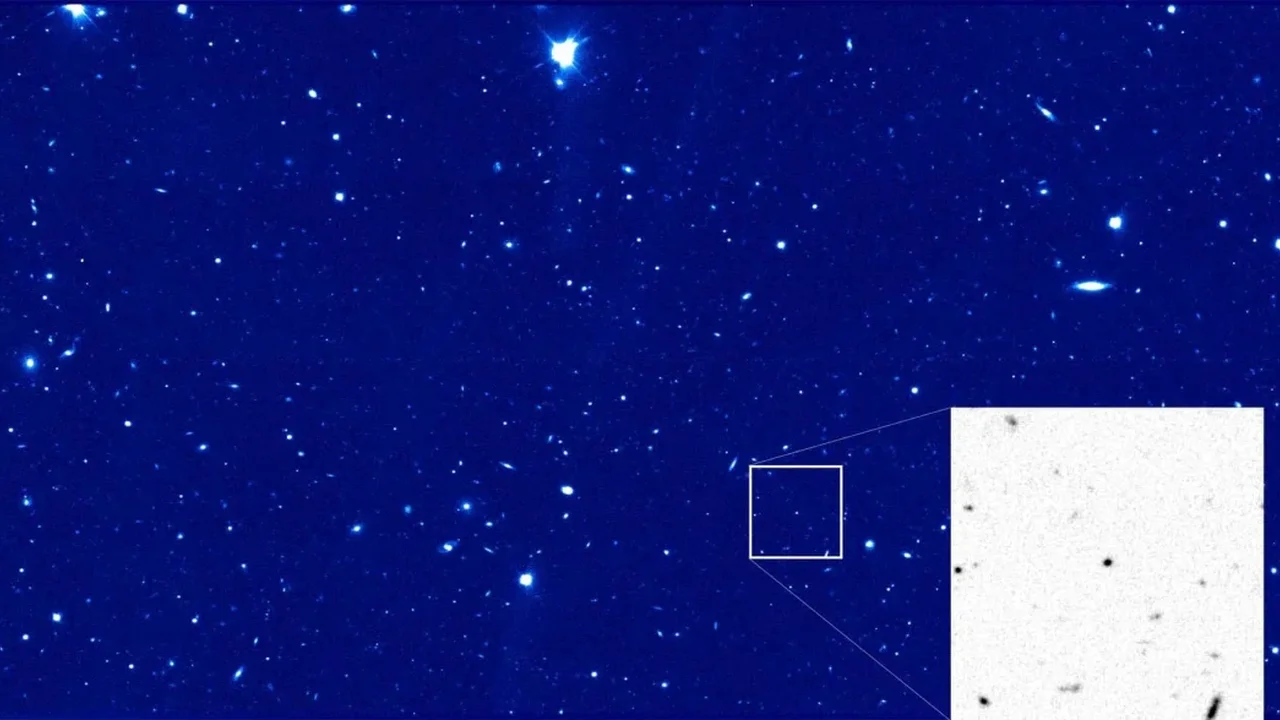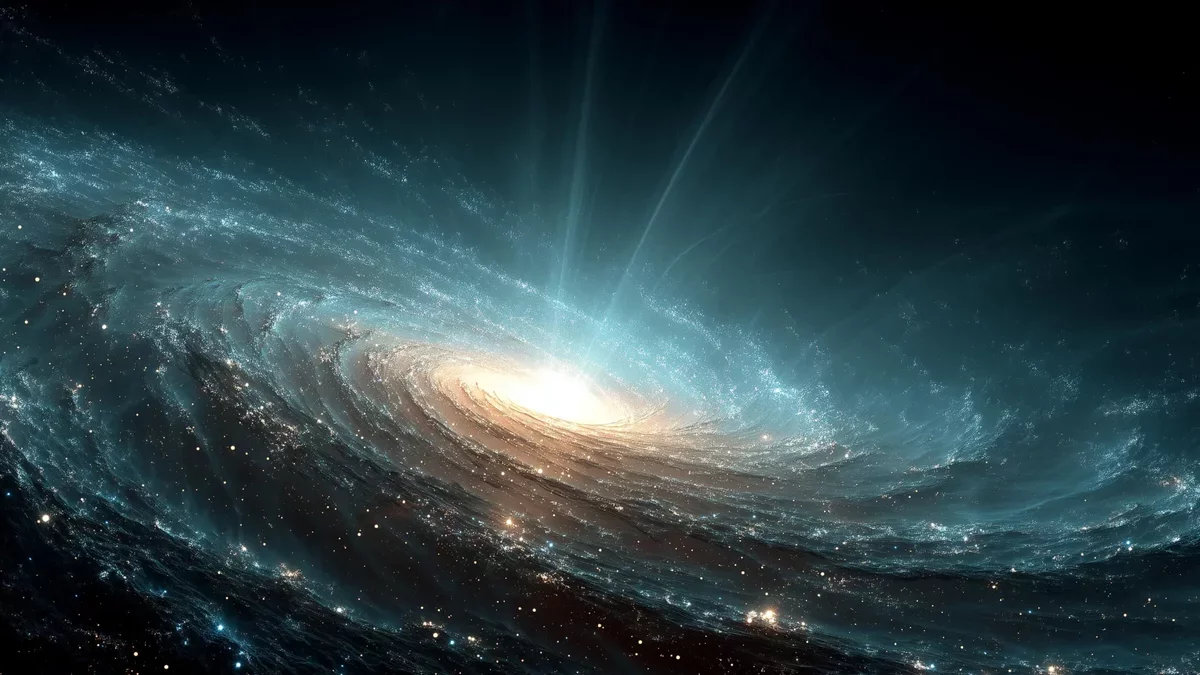
Recent research focuses on IRAS 07251-0248, an ultra-luminous infrared galaxy whose core is obscured by dense gas and dust. This thick material hinders traditional telescopes from observing the radiation emitted by the supermassive black hole at the galaxy's center. However, infrared light can penetrate this dust, enabling scientists to explore the chemical dynamics occurring within this hidden galactic nucleus.
Investigating the Obscured Galactic Core with JWST
To delve into the galaxy's concealed center, researchers utilized spectroscopic data from the James Webb Space Telescope (JWST), covering wavelengths from 3 to 28 microns. They integrated findings from the NIRSpec and MIRI instruments, which are capable of detecting chemical signatures from gaseous molecules as well as signals from solid ices and dust particles. This comprehensive data allowed the team to assess the quantity and temperature of various chemical compounds present in the galaxy's core.
The analysis unveiled a surprisingly diverse array of small organic molecules, including benzene (C6H6), methane (CH4), acetylene (C2H2), diacetylene (C4H2), and triacetylene (C6H2). Notably, the methyl radical (CH3) was detected for the first time outside the Milky Way. Alongside these gaseous compounds, researchers also discovered substantial amounts of solid materials, such as carbon-rich grains and water ices.
"We observed an unexpected level of chemical complexity, with concentrations exceeding current theoretical predictions," stated lead author Dr. Ismael García Bernete, formerly from Oxford University and now with CAB. "This suggests a continuous source of carbon within these galactic nuclei, sustaining this intricate chemical network."
These small organic molecules are seen as crucial elements in more complex chemical processes. While they do not constitute the building blocks of living cells, they may represent preliminary stages in the reactions that lead to the formation of amino acids and nucleotides. Co-author Professor Dimitra Rigopoulou from the University of Oxford remarked: "Although small organic molecules are not part of living cells, they could play a significant role in prebiotic chemistry, marking an essential step toward the synthesis of amino acids and nucleotides."
The Role of Cosmic Rays in Organic Molecule Formation
Employing analytical techniques and theoretical models of polycyclic aromatic hydrocarbons (PAHs) created by the Oxford team, researchers concluded that high temperatures and turbulent gas alone could not account for the observed chemical richness. Instead, the findings indicate that cosmic rays are a crucial factor. These high-energy particles seem to fragment PAHs and carbon-rich dust grains, releasing smaller organic molecules into the surrounding gas.
The study also established a strong correlation between the presence of hydrocarbons and the intensity of cosmic-ray ionization in similar galaxies. This connection reinforces the hypothesis that cosmic rays are instrumental in the production of these molecules. Consequently, deeply buried galactic nuclei could act as extensive chemical factories, impacting the chemical evolution of galaxies over time.
Overall, these discoveries pave the way for further exploration of how organic molecules form and evolve in extreme cosmic environments. They also underscore the JWST's capability to reveal regions of the universe that were previously obscured from observation.
In addition to CAB, several institutions contributed to this research, including Instituto de Física Fundamental (CSIC), University of Alcalá, and University of Oxford.
This project was funded through the Programa Atracción de Talento Investigador "César Nombela" by the Comunidad de Madrid and INTA.