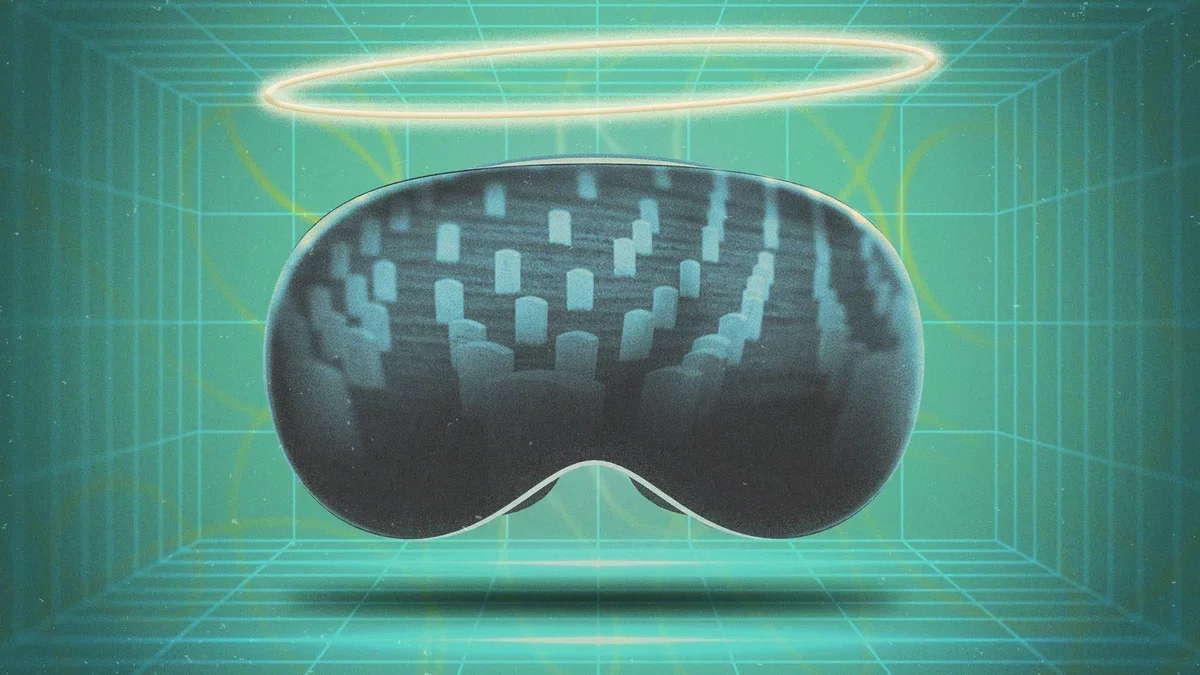
Virtual reality (VR) has faced significant challenges recently, leading many to question its future. Once hailed as the next frontier in digital interaction, the current landscape reveals a different story. Meta, a leading player in the VR market, has seen its Reality Labs division incur losses exceeding $73 billion since its inception five years ago, prompting a shift in focus towards smart glasses and artificial intelligence.
Apple, another contender in the VR arena, reported a mere 45,000 units of its Vision Pro headsets sold in the last quarter of 2025, a stark contrast to the 82.6 million iPhones sold during the same timeframe. Mark Zuckerberg's ambitious vision for Horizon Worlds as a vast digital universe has not materialized as expected, with an active user base of around 200,000--a fraction compared to the 380 million monthly users of the popular game Roblox.
Despite the financial struggles, the VR medium is evolving. Filmmakers and creators are exploring new ways to tell stories through immersive experiences. Matt Celia, co-founder of Light Sail VR, emphasizes the transformative potential of VR in storytelling, allowing viewers to engage without distractions that often accompany traditional viewing methods.
Innovations in VR Filmmaking
VR filmmaking is emerging as a captivating new form of artistic expression. Creators are developing a unique language for this medium, crafting experiences that invite audiences to immerse themselves in narratives like never before. Whether it's a 360-degree view of a performance or interactive documentaries, artists are harnessing VR's potential to create impactful storytelling.
The Thriving VR Gaming Scene
While some may perceive a decline in VR gaming, companies like Resolution Games are thriving by adapting to the unique demands of the medium. Their flagship title, Demeo, has garnered critical acclaim and showcases the social aspects of VR gaming, enabling players to collaborate in a virtual setting.
Is Virtual Reality Truly Dead?
Despite the challenges, many enthusiasts, including creators like Aaron Sorrels from the Soapstone Comedy Club, believe VR is far from dead. They argue that vibrant communities are forming, providing spaces for connection and creativity. While the initial vision of a sprawling metaverse may have faltered, a more organic, community-driven approach is taking shape, indicating that VR has a promising future ahead.