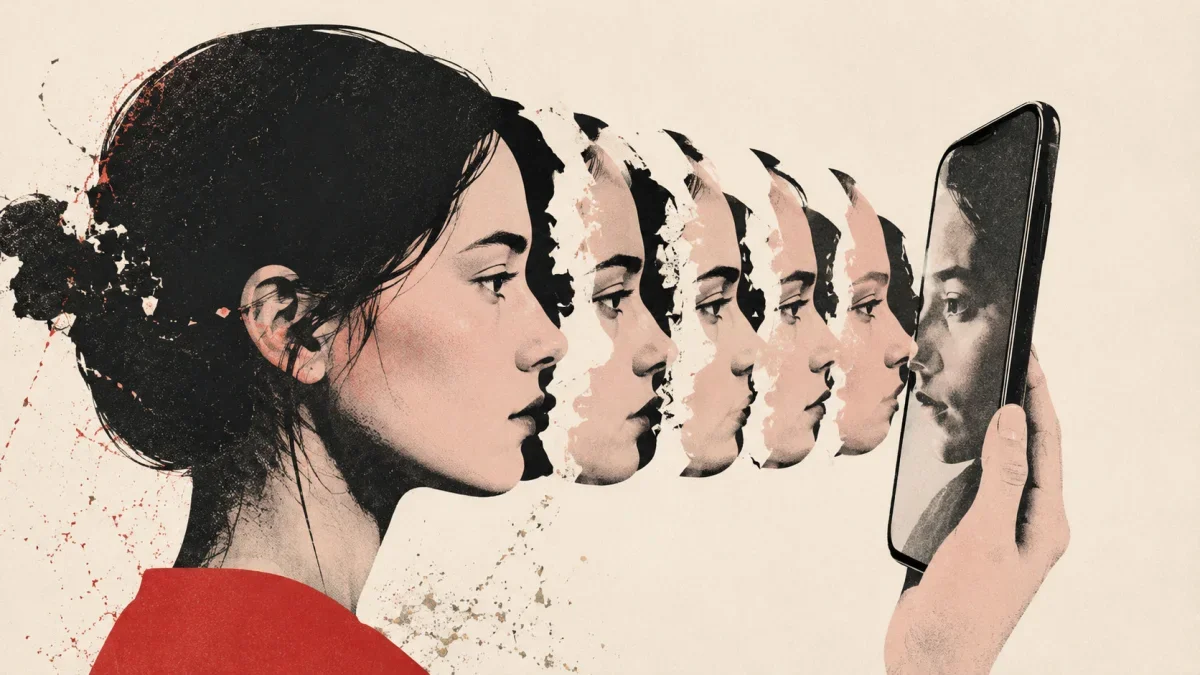
A new study suggests that long-term Instagram use may shape more than online habits. It could also be connected to how people distinguish their own face from someone else's in immersive settings.
Researchers at Università Cattolica del Sacro Cuore in Milan studied 95 young adults, average age 26, who had used Instagram for an average of 7.7 years. Participants spent about an hour a day on the platform and completed questionnaires, a heartbeat-counting task, and virtual reality illusion tests designed to measure self-recognition.
Virtual reality and self-perception
In one experiment, volunteers saw a gender-matched stranger's face in VR while synchronized touches were applied to both the virtual face and their own cheek. That setup can create a strong body illusion, making an unfamiliar face feel more familiar or self-related. A second test used a virtual body and synchronized touches on the abdomen.
The results pointed to a clear pattern: the longer participants had been on Instagram, the more likely they were to experience a stronger sense of ownership and self-location toward the virtual face. Daily time spent on the app did not show the same link.
The researchers describe this as part of the Digital Erosion of Bodily Identity Hypothesis, which proposes that years of viewing, editing, and comparing faces online may make facial identity feel more flexible. They also noted that people who reported using beauty filters showed stronger agency in the body illusion, though that finding is preliminary because the filter-using group was small.
Published in Computers in Human Behavior, the study is exploratory, with a limited sample and a mostly White, European, university-educated group. The authors say future research should track participants over time and include younger and more diverse populations.
As social platforms continue to blend identity, aesthetics, and interaction, studies like this may help define how digital environments influence the way future generations experience the self.