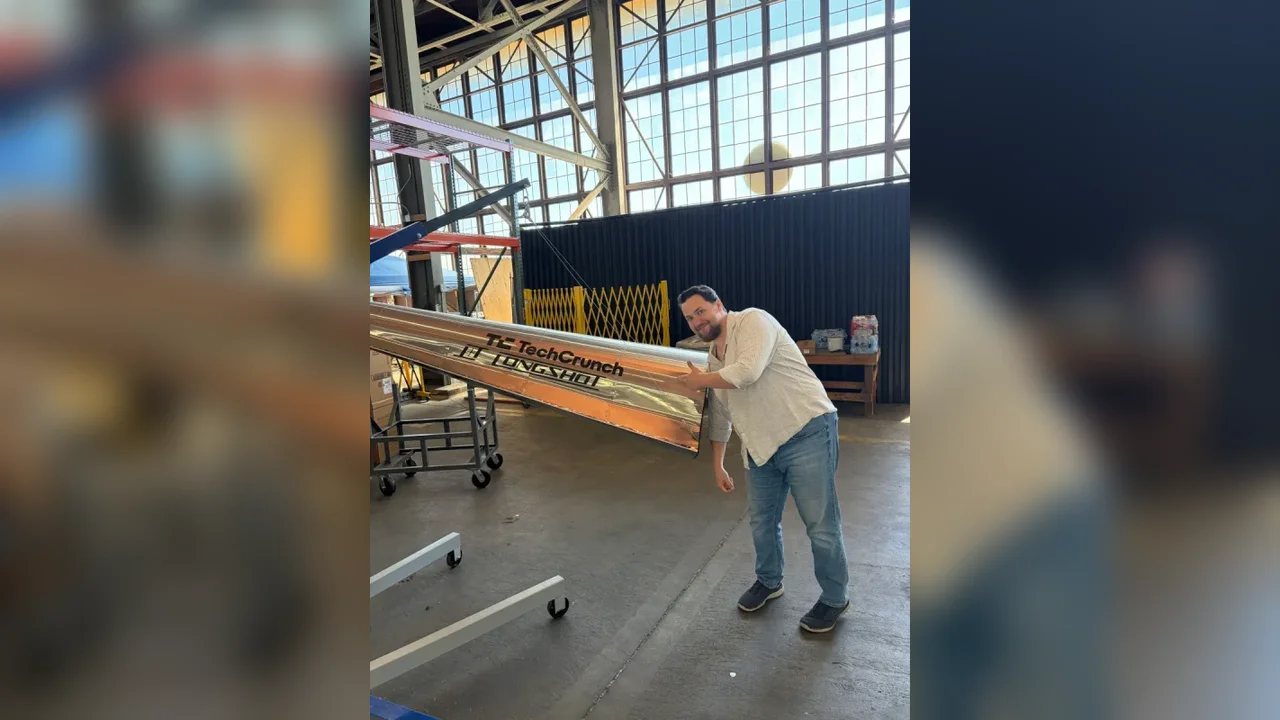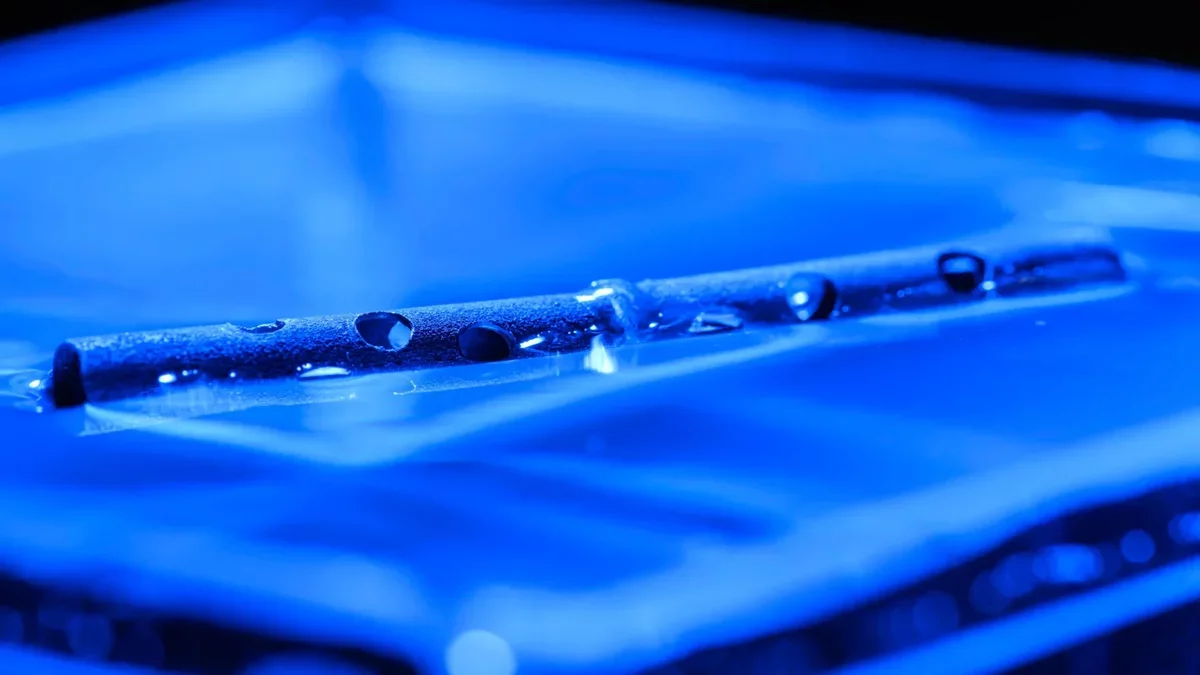
Chunlei Guo, a professor specializing in optics and physics at URochester's Laboratory for Laser Energetics, spearheaded a groundbreaking study detailed in Advanced Functional Materials. The research introduces a novel technique that alters the interior surface of aluminum tubes by etching, resulting in a texture that creates microscopic and nanoscale pits. This innovative surface becomes superhydrophobic, effectively repelling water and keeping the interior dry.
How Trapped Air Prevents Sinking
When a modified tube is submerged in water, its water-repellent interior captures a stable air pocket. This trapped air prevents water from infiltrating the tube, thus maintaining buoyancy and preventing sinking. This mechanism mimics natural adaptations seen in diving bell spiders, which carry air bubbles underwater, and fire ants, which create floating rafts with their water-resistant bodies.
"We incorporated a divider in the center of the tube to ensure that even when pushed vertically into the water, the air bubble remains enclosed, allowing the tube to stay afloat," Guo explains.
Enhanced Stability in Challenging Conditions
Guo's team first showcased superhydrophobic floating devices in 2019, utilizing two water-repelling disks sealed together for buoyancy. Although effective, this design risked losing its floating capability when tilted at sharp angles. The latest tube-based design simplifies the structure while providing significantly improved stability, particularly in turbulent conditions akin to those found in ocean environments.
"We subjected them to extremely rough conditions for extended periods and observed no loss in buoyancy," Guo notes. "Even after creating large holes in them, we demonstrated that the tubes still float."
From Floating Rafts to Renewable Energy
The research team proved that multiple tubes could be linked to create rafts, which could serve as a base for ships, buoys, or floating platforms. In laboratory experiments, they tested tubes of varying lengths, achieving nearly half a meter. Guo emphasizes that the design can be scaled up to support significant loads.
Furthermore, the team illustrated that rafts constructed from superhydrophobic tubes could harness energy from moving water, indicating a promising application for renewable energy generation from wave action.
This innovative project received support from the National Science Foundation, the Bill and Melinda Gates Foundation, and URochester's Goergen Institute for Data Science and Artificial Intelligence.