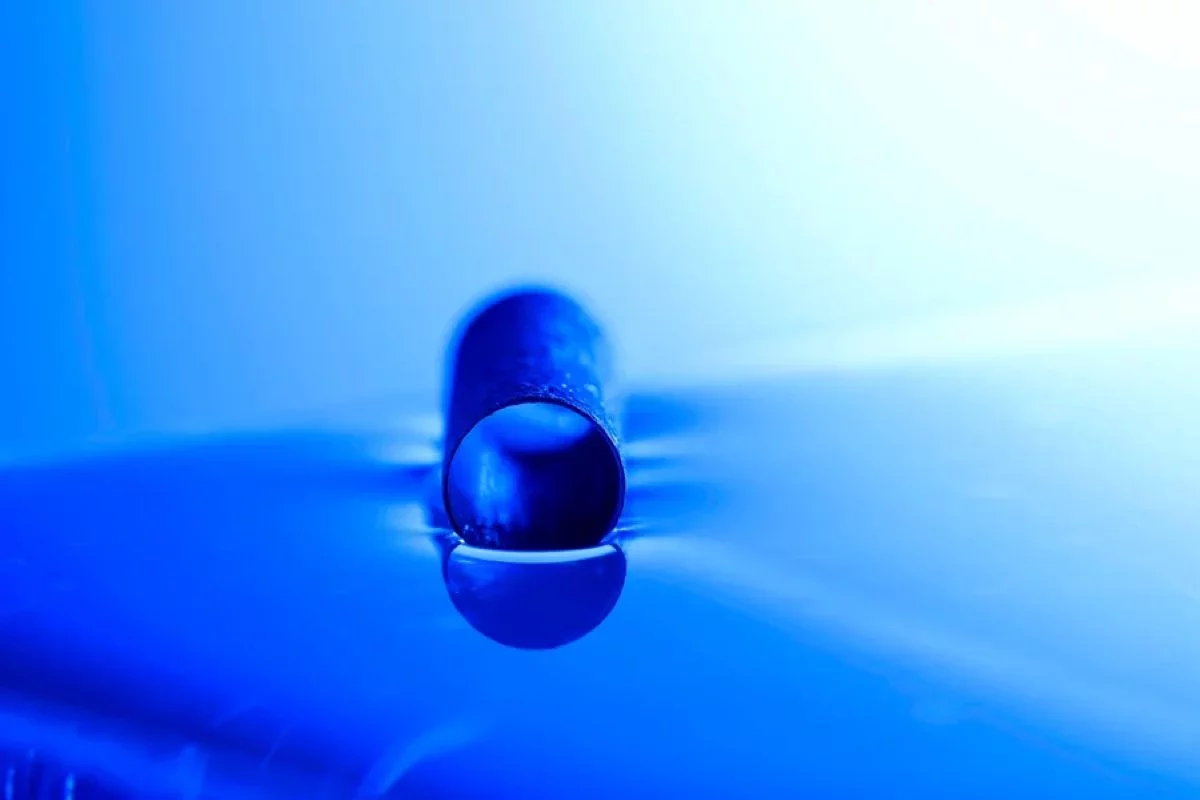
In an exciting breakthrough, researchers at the University of Rochester have developed a remarkable aluminum tube that defies conventional expectations of metal structures. Typically, once water infiltrates a metal object, it risks sinking. However, this innovative design continues to float, regardless of being submerged, tilted, or even punctured.
The key to this extraordinary buoyancy lies not in a special alloy but rather in the air trapped within a surface engineered to repel water. This design mimics natural phenomena observed in creatures like the diving bell spider, which utilizes water-repelling hairs to maintain a bubble of oxygen, allowing it to thrive underwater.
Inspired by Nature
By studying these natural adaptations, the research team created a micro-textured surface on the aluminum tube that prevents water from spreading. This intricate design features tiny pits and ridges that trap air, ensuring that the internal air pocket remains intact even when the tube is damaged.
When water encounters this specially designed surface, it beads up and rolls away, maintaining the air boundary and allowing the tube to stay buoyant. Senior researcher Chunlei Guo noted, "We tested them in some really rough environments for weeks at a time and found no degradation to their buoyancy."
The Future of Floating Structures
While the term "unsinkable" carries significant weight, especially in maritime discussions, these tubes have proven their resilience. They withstand turbulent conditions and significant impacts without losing their ability to float. The researchers envision these tubes as foundational components for larger structures, such as ships and floating platforms, which can be linked together in innovative configurations.
Moreover, this technology could have energy applications. The tubes can be integrated with generators to harness the motion of water, potentially converting waves and tides into electricity.
Currently, the tubes have only been tested in laboratory settings, and further research is needed to determine their effectiveness in real-world marine environments, where factors like salt and organic growth could affect their performance.
This groundbreaking study has been published in the journal Advanced Functional Materials.