In a bold move towards sustainability, California aims to install 6 million heat pumps by 2030. However, with only around 2.3 million units installed to date, achieving this ambitious target requires an average of 2,000 installations daily over the next five years. The task is daunting, especially considering that a typical mini split heat pump installation can take a full day and range from $4,000 to $6,000 per zone, as noted by EnergySage.
Mary-Ann Rau, co-founder and CEO of Merino Energy, emphasizes the need for innovation in the industry. "We've got to do something different," she stated in an interview with TechCrunch.
Operating under the radar, Merino Energy is poised to revolutionize heat pump technology. The startup recently unveiled its flagship product, the Merino Mono, priced at $3,800 and designed for a swift one-hour installation process.
Rau, who previously contributed to Apple's success--where she was seen introducing AirPods--has firsthand experience in electrifying her home in San Francisco. Despite her privileged background, she faced "total sticker shock" when it came to heat pumps, realizing the financial barrier many Californians face.
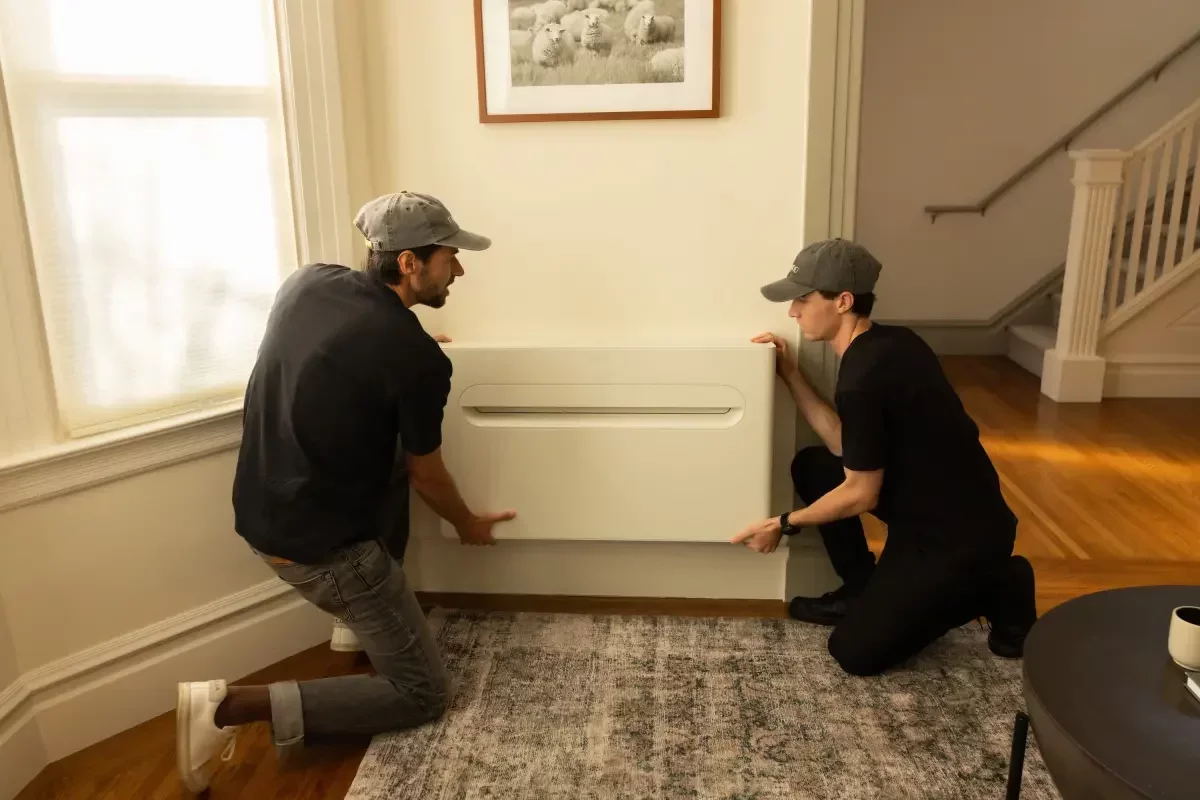
Traditional heat pumps consist of two components: an indoor heat exchanger and an outdoor condenser. Merino's innovative design merges these into a single unit, comparable in size to a typical radiator. This compact system connects to a standard 120-volt outlet, minimizing the need for costly electrical upgrades. "If you can plug in a microwave, then the Merino Mono will work," Rau explained.
The Mono features advanced technology, including Wi-Fi connectivity and the ability to detect room occupancy. It can even coordinate with other units for optimal efficiency. Rau revealed that they are working on an integration with Oura Rings, allowing the heat pump to adjust the room temperature while the wearer is in REM sleep.
Installation of the Mono involves cutting two holes in the wall for air intake and exhaust, simplifying the process significantly. By consolidating components into one unit, Merino eliminates the need for complex outdoor connections, which often involve extensive labor and costs.
While the Merino Mono may sacrifice some efficiency--boasting a SEER2 rating of 15.2 compared to Quilt's 25--it is tailored for smaller living spaces. The startup believes that for urban environments, this streamlined approach is both practical and cost-effective, addressing a critical need in the market.
Currently, Merino is installing 48 heat pumps at the Civic Center Apartments, a low-income housing project in Richmond, California. While initially focusing on California, plans for expansion to states like Hawaii, Oregon, and Washington are underway. Six installers have already joined the initiative in the Bay Area and Los Angeles, with pre-orders now being accepted for delivery later this year.
Rau is optimistic about the potential impact of the Merino Mono. "By simplifying installation and reducing complexity, we can drive heat pump adoption and make sustainable living accessible to more people," she concluded.