As artificial intelligence (AI) continues to permeate classrooms globally, Google is discovering that some of the most insightful lessons on scaling this technology are emerging from India, rather than Silicon Valley.
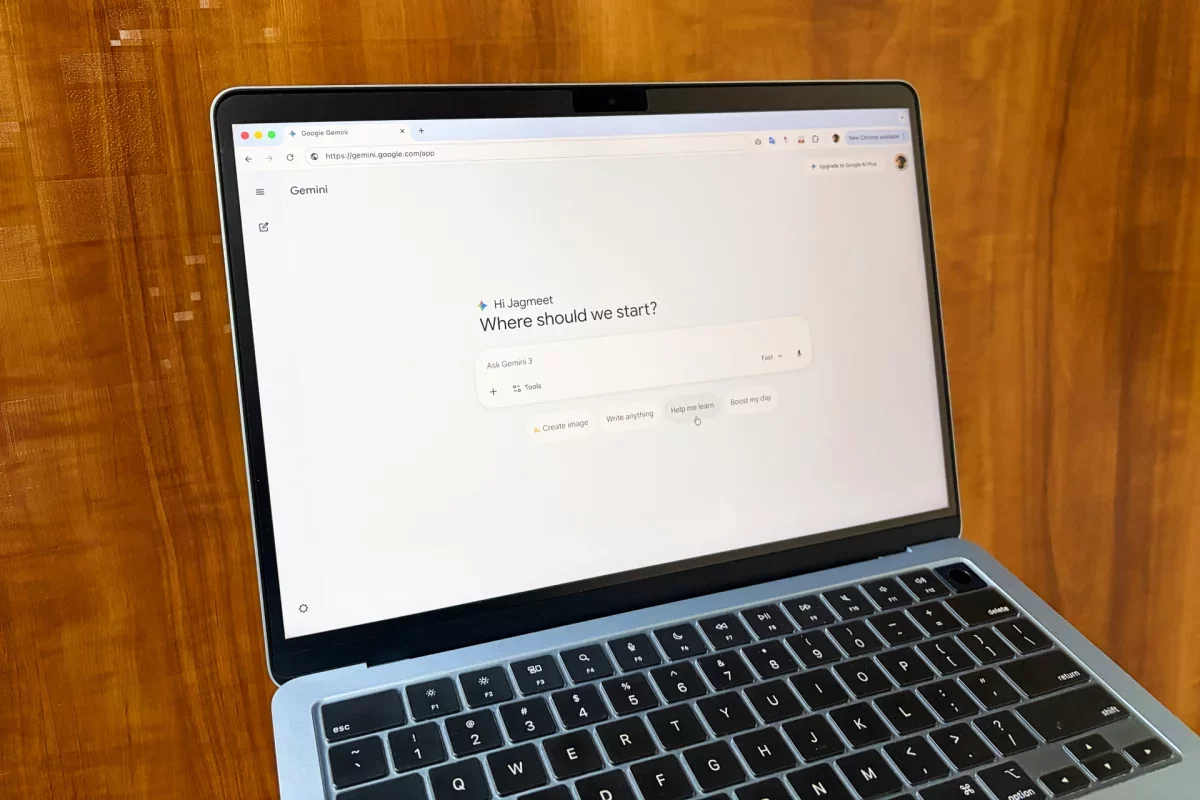
India has evolved into a key testing ground for Google's educational AI, especially amidst growing competition from companies like OpenAI and Microsoft. With over a billion internet users, the nation now leads the world in the utilization of Gemini for educational purposes, as noted by Chris Phillips, Google's vice president and general manager for education. This development occurs within an educational framework characterized by state-specific curricula, significant government involvement, and varying access to technology.
During the recent AI for Learning Forum in New Delhi, Phillips engaged with educational stakeholders, including K-12 administrators and officials, to understand how AI tools are being implemented in classrooms.
The sheer scale of India's education system underscores its importance as a testing ground. The Indian school system caters to around 247 million students across nearly 1.47 million schools, supported by 10.1 million teachers. Furthermore, its higher education sector is among the largest globally, with over 43 million students enrolled in 2021-22, marking a 26.5% increase since 2014-15. This complexity presents challenges in integrating AI tools into a system that is vast, decentralized, and unevenly resourced.
One significant takeaway for Google is the realization that AI in education cannot be implemented as a uniform, centrally defined product. In India, where curriculum decisions are made at the state level, Google has adapted its educational AI to allow schools and administrators to determine its application. This represents a shift from Google's traditional approach of creating globally scalable products without considering the preferences of individual institutions.
"We are not delivering a one-size-fits-all solution," Phillips stated. "The environment is highly diverse worldwide."
This diversity is also influencing Google's perspective on AI-driven learning. The company is witnessing a rapid adoption of multimodal learning in India, which integrates video, audio, and images with text, catering to students with varying languages, learning styles, and access levels, particularly in classrooms that are not predominantly text-based.
Fostering the Teacher-Student Relationship
Another notable shift has been Google's strategy to center its AI for education around teachers rather than students as the primary users. The focus is on providing tools that aid educators in planning, assessment, and classroom management, as opposed to direct engagement with students.
"The teacher-student relationship is essential," he emphasized. "Our aim is to nurture and enhance that dynamic, not to replace it."
In various regions of India, AI is being introduced in classrooms that lack individual devices for students or consistent internet access. Google is encountering schools where devices are shared, connectivity is sporadic, or where learning transitions directly from traditional methods to AI tools.
"Access is universally critical, but the manner and timing of that access vary significantly," he noted, highlighting environments where reliance is on shared or teacher-led devices instead of one-to-one access.
Meanwhile, Google is applying its early insights from India to broader initiatives, including AI-enhanced JEE Main preparation through Gemini, a nationwide teacher training program for 40,000 Kendriya Vidyalaya educators, and collaborations with government bodies on vocational and higher education, including India's inaugural AI-enabled state university.
For Google, the Indian experience is a precursor to challenges that may arise as AI becomes more integrated into public education systems elsewhere. The company anticipates that issues related to control, access, and localization--currently evident in India--will increasingly influence the global scaling of AI in education.
Shifting Focus from Entertainment to Education
Google's initiatives also reflect a broader trend in the usage of generative AI. While entertainment dominated AI applications last year, learning has emerged as one of the most prevalent ways users, particularly younger ones, engage with the technology. As students increasingly rely on AI for studying, exam preparation, and skill development, education has become a more immediate and impactful area for Google.
India's intricate educational landscape is also attracting interest from competitors. OpenAI has begun establishing a local presence focused on education, appointing former Coursera APAC managing director Raghav Gupta as its education head for India and APAC, and launching a Learning Accelerator program. Microsoft has expanded its partnerships with Indian institutions and edtech companies to support AI-based learning and teacher training, emphasizing education as a critical battleground for AI integration.
Simultaneously, India's latest Economic Survey highlights potential risks to students from uncritical AI use, such as over-reliance on automated tools and possible effects on learning outcomes. Citing research from MIT and Microsoft, the survey warns that dependence on AI for creative tasks may lead to cognitive decline and reduced critical thinking abilities. This serves as a reminder that the race to integrate AI into classrooms is occurring alongside rising concerns about its impact on education.
Whether Google's approach in India will serve as a model for AI in education globally remains uncertain. However, as generative AI continues to penetrate public education systems, the challenges observed in India are likely to emerge in other countries, making the insights gained there crucial for the entire industry.