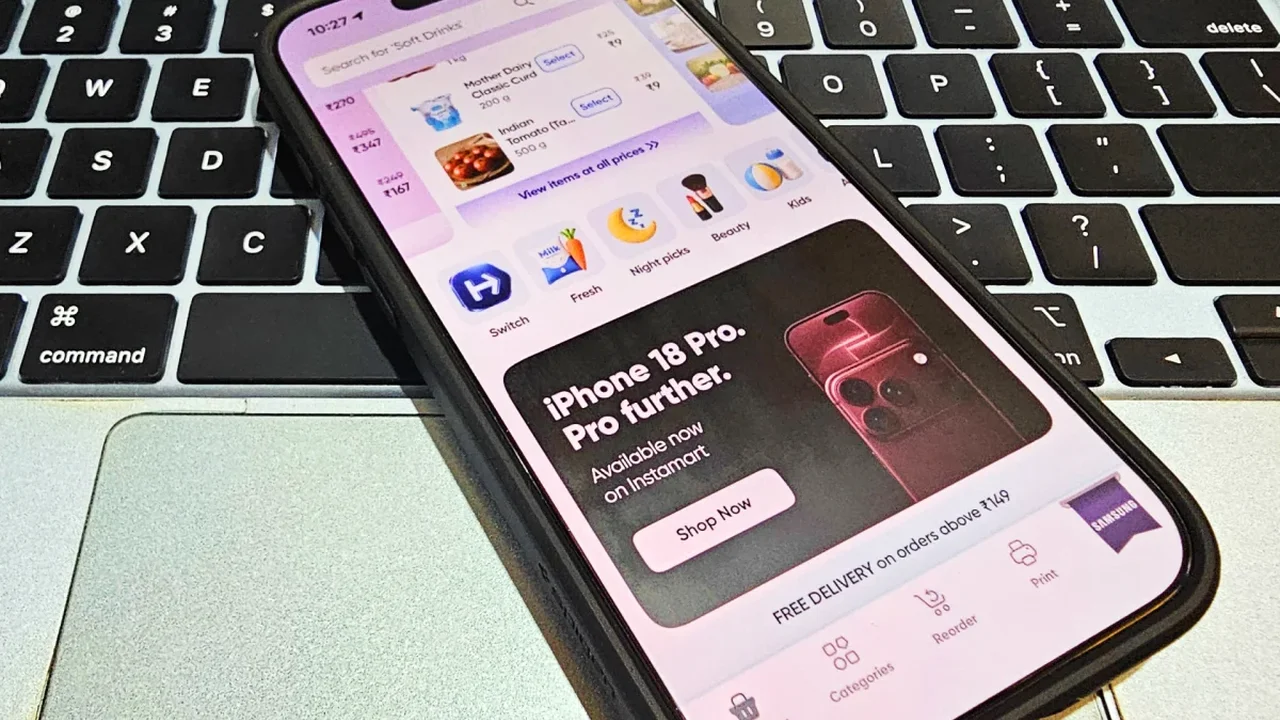
India's fast-growing quick-commerce ecosystem is reshaping the way premium technology reaches consumers. With the launch of the iPhone 18 Pro and iPhone 18 Pro Max, selected buyers in major cities were able to order Apple's newest smartphones through everyday delivery apps and receive them in around 10 minutes.
Blinkit, Zepto, Swiggy Instamart and BigBasket added the new Pro models to their platforms as sales opened in India. Traditionally associated with groceries and household essentials, these services are increasingly expanding into high-value categories including consumer electronics, beauty and fashion.
Premium devices meet instant delivery
The rapid delivery option complements Apple's established sales network of official stores, authorised retailers and online channels. Its appeal is clear: customers can access a newly released device without store queues or the usual waiting period for standard e-commerce delivery.
Early demand highlighted the potential of the model. BigBasket reported delivering more than 300 iPhone 18 Pro and Pro Max devices during the first hour of availability. On Instamart, Bengaluru recorded the highest order volume, followed by Delhi, while the Burgundy 256 GB iPhone 18 Pro emerged as its most requested configuration.
Availability varied across neighbourhoods as initial inventories moved quickly, underlining both the excitement surrounding flagship launches and the logistical precision required for ultra-fast fulfilment.
A growing retail model
India's quick commerce sector has evolved from a convenience service into a wider retail platform. The segment reached an estimated $9 billion during the first half of 2026, while its monthly user base has expanded significantly over the past three years. Forecasts point to continued growth, with non-food categories expected to account for an increasingly large share of spending.
Industry observers note that launch-day smartphone deliveries currently represent a specialised premium use case rather than a major replacement for conventional phone retail. Still, the model demonstrates growing consumer confidence in buying expensive devices through verified digital platforms and brand partnerships.
As quick-commerce networks strengthen their inventory systems and city-level delivery capabilities, instant access to premium technology could become a more familiar part of urban retail experiences.