What connects the Indian artist Abanindranath Tagore, the Mexican poet Octavio Paz, and the Martinican philosopher Frantz Fanon? Over a span of five decades and across three continents, these influential figures aimed to dismantle Western imperial narratives through their artistic and literary endeavors, particularly within the context of the emerging "Third World." This term, initially coined by French anthropologist Alfred Sauvy, referred to nations in Africa, Latin America, and Asia that did not align with the capitalist Western bloc during the Cold War. Today, it has evolved into the term "Global South," which continues to highlight the challenges faced by developing economies.
In her insightful and meticulously researched book Non-Aligned: Art, Decolonization and the Third World Project in India (2025), art historian Atreyee Gupta distinguishes between the geopolitical concept of the Third World and a knowledge-driven interpretation that predates the political movements of the 1950s. Gupta's work emphasizes the Non-Aligned Movement and the pivotal Bandung Conference of 1955, where post-colonial nations convened to foster solidarity and cultural independence from Western influence. Through this lens, Gupta explores the aesthetic, political, and decolonial connections within Indian interwar and postwar art.
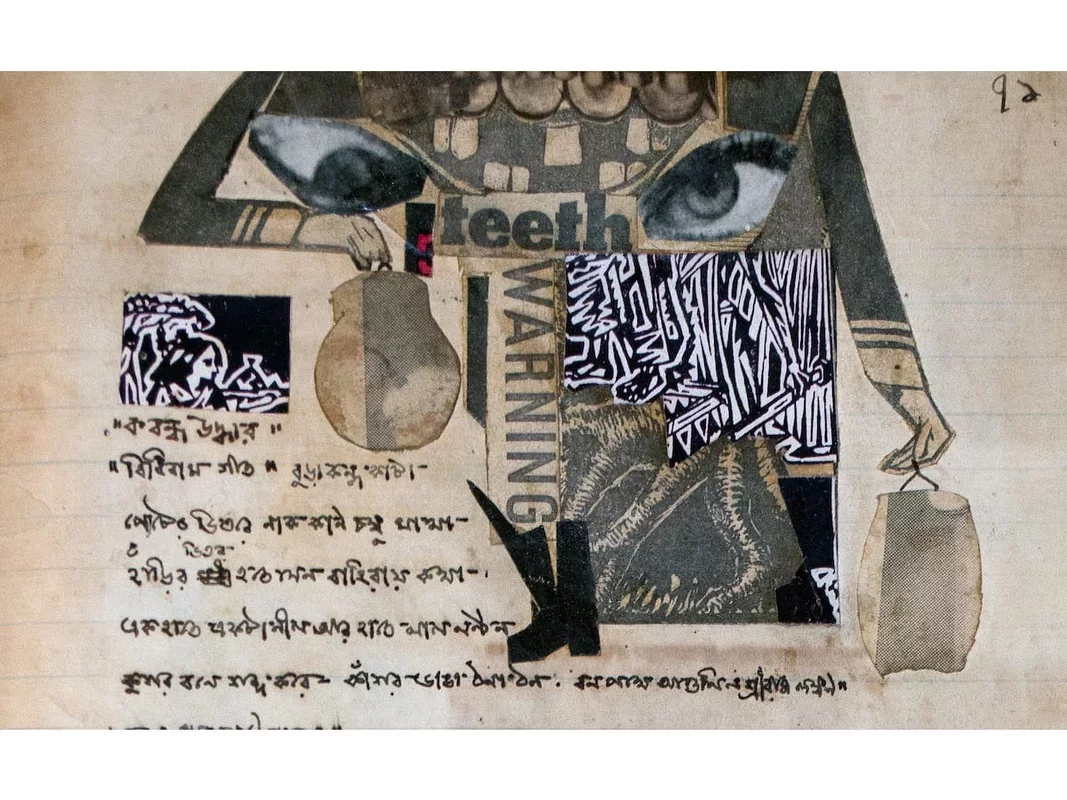
Gupta introduces a "locational approach" to art history that transcends Western-centric views, showcasing artists such as Tagore, sculptor Dhanraj Bhagat, painter F.N. Souza, and Jagdish Swaminathan, who found inspiration in Latin America's Indigenismo movement and the ethos of Bandung. Tagore's collage series, Khuddur Jatra (1935-36), exemplifies this transnational solidarity by blending symbols from South Asia, Africa, East Asia, and Russia, demonstrating a shared consciousness that existed long before India's official alignment with the geopolitical Third World.
Gupta also delves into the friendship between Swaminathan and Paz, both of whom shared a Marxist background, interpreting their connection as a form of decolonial artistic practice. Swaminathan's artwork, particularly pieces like The Sign and the Altar (1964), reflects a rich tapestry of African and Indian aesthetics. Meanwhile, Paz's poetry dedicated to Swaminathan intertwines mythologies from vastly different cultures, revealing a profound intellectual exchange that transcends geographical boundaries.
While Gupta's analysis positions the Non-Aligned Movement and Bandung Conference as crucial to understanding 20th-century Indian art, she acknowledges the complexities and gaps in artists' direct engagements with these movements. Nevertheless, she transforms these gaps into opportunities for exploration and inquiry. One chapter scrutinizes the color black in Souza's paintings, linking it to experiences of colonialism and subjugation, thereby challenging Western interpretations of color in modern art.
Despite occasional dense prose, Non-Aligned offers a refreshing perspective on art history that goes beyond traditional categorizations like the Third World and Global South. As Gupta eloquently states, Tagore's invocation of the rasa of his language exemplifies a spirit of non-alignment that resonates with contemporary discussions about cultural identity and artistic expression.