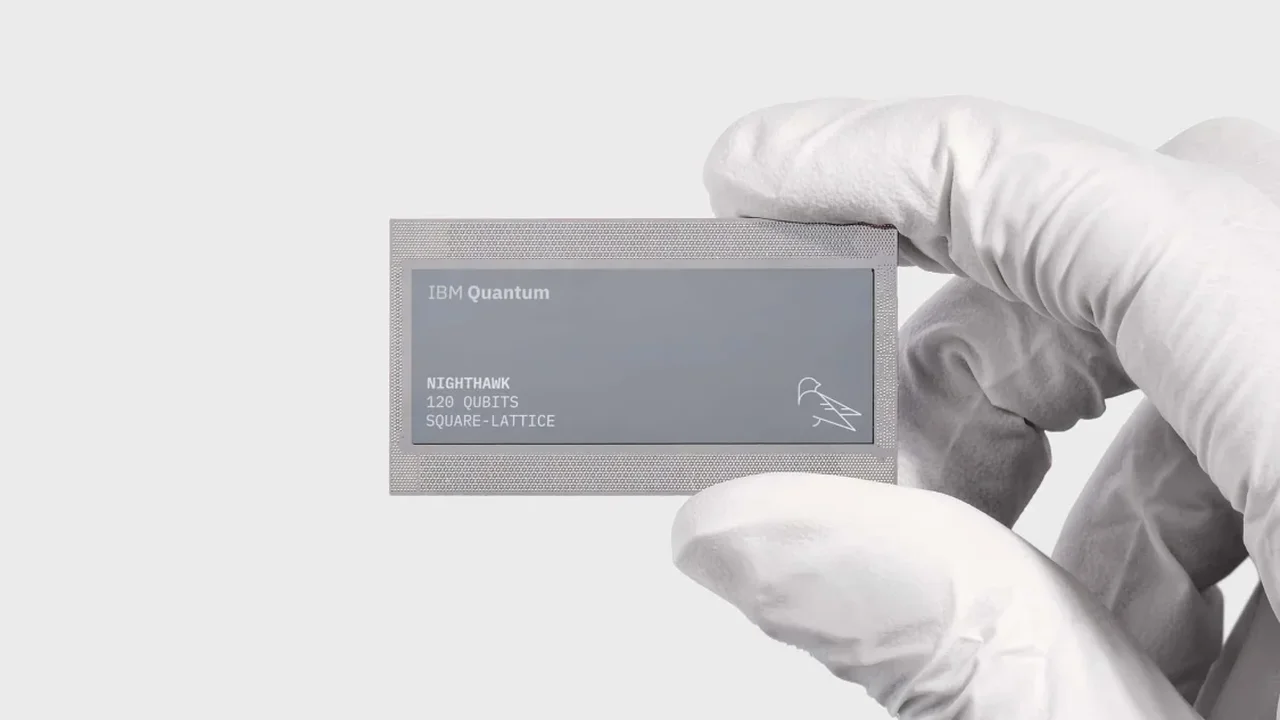
IBM's Nighthawk r2 quantum processor has completed a demanding quantum sampling experiment in just 19 seconds, offering a new benchmark for the pace of quantum computing research.
The test involved 61 quantum bits, known as qubits, running through 36 rounds of operations and 918 two-qubit interactions. The system produced one million measurement results designed to reflect the highly complex probability patterns created when qubits become entangled.
A benchmark for quantum capability
The experiment used random-circuit sampling, a widely used method for testing whether a quantum processor can generate outputs that are exceptionally difficult for conventional computers to reproduce. It is not a direct commercial application, but a way to measure progress toward useful quantum advantage.
Researchers estimated that producing one million comparable samples through a specific classical simulation approach could take roughly 110 years on Frontier, a leading supercomputer. That comparison depends on the simulation method used, and future algorithmic improvements could narrow the gap.
To evaluate the processor's performance, the team used smaller, classically verifiable versions of the circuit alongside mirrored operations that retraced the machine's calculations. Both methods produced consistent results, supporting the reliability of the full experiment.
Speed through faster resets
Nighthawk r2 includes 120 programmable qubits and introduces an active reset system that prepares qubits for the next calculation in as little as one microsecond. This is particularly important for experiments requiring millions of repeated circuit runs.
IBM says the platform can execute more than 100,000 circuits per second, a major increase over its earlier Heron-generation processors. The achievement also stands out because the hardware is available to external researchers through cloud access, expanding opportunities for independent experimentation.
While quantum processors are not replacing classical supercomputers for everyday tasks, faster and more accessible systems may accelerate research in materials science, optimization, chemistry and advanced computing. This milestone points toward a future in which quantum hardware becomes a practical partner to high-performance computing.