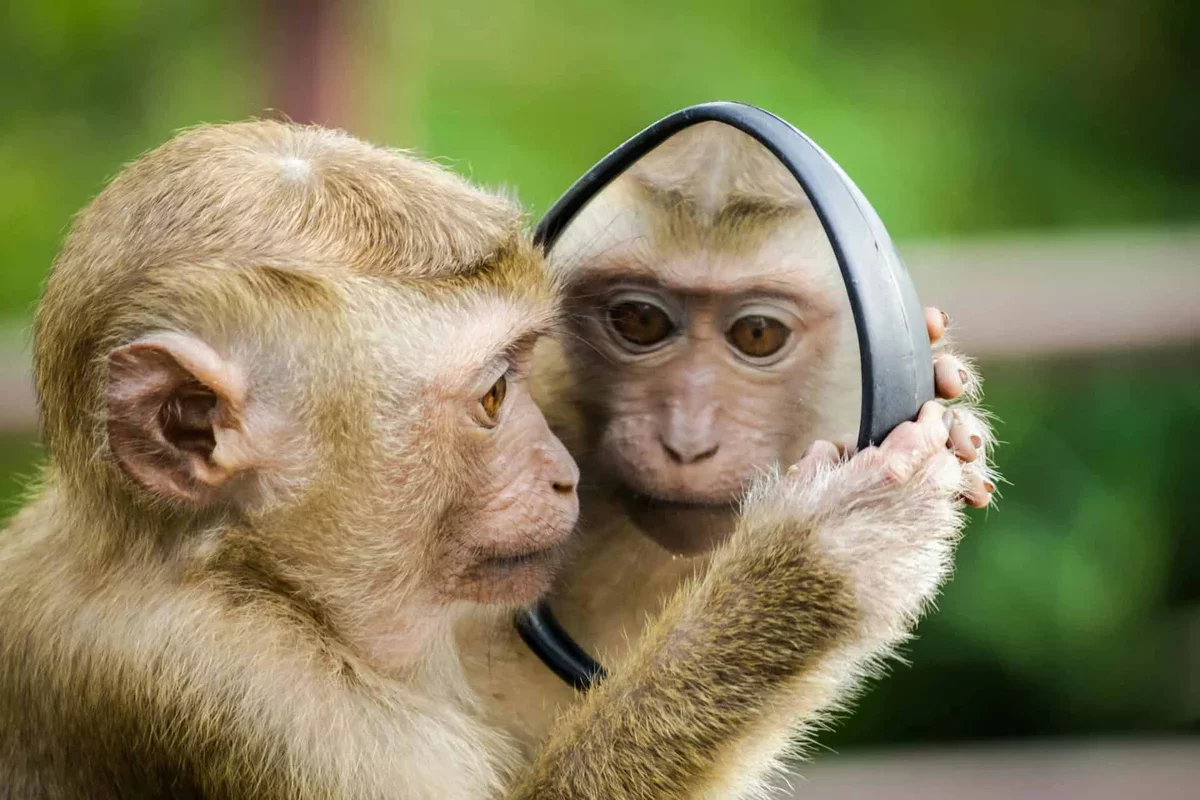
Imagine observing a chimpanzee as it flashes a wide, playful grin. Unbeknownst to you, your own lips might curl upward in response. This intriguing phenomenon, known as emotional mimicry, is a fundamental aspect of human empathy, occurring naturally in our interactions with others. Recent research has unveiled that this mimicry extends beyond humans to include our primate relatives.
Ursula Hess, a professor at Humboldt University, spearheaded a study exploring how well humans can recognize and mimic the emotions of non-human primates. "Apes and monkeys are evolutionarily much closer to humans, and expressions are much more similar," Hess noted, prompting the investigation into our ability to identify and react to their emotions.
A Unique Experiment to Capture Unconscious Reactions
The research team conducted an online experiment with 212 participants who viewed brief video clips of monkeys and apes displaying various facial expressions, including happiness, threat, and neutrality. The clips were designed to include body language for a more authentic context.
While watching, participants' facial movements were recorded via webcams. Utilizing an open-source facial tracking tool, the researchers captured subtle, involuntary reactions that indicated whether participants were mimicking the expressions they observed. After each clip, participants rated the emotions displayed and shared their feelings toward the animals.
Understanding the Emotions Behind the Expressions
The results revealed that individuals not only recognized these expressions but also exhibited corresponding facial movements. Hess explained, "We found that humans are very good at rating the positivity or negativity of expressions shown by non-human primates." Participants effectively labeled emotions such as anger and happiness, demonstrating an impressive ability to interpret primate expressions.
Interestingly, the strength of this mimicry correlated with the emotional connection participants felt toward the animals. When individuals liked the primate more, particularly in response to positive expressions, their mimicry intensified. This finding underscores the significance of emotional engagement in cross-species interactions.
The Link Between Mimicry and Empathy
This study suggests that humans can resonate with the emotional states of other primates, challenging the perception that deep feelings are exclusive to human relationships. Hess remarked, "That humans show empathy towards primates suggests a bridge between the two." This indicates that facial mimicry may be part of a more extensive system of emotional communication, potentially enhancing our understanding of empathy.
While the study's limitations include the short duration of video clips and the reliance on observer interpretation, it opens exciting avenues for future research. Investigating other species and longer interactions could provide deeper insights into the emotional connections we share with primates.
The findings, published in the journal PLOS One, pave the way for a broader understanding of empathy across species, suggesting that our emotional connections may be more profound than previously believed.