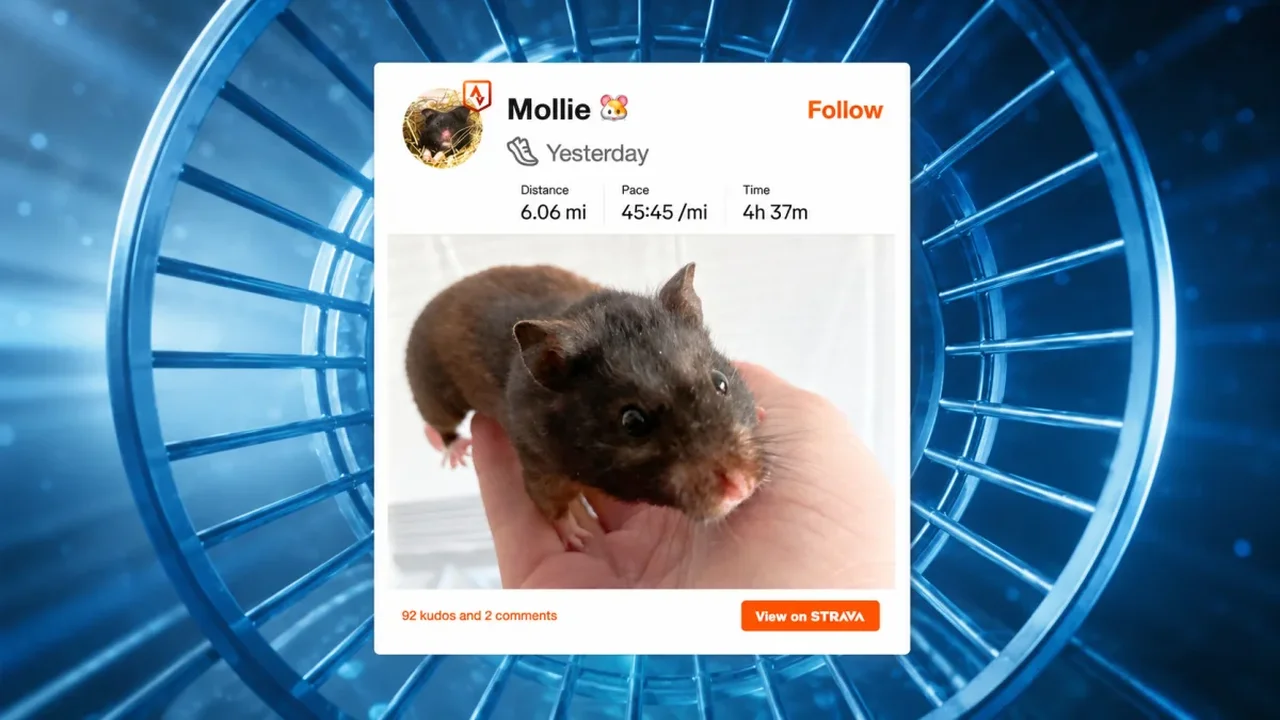
In Utrecht, a 10-month-old hamster named Mollie has become an unlikely fitness sensation. Each night, the small runner climbs into his wheel, and by morning his activity is automatically logged on Strava like a human workout.
The project was created by Thijs de Buck, an MRI physicist and marathon runner, who wanted a more reliable way to measure the hamster's wheel activity. After an early setup with a basic bike computer proved too limited, he built a custom system using a magnet, a Hall-effect sensor, and a small ESP32 computer to track every rotation.
The setup calculates distance, speed, and running intervals, then converts the data into a .fit file that uploads to Strava each morning. Mollie's live pace can reach around four to five kilometers per hour, and his weekly total now averages close to 70 kilometers. His best single-day effort has reached 11.15 kilometers.
Beyond the novelty, the data offers a glimpse into animal behavior. Research on hamsters has long shown that nightly wheel running is not unusual, and studies from institutions such as PubMed-indexed journals have recorded similar distances in controlled environments. The pattern may reflect natural activity rhythms, especially when animals are given space, bedding, and enrichment.
De Buck says the larger cage, deeper bedding, toys, and hidden food were designed to make Mollie's environment more engaging and closer to natural behavior. Over time, the data may help reveal how changes in routine or habitat affect the hamster's activity.
What began as a playful experiment has evolved into a blend of engineering, observation, and digital storytelling. In the future, tools like this could inspire new ways to study animal wellbeing through everyday movement data.